Tomorrow's Minds
What 17 Years Building Finder to $100M Taught Jeremy Cabral About Growing Businesses
About this conversation
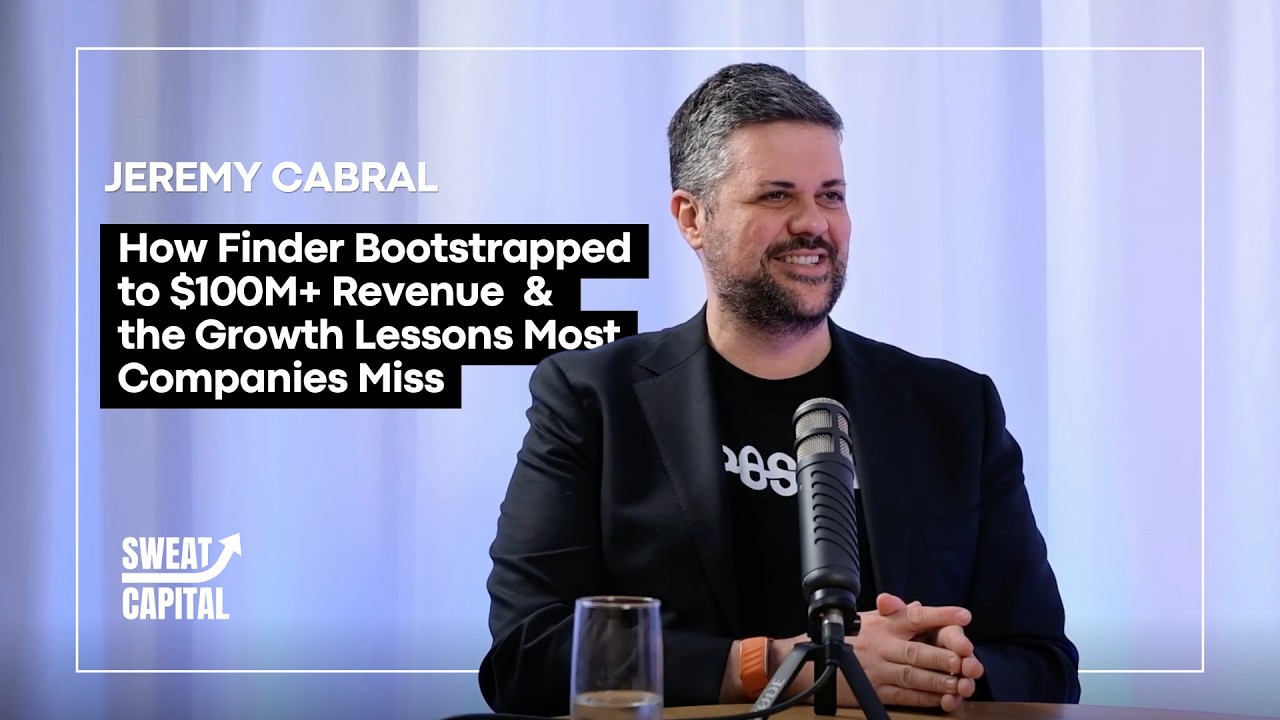
Jeremy Cabral joins Ben Handler for a wide-ranging conversation about identity, obsession and the transition from operating Finder to choosing his next chapter. Jeremy describes connection, growth and helping people as the three values guiding his work. After nearly 17 years at Finder, he stepped away from day-to-day operations and was surprised by the uncertainty that followed. Hundreds of companies contacted him after a LinkedIn post, creating opportunity but also an overwhelming decision problem. Journalling, coaching and conversations with trusted operators helped him separate his own identity from the company he had helped build.
Networking is presented as a deliberate learning system rather than social activity. When Jeremy wants to understand a field, he maps the people shaping it, reaches out directly and immerses himself until he can see the patterns. That method took him deep into organisational design, cryptocurrency and now artificial intelligence. It also explains the breadth of his former Finder remit. He repeatedly took ownership of unfamiliar functions, learnt them intensely, built a workable system and then installed a leader to run it.
The episode explores a faster generation of founders who can build prototypes and internal tools without waiting for a traditional engineering team or fundraising round. Jeremy believes this changes the rhythm of company building. It also raises the importance of executive understanding. Leaders can work with agencies, but they should not outsource their grasp of the channel or the customer. Internal knowledge should be captured through transcripts, documents and structured context so teams can use it to produce better decisions and content.
AI search is a particular focus. Jeremy expects company websites to become surfaces read and acted upon by software agents as well as people. Brands need accurate, detailed evidence online if they want answer engines to understand and recommend them. Publishing generic material at scale will not solve the problem. Companies need strong subject-matter expertise, first-party knowledge and people capable of judging whether the output is true and useful.
Jeremy closes by describing tools that connect models to services and organisational data. His practical starting point is simpler than the terminology: connect one trusted system such as email, Notion or a calendar, learn what becomes possible and expand carefully. The broader lesson from his career is consistent. Go deep enough to understand a new wave, build through direct experimentation and retain human judgement over the system.
Key ideas from the episode
- 1
Leaving a company can unsettle your identity
After nearly 17 years at Finder, Jeremy had to work out who he was without the daily operating role. Journalling, coaching and trusted conversations helped him distinguish personal values from a long-held title.
- 2
Networking is an accelerated learning method
Jeremy maps the experts in a field and reaches out with a clear reason to learn from them. Immersion helps him move from scattered information to a working view of the system.
- 3
Obsession can build breadth when followed by delegation
At Finder, Jeremy repeatedly learnt a new discipline deeply enough to design its operating model, then hired a leader to take it forward. This created executive breadth without permanently centralising every function.
- 4
Faster tools change the rhythm of company building
Young founders can now prototype products and internal systems without first raising money for a full engineering team. The feedback cycle becomes faster, putting more weight on judgement and customer understanding.
- 5
Executives cannot outsource channel understanding
Agencies can execute specialised work, but Jeremy believes leaders still need enough knowledge to judge the strategy, ask useful questions and recognise when activity is disconnected from the business.
- 6
Websites will increasingly serve software agents
Jeremy expects agents to research, compare and transact through company sites. Clear structure, factual depth and accessible evidence therefore matter for machine understanding as well as human conversion.
- 7
Start with one trusted connector
For someone new to connected AI tools, Jeremy recommends beginning with a pre-built connection to a familiar service such as Notion, Gmail or a calendar, then expanding after understanding the permissions and value.
Chapters
- 10:13Connection, growth and helping people
- 13:40Leaving Finder after nearly 17 years
- 14:57Separating personal identity from the company
- 19:24Networking as a system for learning
- 24:28How immersion built Jeremy's operating range
- 30:04Meeting Finder's co-founders through Twitter
- 36:25The shift from SEO to AI search
- 40:00Preparing websites for software agents
- 43:33Why companies need internal content capability
- 48:14Rebuilding the engineering feedback loop
- 54:21Connecting AI to tools and company context
- 57:59A practical starting point for connected AI
Full transcript
12,877 wordsI thought, you know, Google's really struggling, and then they go and release, you know, Gemini, and it was just insane. And, and now, like, their models are just so wild. I actually shifted from my daily use app being primarily ChatGPT to Gemini, which is like, just didn't expect that 2 months ago. But, you know, AutoGPT came along. It basically was prompting itself as you give an AI agent a goal and a job description and things to do, and off it would go. And so AutoGPT was that moment where I think AI changed dramatically. And I think that this Claude bot release was also pretty similar. And so the amount of actions taken on the web will dramatically increase. It probably won't be the same in the sense of like, you know, users, like humans actually using these websites, but I'm genuinely excited for how the web's adapting in this kind of new phase. For me, for example, I had this, this recent thing where I had some customer calls or client calls, and off the back of the last week of calls, I would ask, what are some LinkedIn post ideas based on what I said this week? It's like just the speed by which you can get to valuable insights is insane if you just start transcribing through one interface. You can literally collate all of that, synthesize all of that, and take an action which probably would taken days or maybe even a week or more to do in literally minutes. And so like as an individual, you can become super productive, you become augmented if you connect the right things into an MCP. I think it's a skill that, you know, ultimately people need to learn. Companies need to be having a transcript of conversations internally, externally. This becomes like this constant knowledge base to be able to be drawn from. It's extremely powerful. And then I came with an idea. I was like, all right, like, I can't really write the book on Finder because I think that's Fred's to-do. Like, he's got, you know, his first book was Go Live, and, um, it kind of tells a part of the story. But like, you know, I'm sure like if you ever wanted to do another book, I think it's like it's his to-do or Frank's, right? But I was like, I'm gonna create a book, uh, write a book called Finding Myself. And like, it's more about my personal journey, like post-Finder, like, you know, How it came to the decision, and the kind of— my thing is like in Kokoda, literally, um, having these cards because you don't have much power or anything about like physical cards. And there's like a videographer that's doing it with us.
Kokoda?
Yeah, yeah. So like, you know this, um, Aussie comedian Merrick Watts? He's like a radio kind of show host, you know. So he's doing it and a few others. Um, ideas to have these cards and literally read them out as prompts, um, to kind of answer like how, you know, personal development type stuff and then, um, record the whole thing. And then like it's kind of pre-work to selling the book and then sell the cards with the book. Oh, nice. Interesting. I randomly met the, um, head of products for, um, head of product for Diary of a CEO who actually built the conversation cards for him.
So are they still going around, those cards?
I don't know. Yeah, he used to pump them a lot on the shows, but I haven't heard about it in a while, so maybe not.
So it's currently the head of product still there?
She left like a year ago. Um, she's a great intro if you ever want to chat to her. Is she an Aussie? Australian? She's an Aussie that moved to the UK, and it's kind of fractional chief of staff for all sorts of stuff. But I said to her like, "Hey, do you think you could construct a media tour for me?" And like, you know, I was just like, it would just be because she's got connections; she could probably pull it off. Because I don't think I've got a deep enough network in the UK to do it. She's like, "Yeah, I could do that." So she does the fraction.
So she's fractional chief of staff.
Yeah, yeah. So she does that. So that's her new gig. Like, and she helps creators basically. monetize and grow and all that sort of stuff.
So nice. Yeah, she's got a good track record.
Yeah, she does. Yeah, exactly. Um, you just dropped that podcast and yeah, you're—
where do I sign?
Yeah, exactly. So I think she's going to try and pitch, um, Frank from Kinzo in to, um, to, uh, what's his face, um, Steve Bartlett. So—
Oh really?
Yeah, that'd be a good one if you can land that.
So to get on there?
Yeah.
Really?
Um, yeah. Uh, so yeah. I was like, you know, he invited me to go to Kokoda and it's like, we're going with a cool crew, like, you know, American and so on. I was like, yeah, I like doing tough shit. So, like, sounds good, like right up my alley. And I also can't see how I could logically do this.
Yeah, yeah.
It's like physically, like in terms of like my time, like what it was like, I've got to— it's like a forcing function for me is like, all right, I'm going to streamline my life before I can do this trip and then do something pretty wild. And I was like, all right, I think I can do this if I have another why. And I thought about it. I was like, to be off the grid writing a book, 'cause I think you've gotta, for me it's like if I was to write a book, it's more for me or for my daughters almost. And then like if I write it for that audience, don't really care about what anybody else thinks. It's like, it's cathartic, just get it out there sort of thing. And I'm not gonna try and claim to be anything other than like, Yeah. This is my life experience. for my own journey, and this is what I did to get to an outcome, which is not that significant, but it's out there. Yeah, off you go, have a read if you want. If not, it was not for you guys anyway. Um, but like, you know, anyways, uh, so that's my idea. And, um, and yeah, so doing this, like, you know, I think it's like 10 days or something like that. Um, you fly in and then like there's pockets where you have internet, like not much, not many.
Why does it worry you so much that you can't have internet?
Um, it's not, it's not, um, Well, where I go to immediately is like from emergencies, like family emergencies. Like I'd hate to be like, say celebrating finishing Kokoda and then like by the end it's like, oh, Jeremy, your wife called and something happened to your daughter or something. I'm like, whoa. Like, you know, it'd just be like, I hate that. Like I like being available. I'm a big problem solver, like for my family and friends. And I think to not be kind of that Batman moment or whatever, like you get like summoned kind of thing.
Yeah.
That's where my first fear is. And the second, honestly, just stems off that. Like, I know I can physically get it done. It's gonna be hard as hell. I know it'll be like intense to pull off the kind of streamlining of things in advance to make sure that I'm not like letting anybody down in my life or professionally, like with some of the advisory stuff I'm doing. Um, and it's also a guilt factor. It's like, you know, kind of— I, um, I used to struggle, man, with the concept of being selfish, um, until I made it my word of the year last year and literally just went on this quest, um, to ultimately discover myself and reconnect with myself. I think, um, the word gets a really bad rap. It's like being selfish is bad. I'm like, okay, um, what about, you know, if you think about the kind of root of that word, there's so many positives off the— or nodes of the positive nodes off the word self, like being selfless, self-care, self-aware, you know. Like, it's, it's a really interesting thing how like one word like selfish can just make the whole thing just be bad. And ultimately, like, they, you know, they're saying like, you know, look after yourself so you can help others. Um, but I'm, I'm more connecting to energy now and realizing that Um, you know, energy, if managed well, is ultimately the core source of being able to achieve what you want to in life, um, and turning up the way you want as well for your friends, family, at work. And, um, I actually came up to this discovery through doing a 10-day water-only fast. I literally last year just locked in, um, a family member, um, close to me I thought actually had Uh, stage 4 cancer. Um, it was a, you know, thankfully it was a misdiagnosis. Um, but it was pretty serious, dude. It was wild. Like, literally total medical negligence. Um, yeah, that's the level. Stage 4 as well. Dude, like, no joke. And like, I, for like probably 3 or 4 months, like, you know, everyone's just preparing for the worst and kind of making plans as if like, you know, experimental treatment's the only option, so on and so on. Um, And then like, you know, the final appointment's like, actually, yeah, it was just inflammation. I'm like, what are you talking about? Like, this is insane. And so I actually went and looked up, there was a missing document that I never got access to. And I went and asked like for this document, the doctor never shared it. And on the paper it literally says, this is not consistent with, you know, whatever, you know, cancer they thought it was versus, and I think the doctor was so busy, it was like running like 45 minutes late to the appointment, all this sort of stuff rolled in. It was like, yep, Sorry, mate, you know, this, you know, you got this issue, you know, read it as consistent with ultimately what he thought the diagnosis was. So I went on this water-only fast, like reading about the effect of kind of cancer treatment and the efficacy of cancer treatment when you're fasting. So you basically have better results. And so I literally sat there across from them. I was like, hey, this is the last bit of food I'm having for 10 days.
Wow.
literally ate the food and just water only. And yeah, I did things like, you know, had a constant glucose monitor, fasting salts. I was tracking with everything and, um, not doctor supervised. So it's a bit crazy. I do recommend if anybody wants to do a water-only fast to do that.
How much weight did you lose?
Um, it wasn't for weight loss, but I lost a lot. Like, people like do like, what the— you know, this is insane. So probably like 5, 7 kilos, something like that. Um, and but I felt amazing. Like, I literally was so focused. I couldn't— I didn't think about food at all the whole time. And, um, actually I rolled into this, um, punk concert, like, and I, you know, my wife was in Chile for a little bit, and, um, rolled into this punk concert for a band that, um, I hadn't listened to probably for, I don't know, 15 years or something. And, um, so like really reconnecting with myself in this process. And, um, yeah, just on this, you know, it just kind of kept rolling from there. Just had this momentum of like self-discovery and, um, And, uh, yeah, just reconnected with the energy and, and that was it, man. I just like— so yeah, anyways, there's been a journey, right? Now I'm like, I'm gonna write about this thing again, even if it's just for myself. Um, it's easier to remember stuff as it's happened. Um, and so that's, uh, you know, one of the whys behind this Kokoda trip potentially. Um, and yeah, pretty gnarly, but we'll see if we do it.
Sounds fun.
Yeah, man, for sure.
When someone asks like what you do today, like where you are now, how do you answer?
Oof. Um, I think for me, like ultimately there's 3 things that, well, 3 values I have is connection, growth, and helping people. So it's a trilogy of all those things whenever I can. So like, it's, you know, I like working with good people, building connection with them. And helping them grow their business. Like, so that's the core, like, you know, and that looks like so many different permutations. Um, it was like really unusual, like when I made the announcement, um, that I was, you know, leaving my operational role at Finder, had hundreds of companies reach out. Like initially it was like 170 companies or something in the first—
When was that? Sorry, when did you, um, stop?
I think like September last year. Um, kind of wrapped up most of my operational stuff around mid-October. I was negotiating a few deals through to December with like, you know, big contracts and stuff like that. And I'm still doing, you know, bits and pieces here and there, like kind of bigger problems that we need to kind of figure out together. Yeah, this is like September last year and I kind of did this LinkedIn post. A mutual mate of mine actually helped me write it, Steve Butler, and literally sat there in the Central Coast and it's like, you know, I bootstrapped Finder to $100 mil plus revenue. Now I'm showing others how. Apply here. Or something like that. It was like the most shortest post ever. And it just, yeah, it just went crazy.
Blew up.
Yeah, it blew up. And so yeah, about 170 companies at the time reached out and now it's nearly 400. And it created this data problem for me. I was like, well, who are these companies and why are they contacting me? So I needed to know more about them. So I sent out these forms that kind of qualify them. Are you like pre-revenue? Do you have staff? Are you full-time, part-time? How are you funding this thing? Um, and kind of where I landed was, um, I want to be able to help as many people as possible. Um, and I got really interested in, you know, things like online community building, courses, group coaching, and things that you're ultimately, you know, phenomenal at. Um, which when we first connected, I learned so much from you on that. Um, and so I'm exploring ways of getting to that goal. Um, but in the meantime, doing You know, just kind of looking under the hood of all these companies and figuring out like how I can help them. And it's pretty broad because at Finder, I ran a lot of functions. I was like product, tech, data science, growth, operations, and international expansion. So it was like—
Bit of a mix.
It was a lot. And so, you know, initially I was doing some AI app builds and that's hyper fun. So you have like a founder and an investor and kind of an ambition to build an app and So I found some AI devs that would just jump on that and I kind of run that for them. And then I was teaching some startups from Startmate growth hacking. So I kind of went in there and initially was just telling my founder story. Then they invited me back like, hey, they want you to do a session on growth hacking and did that. And now I'm the stream lead for product-led growth, this cohort for Startmate. Okay. So it's a mix of things, but ultimately I want to have as much impact as possible for my time that I, you know, and kind of help as many companies as possible learn, you know, the things that worked for me and also from my mistakes as well. So that's the, that's the goal.
Yeah. When did you leave Finder? Was it like 6— sorry, how, sorry, how long were you at Finder for? 16 years?
Nearly 17. Yeah.
Dude, that's crazy. So I was thinking about this today before we came in because I've never been at a company for That period of time, like, as an employee and also as a founder. Yeah. But I know, like, leaving my first company, Cohen Handler, after 9 and a half years, like, that was wild. Like, just like I've shared this story before. So when I was exiting that company, I started Buyer's Agent Institute in the final year. So, and Buyer's Agent Institute, BAI, was generating revenue. That's what like really helped me exit because I was like, hey, I've got something good here. Here's the next thing, right?
Yeah.
So I was really clear on it. But still, like when I was exiting and I, and I transitioned out, I was like doubting myself heaps. Like fear of— I was like, like, just fuck. Like this whole— I was so stuck with my team and the, the, the day-to-day. Like just everything was very just habitual.
Yeah.
And so it was a big, it was a big wig out for me, to be honest with you. Like getting out of the office, like I was so used to being in an office and I was working from home and like It was just a big transition for me. Like, I guess when I was thinking about your journey, like, it's like double the amount of time that I spent. And I was like, wow, like, how's that going for you?
Well, man, it's interesting. I had certainly similar feelings. I remember I had all these companies reach out and it was really overwhelming because I didn't want to say yes to the wrong thing. Yeah. And initially I thought I was going to have some time off and like, that was my plan. And then I felt bad about even having time off and I booked this, like, I think it was like a 3-day or 4-day trip to Fiji. And I booked it and I was like, after I booked it about half an hour later, I was like, this is silly. And I extended the flight and kind of like, you know, the accommodation and whatever. So I did a longer trip, which is super cool. And the way I justified it was I was going with the head of strategy for APAC from Google. And so that would be a really cool trip to learn some stuff. And it was like, I was still like in this work mode and actually she's a really good friend. So as, as, as The wrong way to kind of position the spending my time. Um, so yeah, that happened, um, the trip, and it was actually amazing. Um, I did a lot of journaling when I was over there. Um, this book, um, I think it's called The Writer's Way, um, Julia Cameron.
Okay.
You just like— Steve actually told me about this, and I was journaling every day, like just filling pages. You have to do like, I think, 4 or 5 pages a day. And like, just, you know, crazy seeing how I went from like fear and kind of, um, lack of self-belief and concern to this, you could just see how I just became more and more confident over the course of a few weeks. Um, and I think it came through the validation you quickly get. It's like, maybe I am more than like a one-trick pony, and it's not just this Finder thing, and, and there are, um, people out there that kind of value what I can give. Um, but yeah, with all these companies reaching out, it was still overwhelming. And, um, I remember I was in Chatswood. I just done a session with, um, a mate of mine, Braith, who, um, It's like a LinkedIn gun. Um, Braithwaite Long, he does, um, the LinkedIn stuff for Kinzo and so on. So we're in Chatsworth and he's kind of giving me some thoughts on, on my approach to LinkedIn. And, um, after the session, I just sat there on a bench and he had left. I didn't move for like 45 minutes. I was like, I'm like stunned. I don't know what to do. I'm freaking out. And then I get this email in. Um, it was a friend introduced me to someone who I couldn't even tell you the name. Or I'd have to chase my email, go back my emails and find out. But it was like, here's a coach that I know, um, you should jump on a call with them and, um, they're really cool. And I just opened up the email, didn't research them, dialed them. They were literally at the international airport going to Thailand. Um, and he's like, man, I'm a bit busy right now. Do you wanna catch up in a couple of weeks? So like, can we just do a session now? And so like, he's going through security with his AirPods in. Of course he said that.
Yeah.
Yeah. And we do this like 40-minute session. And he basically just like on the spot gave me like 3 bangers. Like, um, but one of the key ones that just stuck with me the most was, um, you know, selling, you're not selling your time, you're selling outcomes.
Hmm.
And that was really, really important 'cause I was so, I was freaking out about, I guess, finding me in, Finder being such a time-intensive business. Like it was global, lots of crew. Um, and at times it's like really taxing, like, you know, mentally, emotionally, physically, whatever. Like it was just a, an intense journey. And to go back into that quickly was my kind of reaction was like, I can't do this. And then it just really gave me the confidence to start putting out there more kind of outcome-based ways of working with people. And I think to your point of kind of like you had that kind of lead-up of people, you know, ultimately doing your course and so on, it gave you a bit of confidence. I think getting some of that early confidence quickly allowed me to go, actually, you know what, this is going to be fine. And, um, I will do interesting things besides Finder, and there's, there's lots of opportunity for me out there. And, um, yeah, it just, um, by December, I literally— my mind just went quiet, and I was just like, I'm good. Like, and I literally— something shifted. It was actually just before we had met as well. Like, I just went into a better zone. I was just like, man, this is, this is great. And, and honestly, like, Just cool things started happening. Like, I mean, when we met, you were so generous with like your thoughts on how I could do things. And like, you know, just, I was just like, man, like literally just met this guy and he's like, knows everything I'm trying to find the answer to. And it's like, you know, here you go. Like, this is how I do it. I was like, this is just so awesome. So, um, it's been happening like almost every other day, like just these, these kind of experiences where, um, I don't know, just being very fortunate, um, to To have a lot of help out there for me. So it's been cool.
You seem like a prolific networker. I mean, like, yeah, is that, I mean, is that, it seems like you actively go out to like connect, right?
Yeah. Like, um, I mean, just before this I did a call with a guy that I always told myself I wanted to meet. Tim Soulo works at Ahrefs. It's like a big SEO software company. Been there forever. Similar sort of journey to Finder. Bootstrapped. He bootstrapped from $8 mil to $150. He's coming to, he was going to be in Sydney in March and I was connecting with him because we've got an idea in the AI search space that I'm launching. And I was like trying to get his perspective. Anyway, spoke for an hour, like literally totally legendary. And I was like, how did I not have this call earlier? We connected on so many fronts, like, and I was like, this is just, yeah. So I don't know, I'm just kind of remembering, I wanted to speak to that person and like kind of reaching out and People are saying yes is really cool. And then, I don't know, just a lot of people also inbound as well that want to chat that I'm learning so much from as well. So I'm kind of in this R&D mode. I'm really trying to understand more about myself, more about business building actually. And the craziest thing is almost the average age of the people I'm hanging out with is getting younger and younger.
I feel the same way.
Oh man. I went to this AI event for a company called Build Club. It's got a community of AI automation builders essentially. And I think everybody was around 18 or 19 years old. I was only there for 20 minutes and I was like, hey, who should I meet? Met this guy who runs this hacker house in Sydney. Went and spoke at that hacker house and did a, like a talk on my journey and also why I'm bullish on Australia and building startups here. And yeah, literally everyone's like so young. And yeah, I guess I'm just trying to look at the formula or the ingredients that like You know, what's the unique remix of things that if you're, you know, 18, 19, 20, or I've even been hanging out with like a 17-year-old videographer, like who's crushing it. Um, you're like, how are you guys building businesses? And like, I think they, they are doing things differently. Um, the crazy thing is that I think because they had access to YouTube and I didn't growing up, it's like they know about everything, dude.
Yeah.
It's like they literally know about like cap tables and, you know, Series D, and I'm gonna wait till this and raise. I'm What's going on here? Like, it's like these kids are like just so skilled. And, um, yeah, it's been fun, man. So, um, yeah, I did this photo shoot with a guy, Toby Edwin, who is 18 years old. Um, literally sat with me for 2 hours in Double Bay. It was like, all right, man. Um, he had this Notion file prepared. It's like, you know, this is what I've been thinking about your brand. I think it should be your tagline. Your color's orange, so you're gonna have to buy this new iPhone with— it's orange with a terracotta case. By the way, you're free on Tuesday. I booked a photo shoot. And like, literally this LinkedIn photo now, and like, he Amazing. I was like, I don't know why you did this, but you're an absolute legend. Um, he's like a, I don't know, an 18-year-old philosopher. Such a smart dude.
It's wild, hey?
Yeah.
I was with this dude last week, like this successful entrepreneur. I thought he was like 30s. I thought he was— I didn't ask, but obviously I thought he was like mid-30s. Then I was with someone who's like, nah, nah, he's pretty young. So I just hit him on Insta again and say, hey dude, how old are you? And he's like, I think he was like 24. I was like, fuck. Like, like, do you know what I mean? Like, you're right. Like, and a lot of the people that I'm speaking with and collaborating with, like, they're younger now. Yeah, they're smarter. Um, they're just doing things differently. I feel like they're at the full forefront of like where we need to be.
Totally, man. I think that's like what I observed was, um, there's this different rhythm, different kind of drumbeat that's, um, that's out there like with the kind of young kind of entrepreneurs in Sydney, at least the ones I'm exposed to. I don't know, kind of other cities in Sydney. Um, But it just feels different. They're Silicon Valley connected. They're, they're not here to wait for permission. They're like, you know, they're not gonna like do their time working in a company. Like they're literally like just ambitious, you know, technologies, you know, in their fingers, at their fingertips.
Yeah.
Because they don't have to wait until they raise money to hire engineers. Like they're literally vibe coding whatever they need. Um, it's kind of absurd. And, um, so it's the rate of like, I think just extreme velocity and, and volume of like kind of output. Um, which really drew me to this community.
Yeah.
Um, something called Next Chapter as well. Um, Luca Marcioni, who kind of brings together, um, this young crew of like, you know, young ambitious leaders essentially in business. And, um, man, it's just everyone knows everybody. It's like, and, and I think this thing, I think the thing I said on Tuesday was like this, um, hacker house is like, I don't think the difference that I'm noticing is like they are so willing to share amongst each other and they don't see They're just like sharing. They don't, they don't go like, I'm not gonna tell you this, like you could take my idea or whatever. Like everyone's just like, here's how I do it. Yeah. Open book. Yeah. Total open book, man. I'm like, that's killer. Um, and it's like, yeah, I dunno, it's this community just thriving. It's just like absolutely crushing, dude. So cool.
So when you were at Finder, were you like networking hard like you are, like you are now, or is it different?
I, I am, I was very purposeful. In my kind of, when I need to learn something new, I would absolutely like absolutely obsess and immerse myself in that thing. So, man, there's so many examples of this, but kind of began when I met Tim Ferriss and read 4-Hour Workweek and, you know, was kind of just looking at the way he did things and I was like, I'm pretty sure there's parallels to how I do things as well, but kind of taking some tips and tactics. from him was, was key. Um, but what I used to do was like, okay, say I need to learn about, um, I mean, there's so many weird examples, but here's the weirdest I can think of. Matrix organizations. It's not something you just wake up out of bed and you suddenly know what a matrix organization is and how they operate. Uh, so it's like when you have like multiple reporting lines, some are dotted and like they're cross-functional and cross-geo and like big companies like GE have like 9 levels of matrix. So you'd like have one person with like all these like org chart relationships and like for a decision you go to that person around this sort of thing. It's a whole mess. Fuck.
Um, yeah, it's painful.
It is painful. Um, and the reason why I looked at it was my, um, competitor in the US, Node Wallet, had a matrix organization. I was like, that's interesting. Um, and I was building this BizOps function out in Finder where the BizOps team would be embedded into each of the functions and supporting it, and it would allow me as the COO to have a lot more reach and kind of impact across all the functions, even if I didn't directly manage them. And so what I did, I read 3 books on matrix organizations on the plane, went and met someone from GE that could tell me about it from the inside, literally consumed everything I could find on Medium, Twitter, whatever, every podcast, and just came back and I was like, so here's my org chart for the Biz Ops team. And yeah, like I just, I would, you know, I'd sometimes read a book, go and meet the author, say, hey, that section doesn't make sense. They're like, yeah, I wish you, yeah, I agree. And I wish I rewrote that section actually. If I had a chance to do it again, I would. It's just like, yeah, whether it be a podcast, a conference, a consultant, an agency, the client on both sides, like the competing agencies, like I just immerse myself in the thing. You kind of need to do that when you're scaling a company, right? It's like you pretty much need to be a better version of yourself every 2 to 3 months. And you normally need to upskill in something that you literally have no idea how to do that thing. I remember data science, I was like, man, I gotta build a data science team. So I was like, all right, I'm gonna read about it. I'm gonna, you know, watch videos, listen to this and that. Ended up doing a 12-week course at General Assembly, trying to hire the teacher, which led to him, he said no. But he introduced me to someone that somehow gave me the confidence on, The data warehouse we should use, like blah, blah, blah. And like kind of off we went and we had a data science team. So it's just like total immersion on these like little quests for 2 or 3 months really.
It seems pretty extreme though, I guess, the way you are doing it, because I guess it makes sense then as to what you said earlier around how much shit you were across. Like it seems like, you know, growth, ops, product, all these different marketing. Yeah. 'Cause it seems like you obviously immerse yourself so relentlessly.
Yeah.
In such an obsessive way that like, You then can own it and drive it. But I don't think— I don't think I haven't met too many people who can run like that. Like most people are pretty focused in like product and they don't venture outside of product or ops is a bit more diverse, but like I feel like people usually are pretty narrowed.
Yeah. And I mean, I'm not sure if the right— I did it the right way, but it certainly allowed me to have that kind of breadth of responsibility and accountability. But kind of what led me to that approach as well was a book called Rework, Jason Fried, who was— Yeah, I've read that. Yeah. And he speaks about first being able to, first doing the thing before you delegate essentially. And so conceptually I was like, that makes a lot of sense. And so I'd just go on this deep dive, learn about it, then know how to design the function, what type of leader we need, where the kind of alpha is or the edge that you kind of need. And then you just get, so much, um, so deep into it. And the interesting thing is like you can step out of it and like just never think about it again for like another 6 months because you hired the right leader to go and run it.
Yeah.
Um, I was like that with crypto, man. I went like, I was obsessed, like, like literally inside out, like built this crypto education platform at Finder. Um, and I was like, yep, I'm done now. Like moved on to the next thing, you know. Um, but it's just, um, yeah, I don't, I don't know why, um, I, I, I, and again, I'm not sure if I do it well necessarily, but for me it's, it allows me to go through this constant evolution where I learn about things. And I guess I'm partly driven by, um, there's friction inside every organization and if you have the wrong organizational structure, you can really overcomplicate decision-making.
Yeah.
And, and things just take far longer than they should, they need to. And there's this whole like negotiation between like, you know, in resource planning and all sorts of stuff, which is just, largely unnecessary if you can have a singular accountable person that has all the growth levers they need at their disposal. So for me, I think in the kind of the mix of things I was running, I was always really seeking to try and remove the friction to make it really easy for the company to pivot towards whatever it needed to do strategically at any point in time with the least amount of effort possible. So that was my kind of playbook, I guess, as we grew Finder over the years.
How did— just quickly, how did you meet your co-founders?
Yeah, so, um, I was initially reading Marketing Magazine, um, back in like, I don't know, '08 or something like that. Um, and Fred used to have a column at the back of the mag on like, you know, marketing sort of stuff, and sometimes had a different perspective to him on what he had written. And I connected on Twitter, and, you know, he'd tweet about things as well.
Sorry, what were you doing at that time?
I think I was at uni. Okay, you're at uni. Just, uh, I was like tail end of uni. Yeah, I was still working full-time in my parents' company just prior to that, and for about 6 months at this, um, CMS company that was effectively trying to stop, uh, businesses from spending $30,000 to $40,000 on, uh, Yellow Pages ads and instead sell them websites. So I kind of did this for a short stint. Um, and yeah, on Twitter, Fred put out a tweet like, Should I buy, uh, I don't know, it's like Nokia N95 or an iPhone or something. And I've always been really early to buy the latest technology. Um, so I bought the iPhone maybe a matter of days after it launched, and I was like, dude, iPhone is hands down the craziest thing of all time. You should definitely get it. And then we connected on LinkedIn. We, um, ended up going to the same conference together, and, um, he initially was saying, hey, I've got this, um, you know, couple of agencies here. You want to roll there? And about 2 minutes in, it's like, forget that. I've got this new idea, um, which was effectively, it was like a group of ventures, about 27 of them, um, experiments, a better way to kind of call it, um, many of which were kind of struggling, some were doing okay. And one of them was Credit Card Finder. And so I worked on that. I got it unpenalized because I had a Google issue at the time and effectively got some sweat equity in the business in the process. Then a few months later, maybe, I don't know, I've got to really trace back the exact time, but a few months later I met Frank. We went to this dinner because like they had this earnout period. And, um, so, you know, Frank was obviously making sure that like they got their second check and like, you know, things were, you know, all buttoned up and, and, um, and smooth. And, um, I had grown it pretty significantly at the time. Um, and, you know, got to a point where like, you know, I was already all in. Um, and the guys were like, you know, on the tail end of that earnout, we're like, yeah, like, let's do this. Like, it's, um, it's going to be a thing. Um, so we just, yeah, we had a Beppi's or something like that in Darlinghurst. Yeah, that's when I met Frank at Beppi's. And, um, yeah, just, um, rest is history, man.
That's crazy. So they were, they were both business partners?
Yeah.
Okay, so they were both on earnout?
Yeah, exactly. And they were schoolmates originally, and then like there's a whole story there as well.
Yeah.
Yeah.
So Are you deep in Bitcoin?
I used to be. I wish I was as much as I was back then, but yeah.
Okay. No, yeah, because I was pretty late to it. Hey, like I was on a boat whale watching with some people and this was about a year, a bit over a year ago and they're deep in Bitcoin. Oh man. And I was just listening to them for like, I was on a, for 5 days we're on a boat. By the end of it, I was like, fuck, like I've got to get into this just because like there was just a few like just basic things that I just don't— I, I felt ignorant never looking into it. Yeah, I never, I never researched it. Well, never.
I, um, the reason I became obsessed is I just got married, went to New York, was on this subway, and, um, you can see crypto ads on the subway. And it's like whenever there's ads for something like on, you know, New York subway or whatever, it's probably going to be a thing. So I gave it to my US team, they had a crack, and then I ended up taking it on as a personal project to kind of build out this crypto comparison. And when we got into it, I think Bitcoin was $900 USD. Fuck. Coin. Yeah, yeah. And by the time, like, kind of, you know, things popped off, it was like, so this is Feb 2017, and then just by December 2017, like Ripple and everyone, everyone's talking about it over Christmas barbecues or whatever. Um, it was obviously, you know, it was going insane, but I have this kind of method of spotting signal early and investing in it. And I guess taking the risk that it, you know, sometimes doesn't work and often probably doesn't work, but sometimes it does very well. But ultimately in that moment, I was able to use early signals on like things like Google Trends versus like a tool that gives you lagging indicators like average monthly search volume. So instead looking at like kind of it's trending before the tools show you sort of thing. And we ended up building the biggest, oh man, it was insane. Like one of the biggest crypto comparison slash education platforms globally. We launched into 23 countries and we became a top 10 Binance affiliate globally. And man, like some of the stories were kind of printing at Christmas time. Like each story was getting like 200,000 views, 100,000 views. And yeah, it just was Again, I had to really obsess to understand it and do it in a compliant way that kind of, you know, Finder has, you know, important licensing and stuff has to follow. Um, but yeah, built up this team and then kind of eventually a few years later moved on from running the crypto side of the business. But, um, yeah, for that moment, man, it was just like one of my favorite things to do is capitalize on a trend. So, yeah.
You got in early.
Yeah, man. Yeah. Yeah.
It's funny now, like where we are now, February, like Just seeing on X, just when the market starts to drop, just, I haven't been in very long, so like, but I'm conditioned to know like not to sell and like, what, you know, I felt like 2 mistakes people make that I, the research that I did with people in Bitcoin was one, they sold when shit got bad.
Yeah.
So they lost.
Yeah.
That was a big one. They sell. And then 2 is they want money and they get greedy, so they start buying altcoins, they diversify.
Yeah, yeah.
And then they get burnt. And then, so I just thought my strategy was like, Buy Bitcoin and just don't sell. Yeah. And don't buy, and don't buy anything else. It's like, that's just my strategy. Um, but, uh, yeah, it's interesting to see what's happening now. Like everyone's just like just freaking out.
Oh yeah.
Thinking like it's, it's gone and it's, it's over. It's, it's interesting just watching the psychology.
Totally, totally. And, um, yeah, it's just, it's one of the things that who knows where it all goes, but, um, at least, you know, have a portion of your portfolio towards that.
Like, yeah.
A smart move to have something.
Something.
Yeah. Yeah.
You said AI search before.
Oh yeah.
So like, is that where you are focusing now?
Like, yeah. So, um, yeah, what'd I say? Obviously Finder had a huge amount of success in SEO.
Yep.
Um, yeah, I was really, really early into like geeking out on SEO, um, probably 25 years now. And, um, you know, the, the interesting thing is, uh, with the disruption of the channel, like, you know, ChatGPT launching and Google shifting its this platform to be more like ChatGPT, I guess, um, is I still feel there's a huge amount of importance for the channel. And a lot of people are going to go like, well, there's no traffic anymore, it's all going to go away, so it's not important. For me though, the way I look at it is like, firstly, like, these answer engines and ChatGPT and so on, they're saying things about your brand, so you need to be able to control what's said. It's not like from a place of manipulating that, though some people are doing that effectively right now. It's more like they, these crawlers can't understand things about your company if it's not publicly published. Like they have to learn based on information that's published. So it's important for companies to go and, you know, produce content and make sure that there's, you know, press around them and kind of touchpoints online, whether it be like a Reddit thread or, you know, positive customer reviews and all this sort of stuff, right? So I think how your brand turns up online really matters. And I think the other thing is like people are looking at, you know, the traffic problem in the wrong way. I genuinely believe that it's gonna be like a bit of a dip. Maybe we'll see less traffic to websites and I think there'll be an explosion in traffic. And what I think was gonna happen is that these effectively experienced—
Sorry, explosion in traffic where?
Like new traffic to websites.
To websites.
Yeah. Yeah. And what's gonna occur in my view is that your website becomes a surface area that's primarily used by an AI agent. And if you can prepare your business, both like how it turns up online reputationally and so on, and also prepare the website to be agentically used or build an app into ChatGPT, the things that consumers take, you know, the things that take time to do right now will suddenly become very fast to do. And so if you remove the effort, people are more likely to do that thing. So I think that things like, you know, take Finder, like switching financial products or whatever it is, if you can suddenly do that agentically and an AI agent goes does it on your behalf, you'll suddenly start seeing more than like, you know, 20 to 30% that maybe compare in that market to maybe 80 or 90%. And so the amount of actions taken on the web will dramatically increase. It probably won't be the same in the sense of like, you know, users, like humans actually using these websites. Um, but I'm genuinely excited for how the web's adapting in this kind of new phase.
What about if you're like a service-based business with a website? Like, do you—
same thing? I think it's the same thing. Like, so I think every service-based business, um, still needs to really look at this stuff seriously. Like now Now's the time to go and build out your, you know, solid reputation online. Um, again, it's like, if anything, the service-based businesses are, you know, often too busy or don't prioritize content and some of this stuff. So like, imagine everything was just like kind of wipes, you know, wiped clean. It was like almost like a hard drive kind of wiped clean.
Yeah.
There's no information other than like what was already published, like up until this point. And it's decided at that moment, this is what the, the human race knows about your companies. It's like, dude, that's crazy. It's like, now's the time to build. Now's the time to ship while the web works the way it does before all these players like OpenAI build their own indexes and then they maybe don't need indexes and don't need to crawl the web and whatever. Like it just completely changes.
Yeah.
So I think it's more important than ever really. And I think I managed to kind of really understand a few of the big levers in AI search over the years with Finder. We became really good at getting press for the business. Um, which helps, you know, build trust and authority in a space. Great at content production. We really did that at scale. Technically, um, had a very, you know, strong SEO website, SEO platform as a website. Um, and I learned all these things and I think there's an opportunity to really share that with the world. So yeah, I'm launching something called Search Leaders pretty soon and, um, doing that with a mate of mine, Tom Critchlow in the US. And, um, yeah, it's pretty exciting. Um, we, you know, are both, I guess, industry veterans and, um, Yeah, just gonna put this information out there, invite people into this online community, and, um, and really try and help the industry evolve and kind of upskill and educate people to how, and how they could not only like, I guess, as an SEO, like be relevant in this kind of next phase, but as agency owners, um, you know, agency owners need to evolve their offering and kind of change the construct by which they sell their services.
Yeah.
And if you're a C-level exec, like whether it be like a CEO or a CMO or whatever, You need to understand how these channels work. And, um, so yeah, pulling together, you know, a few different groups of people, um, into this community. And, um, I think it's gonna be a whole heap of fun and, and, um, looking forward to, to sharing the knowledge.
Sounds exciting. So it's like B2B, B2C?
Well, yeah, effectively, um, it's mostly for B2B. B2B. Um, but as you come onto the platform, you'll get grouped together. Like if you're an agency owner, like with agency owners, if you're an executive in that group, Because I think they all need different type of help, a different type of help. And yeah, the idea is that we bundle some software as well when you join up. And so you get like an LLM visibility tool and other tools like that as part of your membership. And yeah, weekly workshops. Tom and I have a pretty cool network in the SEO space and hopefully we can kind of give back through sharing all this knowledge and And guides and resources.
Sounds interesting. Like, just me listening to you as a founder, I'm like, hey, like, I'd want to understand that, even though I'd obviously probably engage the agency and go do it for me.
Yeah, exactly.
But I still want to understand, like, hey, what's the landscape look like? What do I need to be prepared for? Yeah, uh, like, that would be super interesting.
Yeah, it's interesting, right? Because a lot of companies do work with agencies. Um, and I think in the executive kind of group that we're pulling together, I really want to help them understand how to better work with their agencies. 'Cause I think there's like often a knowledge gap and, and, um, kind of ways that they can engage with an agency to get more outta that arrangement. Um, and I still am a firm believer in having, you know, parts of your core flywheel in-house.
Hmm.
Like, I think totally delegating every single marketing function, um, I'm, I don't come from that camp. Like, I'm, I'm personally of the view that like, especially given how, um, how much information's already out there to learn about these things. I think you could have, even as a small company, like an in-house generalist, like a marketer that can kind of engage with specialists, you know, either consultants, contractors, agencies to get things done. But like in-housing the, the kind of context so that, you know, you can switch agencies and you don't lose the context when you end the contract.
Yeah.
So I think that's like, you at least have to have someone that has like, you know, a good understanding of what the work's been You know, done. And it gives you that kind of flexibility to move between companies if it, if it's not working out for you. So yeah, I'm a huge believer in that.
So if you're a small business, right, and let's say you're someone listening to this now and you outsource content, for example, whatever, like, do you think most small businesses should be like doing that internally?
Oh man, 100%. So like, I think the biggest concern I have right now is that, um, When ChatGPT was first launched, people were like, wow, like it can produce this content, how good. Literally Ctrl+C, Ctrl+V, put it onto the internet, like copy pasting. And yes, it, you know, perhaps as, as someone that wrote content up until that point, maybe you would've rated yourself as a 4 or 5 outta 10 versus ChatGPT's 8 or 9. But if that was, you know, what ChatGPT produced, I think that you should, you know, as a model, think and go, You know what, if that— everybody has access to that same platform, that now needs to be 1 out of 10. Yeah. Um, so therefore, what does 10 out of 10 content look like? And that's going to be like the grounding that you give it in terms of your company's data, the, the crafting of prompts and prompt chaining of prompts, um, the tone of voice, the, the configuration, and kind of the chunking of the work so you do it in a way that is unique and high effort. I'm a massive believer in genuine, like most of the time, if you can do something that's higher effort and difficult, I think most companies won't do that thing that way.
Yeah.
And so if you can make a difficult thing easier to do by scaling it with some technology, there's a lot of edge in that. So for me, in-housing's critical because no one knows your story better than yourself. And I think that story is the uniqueness. There's a lot of things that happen inside an organization that unless you're inside the walls, like you just won't hear it and you won't be able to make sure that becomes a part of, or is, is woven into your content strategy.
Mm-hmm.
So for me, like a huge, um, thing in my view is like companies need to be, companies need to be having a transcript of, you know, conversations internally, externally, obviously with permission every time. But this becomes like this constant knowledge base to be able to be drawn from. And, um, it's extremely powerful, like, you know, For me, for example, I had this, this recent thing where I had some customer calls or client calls and, you know, off the back of the last week of calls, I, I'd ask, you know, Granola, which is what I use, you know, what are some LinkedIn post ideas based on what I said this week? And it's like just the speed by which you can get to like valuable insights is insane. Oh yeah. If you just start transcribing. So, um, I think it's a key habit. I think companies need to start improving their APIs and datasets and making them available for agents to use. Again, very, very important. Like, it's unstructured information, sure, like LLMs can do stuff, you know, with that, and, and, you know, that's the whole point. But it's very powerful when the information is also structured and, and, you know, built into, you know, APIs that are usable across platforms. So, um, I just think there's a phase of kind of retooling, um, building the foundations and tech required to ultimately power, whether it be your content or marketing automation and so on. And for the companies that do it, I think they'll have a huge advantage over the next 2 to 3 years.
I find, uh, for copywriting, Claude a lot better than ChatGPT.
Yeah, definitely.
Like significantly better. I dunno about you.
Totally agree. Yeah. And it, but it also does change from like month to month, week to week, day to day.
That's true.
That's true. So like, you know, when Sonnet was released, it was awesome and Opus and, and all that sort of stuff. Yeah, but Claude tends to be more creative at this point in time. But also I thought Google's really struggling and then they go and release Gemini Flash and it was just insane. And now their models are just so wild. I actually shifted from my daily use app being primarily ChatGPT to Gemini, which is like, just didn't expect that 2 months ago. But they just, I guess, and again, if you go back to the point I was making, the amount of data Google has for training data.
Yeah.
It's kind of expected that they would be in this position having Gmail, Free Mail, Maps, Photos, like literally the web. Like it's, they kind of built this moment and I mean, they invented TensorFlow as well. So in 2017, that was the technology that underpinned all this sort of stuff. So it's, you know, as an organization, they took a bit of time to get to this point where they can actually genuinely be crushing like they are. But, and it changes from day to day, like whichever model company or whatever is the one to use. Yeah.
Seems like, you know, tech stacks just need to be completely reviewed, consolidated, like, 'cause you can save now so much cost. There's so much, so much better technology that's getting produced that like, I don't know, just with businesses that I've been speaking to, even my own business, like just, you've gotta do a review on tech stack.
Oh man, 100%. Like, I think one of the things I said to the engineers at Finder, about a year ago was I don't really want to hear about technical debt anymore because I truly believe, you know, at the end of kind of a release, we'd spend all this time on technical debt and, um, and really focus on cleaning up and all this sort of stuff. In my perspective, I think the problem we should be talking about in technology is like, can my customer cognitively handle another product release right now? It's like, because then we've hit the pace of releasing of technology that I think we should be operating at.
Hmm.
It's like, it's just, It's become so fast to release products that we should be so, so like high volume and like put all the things out there that we wanted to build that you start really thinking is like, okay, we need to like sequence this stuff so that the messaging is better and, you know, the communication matches up with the right marketing strategy and so on versus, well, we don't have enough resource to build this thing. Like you're gonna have to prioritize one or the other sort of thing. So it's, it's more like, obviously I don't mean that in like a binary sense, but as a—
Yeah.
So the mental model, I think for me, the way we build technology is shifting and the culture around engineering needs to shift with that as well.
What excites you like about this new tech wave that we're facing? I mean, obviously you're speaking to a lot of entrepreneurs, you're obviously getting into this AI search, but I guess now that you're out of Finder and there's this ample opportunity, like what keeps you up at night?
Yeah, well, Claude bought last week. I literally went to bed at 3:00 AM, man. I was like, I said it like, you know, I'm obsessed. with kind of like these viral moments. And I was like already working till pretty late and I was like, oh man, this Claude bot thing's popping off. It'd been launched about, I don't know, 48 hours before. I was like, I'm gonna install it. And so installed it, put out this LinkedIn post, which got to like 50,000 impressions or something. And all these people were like, it's a setup guide for Claude bot. But I believe that these moments are actually really, really important. Unfortunately, I can't remember on the spot, but There was a similar moment when, oh, I do remember it actually. AutoGPT was released and I was like, oof, that is very interesting technology. It was like a GitHub repository that was just becoming really popular. And it basically was the, I guess the pre-work and the kind of blueprint for where AI agents were built on top of.
Hmm.
So you had ChatGPT and you could prompt ChatGPT and get answers and that's cool. And it's kind of like this, Prompt by prompt sort of thing. When AutoGPT came along, it basically was prompting itself as you give an AI agent a goal and a job description and things to do, and off it would go. And so AutoGPT was that moment where I think AI changed dramatically. And I think that this Claude bot release was also pretty similar. It's like, wow, okay. It made it so easy to give control of my computer's interface and access to things like integrations into messaging and ultimately whatever you you give it access to. Like, it's, it's pretty broad. Um, and then the accessibility for me was so key. Like, I'm able to talk to this thing on WhatsApp or Telegram or whatever. Um, and like, you, you can, um, queue up agents as well. So like, queue up the prompts, so you just smash it with like 10 messages, then it'll literally go and do the 10 things in a queue. Or if you're using ChatGPT or Gemini right now, it's like one by one as it's answering. Um, yeah, so I don't know, man, it's like, uh, Claude code in your pocket kind of thing. And obviously, you know, Claude's got its own offerings as well, but for me it's a serious bit of tech that everybody needs to be looking at right now.
Anthropic are like, you think they're market leaders?
I think that they are the market leaders in a few things. I think the way that Claude code works is phenomenal. That entire system is just a game changer. And I think they're about to make a huge shift in the way we all work with Claude Cowork. Effectively, I think having Model Context Protocol, MCPs, that they were early to effectively build these ways where applications can interface with AI agents, can interface between each other and get access to your information and so on. And with Cowork, it's like, you know, yes, you could have your own MCP server and code these sort of things in Claude code, but now It's like the familiarity and ease of interface like ChatGPT and literally giving you that kind of UI. Like we saw it happen with ChatGPT. Like as soon as they built a UI over the top of their GPT APIs, it became nuts. Like I had access to the GPT-2 preview API and I didn't do much with it. But then when you see the world, suddenly everybody's using the same APIs with an interface like ChatGPT, it was a game-changing moment.
Wow.
So co-work, I think, is going to be massive and Yeah, I don't know, man. I just, I, I, it's exciting times. That's all I can say. Like, it's just, I'm, I'm so up for this. I just love like fast moving, um, you know, just, yeah, fast moving, kind of lots of things to learn, lots of things to trial. And again, it's like, maybe it's about the networking. It's like kind of, for me, it's like, how are you doing that? Like, you know, and kind of connecting with people and getting information.
Yeah.
In ways that, you know, it's just not yet published. It's like, it's kind of wild. Like, I remember when I was, um, really young building computers at like, I don't know, 13 or 14 years old, you learn how to build a computer through chatting to a mate. It's like, so how'd you do that? So you put the thermal paste under the heatsink and whatever, and like, oh sweet. And then you turn it on and it'll blow up, or sometimes it wouldn't. And so you're like, it's expensive parts. So you, you make sure you don't do it that way, or, you know, make sure next time you put more thermal paste or whatever. Um, so I think it's kind of like that because the pace of release is so fast. Yes, you can kind of watch YouTube videos in 3 or 4 days' time, but there's an edge in also learning it yourself and not just like handing over all the, you know, the keys to AI and it's like, I never have to learn another thing again. I think it's like still remaining on the kind of forefront of this stuff is really critical. Yeah.
You said Model Context Protocol, MCP. I feel like there's only like a small minority of people who actually like run their day-to-day through MCP.
Yeah.
Like, do you think most people should be operating like that?
Absolutely. Yeah. I'm actually thinking about running like a workshop or something on this because, yeah, I think like ultimately it was the CTO of OpenAI put out this video probably about 18 months, 2 years ago, and he kind of painted the vision of how he saw people using their computers. And I'm trying to remember, is it Brockman? I think, yeah, surname Brockman. And yeah, he's like, you know, he saw people ultimately interfacing with their computer through this chat interface and kind of laid out the foundations of how UX will be for people going forwards. And so MCP is fascinating for, you know, again, if you want to engage with it through a chat interface, but also how your company can engage with other companies is insane. And if you can have these discoverable MCPs where you can't predict the use case for how or why the information the MCP has access to will be used. I think that's the extremely exciting thing. It's like you kind of publish it out there and it's like, hey, if you want to connect to this thing, here you go. Um, and I think it can really change the game for some businesses where perhaps they're like, you know, are a great data company with like one kind of surface area, like an application that they own that you can use. But what if you introduce a new business model, like selling your data or making it available for other companies to build? companies on top of. I, I just think it's an incredible time for, um, for companies, and I think they need to spend the time to clean up their data, prepare their, their workflows and systems to be integrated in such a way that is AI-first and AI-native.
What about as an individual? So non— like, let's say you own a company, let's say just you want to go about your day-to-day.
Yeah.
Like, just, do you think you should be operating on MCP?
Oh, absolutely. So, you know, um, ClaudeBot's a, A really interesting kind of example of this, but in a more basic sense, like at minimum connecting in like your email and messaging platforms and documents and all this sort of stuff. And you are able to bring together all of this information in a way that makes it streamlined and synthesized. A really good example is you can have your data lake, like, or, you know, something like Google BigQuery, which has access to, I don't know, all your company, say you're an agency that's you know, an AdWords agency has all of your data in there, your client reporting and all this sort of stuff. And you've got like transcripts from your client calls and you've got your deliverables, which is once a month I need to send a report and update them on the strategy and so on and so on. Through one interface, you can literally collate all of that, synthesize all of that, and take an action which probably would've taken days or, or, or maybe even a week or more to do in literally minutes. And so like the, The, as an individual, you become super productive, you become augmented if you connect the right things into an MCP. And I think it's a skill that, you know, ultimately people need to learn. It's like, I don't know if you remember back in the day, like we had to figure out how to do a VLOOKUP or something in Excel. It's like you don't just know that stuff like by default. And so spending the time, like literally probably in a workday as well, like, you know, at Finder we had this hackathon where it was like, I want everybody to learn how to, you know, code with the new IDEs or, um, or, you know, upskill in ChatGPT. And you just create space in the day for, for yourself and for your team. And I think it's phenomenal, um, after creating the space, how it changes the way you work. So yeah.
So if you're someone listening to this and let's say you've never heard of MCP and you're just like, fuck, what's this? Or you've heard of it but you're not using it like individually, like how would you suggest they go about just Getting it like implementation, like getting it set up.
Yeah, probably the simplest way is just to start with connectors. So pre-built connectors into ChatGPT or Claude, like integrating like Notion, Gmail, whatever, and you'll get an idea and a sense of how this information can be used. And then each of these platforms can connect to MCPs as well. So you might have something like your website and, you know, install a plugin in WordPress. So you have an MCP that connects into your WordPress. And you can suddenly start interacting with your WordPress website through a chat interface and like making changes on the website through MCP, something called Context7, which is kind of like a protocol for connecting into various content management systems. And most CMSs are gonna exist as part of Context7. So you can MCP into like Webflow or WordPress, Wix, whatever it is. And again, instead of like logging into the platform to do the thing through chat, You can make, sorry, you can take actions from chat outwards on the system you're trying to interact with through that interface. So again, starting with integrations and then stacking, you know, maybe some plugins and, and so on is probably the way to do it. Um, and eventually you can try and code your own MCP as well, which is, um, a whole other level.
That's interesting. So, and so when's your, um, when's a, your AI search, uh, biz launching?
Yeah, we've got a tentative date of mid-March. Um, so we're not gonna be quiet about it.
Um, yeah.
I post daily on LinkedIn at this point, so certainly if you follow me there, you'll see it. And yeah, just, it's gonna be a heap of fun, man. Like, you know, reconnecting with, you know, people I've known in the industry for 20, 25 years, it's gonna be cool. Like, they're gonna be doing workshops with us. We're gonna have some events as well throughout the year. And yeah, the goal is really to just give out as much knowledge as possible and share our network, playbooks, resources. thinking, like, we're all learning together as well, right? It's like, it's not like we have the answer to everything, but I think by bringing a community together, there's a better chance that we'll evolve through this and all, you know, really thrive as well, which is key.
Yeah, I'll put this on the, uh, on the show notes. Yes, we can do that.
So people can join. Yeah, 100%.
Thanks, brother. That was fucking awesome.
Yeah, thank you.
Love that.
Yeah, that was good chats.
We're gonna get kicked out, but we could keep going for hours.
Yeah, I know. That's so good.
We'll do a round 2.
Yeah. This is good.
Thanks, man.
Thank you.