SHFT POD
Cracking the Growth Formula and Building Global Success
About this conversation
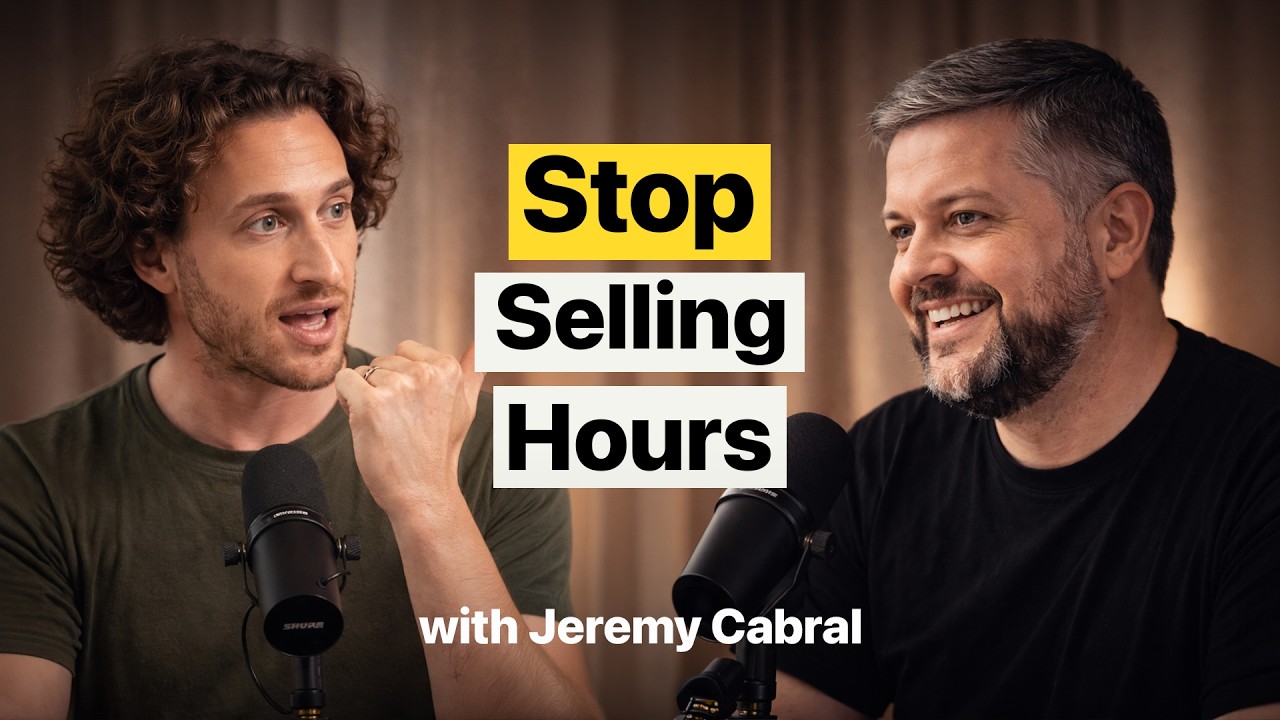
Jeremy Cabral traces his growth mindset back to building websites for his parents' promotional products business. That early curiosity led to search optimisation, a chance exchange with Finder co-founder Fred Schebesta on Twitter, and a 24-hour plan to recover a penalised comparison website. The work became the foundation of a 15-year journey at Finder.
He explains that Finder did not treat SEO as a narrow marketing function. Teams received clear traffic targets, built content against customer demand and hired for raw potential rather than a perfect employment history. The company also gave category leaders meaningful autonomy and profit-and-loss responsibility. That structure helped Finder move quickly when COVID changed consumer behaviour. As travel and other categories collapsed, the team redirected effort into face masks, retail investing and other areas where demand was accelerating.
The episode is equally honest about the personal cost of scale. Jeremy describes raising capital while caring for infant twins and operating at an unsustainable level. A weekly executive coach, Craig Hall, later helped him process difficult decisions and build a healthier leadership practice. Marathon training then became part of the identity shift that followed his departure from Finder.
Much of the second half focuses on AI transformation. Jeremy argues that leaders should begin with a small team of four or five strong operators, let them prove better ways of working, and turn the winners into reusable infrastructure. He cites an agency that moved from minimal AI use to 61 per cent of work within two months by creating an AI-native unit. The aim is not activity for its own sake. Teams should identify where output, cost or speed materially changes.
His advice to founders remains consistent across SEO, AI and new products: launch earlier. A landing page, conversation or rough service can reveal demand before a team spends months building. Confidence comes from direct evidence and repeated application, not from waiting until every uncertainty has disappeared.
Key ideas from the episode
- 1
Hire for potential when the playbook is new
Finder could not recruit from a mature SEO talent pool, so it looked for capable people who could learn quickly. Clear targets and autonomy helped those hires grow with the category.
- 2
Keep resources mobile when demand changes
When COVID disrupted established categories, Finder redirected effort towards face masks and retail investing. The underlying capability stayed useful even as the market moved.
- 3
Start AI change with a small proven team
Jeremy recommends assigning four or five of the strongest people to an AI-native unit. Their job is to prove workflows, measure gains and give the rest of the organisation something credible to adopt.
- 4
Turn experiments into shared infrastructure
A successful AI workflow should become a reusable tool, skill or process rather than remain an individual trick. That is how one person's improvement compounds across a company.
- 5
Measure transformation by business movement
The useful questions are whether AI increases output, reduces cost or removes a constraint. Tool usage alone says little about whether the organisation is performing better.
- 6
Launch before confidence arrives
Jeremy asks founders to sell, publish or test sooner so the market can answer their assumptions. Real demand is more instructive than another internal planning cycle.
Chapters
- 0:01Erin and Dan introduce Jeremy Cabral
- 5:07Learning the web through the HTML Bible
- 10:03The 24-hour plan that opened the Finder door
- 15:53Traffic targets and Finder's SEO formula
- 21:19Redirecting growth during COVID
- 25:25The value of a weekly executive coach
- 30:23Why startups should launch sooner
- 38:21An agency reaches 61 per cent AI adoption
- 43:05Context files, skills and chained agents
- 49:10Direct application builds self-belief
Full transcript
11,485 wordsWelcome to the Shift Podcast, where we have conversations with people that have made a shift in their life that's put them on the path they're on today. I'm Erin.
And I'm Dan, and we hope that these conversations will inspire you to take a shift in your life. We're back.
We're back. I don't even know where we are, episode something or other, but we're—
it's just cranking through.
Really are, and booked out.
And somehow have landed today's guest. Which is, I can't wait to introduce. So our guest today co-founded one of Australia's most recognised comparison platforms. Jeremy Cabral joined finder.com.au in 2009 and spent 16 years as the Chief Operating Officer, helping bootstrap the business to over $100 million in revenue across 23 countries.
Amazing.
Last year, stepped back, not to slow down, but to lean into what's next. And today we talk about the leadership it takes to build something that lasts, And the self-awareness it takes to know when your chapter is done. Jeremy, welcome to the podcast.
Thanks for having me, guys.
I'm so excited.
I am pumped for this one, and I've consumed a lot of content on Jeremy over the last couple of weeks.
Stalker.
I can't wait to dive in. So, mate, thanks for making it work. Appreciate it.
All good. Yes. All the way, all the way from Sydney.
Yeah.
Very special.
Drove up the coast to Byron. We've been hanging out there for the last week or so. I was in Melbourne yesterday and then back here in the GC, so getting it done.
It was awesome. Dan actually sent me a screenshot of some of our content and you'd hit the fire emoji and Dan sent it to me and he was just like, LFG, like what the hell?
I was like, get him on the podcast, get him on the podcast. It looked like a vibe. I was like, yeah, I do want to sit on that couch. Yeah, yeah, sounds fun.
And it's funny, like when you start to dive into someone's background and you start to see all the people that we kind of know as well, like there's so— you've got like that one degree of separation from people that obviously you know in your network and then people that are in my network. And, and yours is.
So yeah, it must be somebody I knew that was on the pod or something like that for me to kind of see it in the first place.
It might have been, uh, Jason White, maybe. So he's the founder of, uh, Marketplacer.
Yeah, I'm not sure, man, but like, honestly, yeah, somebody. Yeah, yeah, yeah, yeah, definitely crossed my feed and I was like, oh cool.
There we go. I also think it's really nice, like we touched on previously, but when, when you are on so many podcast episodes, there tends to be kind of a theme with that. And I think today's conversation about what we're going to unpack with you is, is really Very different to what you've been asked to talk on. Still some similarities, but yeah, I'm excited.
For sure. Which kind of takes us into the first part, going back to where I guess your business journey started. So I've heard that you obviously jumped in and helped your parents out with their business, but take us back there.
Yeah. So I always wanted to earn money at a really young age. I think I first started by becoming a soccer referee at 12 years old. And yeah, so I used to go to the games on a weekend and referee and that was pretty cool. But I remember also figuring out to get a job legally, you have to be 14 years and 9 months old.
That's right.
Yeah, I got this job at Big W doing night fill literally on the dot. And so that was cool. And just most of the money went into Timezone, literally.
Yeah.
A Porto and Timezone with my mates. I literally had the top score for Time Crisis 2 across all of Sydney.
All of Sydney?
All of Sydney. I went to the city, Manly. Me and my mate would just go there and just literally been the number one players.
That's awesome.
So, like, proper addicted. But yeah, so around that time as well, I found out about, like, I think randomly the earliest example I can think of was like watching Oprah with my mum, which like, I don't know how I got the kind of inspiration, but I wanted to start a bath bombs business.
Okay.
It was like so random. And like, it's like, Mum, I want to start a business making bath bombs and selling bath bombs. And she's like, Sure. Like, if you want to do that. And then I was like, you know, fixing lawnmowers and, you know, doing that. But around that time, I found out about getting an ABN and registering a business. Somehow after like, I was pretty intense as a kid, I think I'd kind of tell my mum every day, like multiple times a day, like, I want this thing, I want this thing. Anyways, convinced her to let me get an ABN and—
How old were you at that stage?
I don't know exactly. I'd have to check back. Because I probably was doing some work with my own company pre-ABN as well. But I remember there's a supplier of computer parts in Parramatta in Sydney that required me to have an ABN to get wholesale pricing.
Yeah.
And I was like, oh man, I need an ABN. It was Altec Computers actually. And yeah, so got this ABN, started buying wholesale parts and basically building computers and selling them to my mates, my mates' families and whatever, but also for my teachers. And yeah, I was like building these computers. I think I was making about $200 per computer that I built.
How good.
Yeah, it was pretty good. I was like probably, I don't know, 15 or 16 or something.
How do you learn that stuff at that age? Is it just like curiosity or?
I was pretty lucky because my older brother, he's about 6, 7 years older than me. All his mates were really nerdy. And so I'd like, they'd come over our house and we'd have these things called like a LAN party where it's like everyone would bring their computer and like play games, but like all weekend and through the night. And they'd often have to kind of modify their computers to play the latest games.
Sure.
So yeah, through observation, I think I just saw how computers were built, like, you know, have like the CPU and the heatsink and the motherboard and all these bits and pieces. And, you know, I kind of figured it out through observation. And then, yeah, kind of taught my mates as well. So I just, I think since that moment, I kind of really was just desperate to launch a company. And I started learning about building websites. 'Cause I was walking past this shop window every Thursday night. I think it was Dick Smith Electronics or Tandy Electronics, one of those stores, like had this book called the HTML Bible. It was like 1,000 pages long. And yeah, I convinced my mum to buy it for me and I read it like 3 or 4 times over, knew how to build a website but had no reason to. And then built this website on the Sydney 2000 Olympics, put it on a floppy disk, gave it to my sister and she basically got nearly, I think, 100% for like her assignment, her uni assignment. But when I really cut my teeth into business was taking, I guess, the combination of skills I learnt there and helping my parents launch their promotional products company. And I had no idea what promotional products were. My dad had spent a couple of weeks up in the family room watching the cricket after leaving his job. And I was just like, something's wrong with Dad. He's not talking much. And then he comes down to the living room, is like, I want to start a company selling merchandise. I was like, I don't know if that's a thing. Like, you know, who buys this stuff? Like, and I was like really worried. And so, I kind of just leant into that opportunity to help them build the website, the accounting system, the computer, like every bit and piece of that company at a pretty young age. And yeah, just kind of loved the fact that I could actually apply myself in a real way that helped the family. So, yeah, that's the beginning.
How good. What a start.
That's really like, it's crazy when you think you've got these kids with these entrepreneurial minds and so many people fall into like, Oh, they're just kids, you know, the lemonade stand at the front and like buying and selling. And I used to, in my street, go and steal everybody's newspaper from there, the free newspaper from their letterbox, and sell it back to them when they got home from work.
That's so good.
I was like, oh, that'll be $2. They're like, it's free. But they all paid me for them.
That's amazing.
Yeah, that's interesting.
So good. And so, so once you finish up helping, how long did you spend helping your folks with their business?
That started in 2001. 25 years. Yeah, 2001. And then I kind of probably spent about 7 years or so helping them out. 8 years actually, through to '09 where ultimately co-founded Finder.
Which is the part I want to get to now is how you find yourself there because I've heard the story, but I can't wait to hear in real person.
Yeah. So, I had through uni been— at uni, you get like these discounts on things like magazine subscriptions and all this sort of stuff. So, I had a subscription to Marketing Magazine and another one called ADMA, which is like Australian Direct Marketers Association or something like that. So, yeah, I had both mags and I remember Fred had a column in the back of Marketing Magazine and he'd often talk about digital marketing as a topic. And I had through uni, I did a few electives or a sub-major or whatever they called it on e-marketing, so electronic marketing, whatever. And in that process, I was hanging out in these forums and talking to some honestly legends in marketing who were engaging in this forum with me. I don't think they knew how old I was, but I was like, hey, what do you think about this definition and that definition? Because it was early in SEO and no one really had agreed terminology for things. And so anyway, I did up this report, which is probably tens of thousands of words long. So I had really strong academic knowledge in SEO and I'd applied that inside my parents' company and I'd stepped out to work with a business that was developing the CMS for my parents' company as well and getting some good results there. But I felt that the frontier to really battle and kind of win hard was in the most competitive space where the most legal, I guess, competitive spaces. There's a lot of kind of black hat SEO type things, online gambling, all this stuff where there's really interesting stuff happening. But for me, the online finance space I thought was a really good space to compete. You've got big banks, huge budgets, and a few players there. And so anyway, Fred was writing about this sort of stuff and on Twitter he put out a tweet saying, should I get the Nokia N95 or the iPhone? And I'd just bought the iPhone, I think a week or two after it had just launched in Australia. And I was like, dude, this is a game changer. Like, I'd had smartphones up until that point. I think the iMate K Jam and all these like random smartphones, they're all rubbish.
Yeah.
And then, yeah, the iPhone was like actually game changing. My mate had an iPod, I think, 6 months. No, no, sorry, the iPhone Wi-Fi only. And so I'd kind of seen the device, but just, he bought it from Hong Kong or something like that. So I was like, this is insane. When you could buy it in Australia and use it on a 3G network, it was like, this is it.
Yeah.
So anyway, said, get the iPhone, that's where it's at. Then I think we either caught up on LinkedIn over DMs or something, met at this conference, and a couple of minutes into this conversation, he was initially talking about, I've got these 2 agencies, I'd love to get you involved. And he'd actually sold those 2 agencies to a listed group. And he's like, you know what, screw that. Let's talk about this new thing that I'm doing, which is at the time 27 Experiments. one of which was Credit Card Finder. And he's like, look, I've got this issue with this website. If you can fix it, I'll pay you a bounty for basically getting it done. And yeah, I'll give you a stake in the company. And so worked at that. I remember still at uni and I spent that— and he said, you got 24 hours to give me a plan. I was like, all right. Didn't sleep. Literally shipped the plan early that morning. Then I had to drive to uni. I remember Sleeping on the side of the road on the highway because I was just that exhausted. I was like, I can't keep driving. So I did that. He saw the plan. We implemented the stuff that we needed to do and the site came back 2 weeks later. He calls me up and I remember I was driving up, driving in the city behind in one of the laneways and he's like, hey mate, what's your BSB and account number? I was like, what do you mean? He was like, the website's back. I want to pay your bounty. I was like, all right, game on.
Okay.
This guy's legit. And yeah, I guess the rest is just history. We just kind of met through that moment. I met Frank soon after that. But yeah, it was just about grabbing these experiments and trying to grow these businesses. And then Credit Card Finder became the winning kind of horse and we just kind of backed it.
So what size business was it when you joined? Quite fresh, right?
Yeah. So the agency, so the 2 agencies, they had a couple of interns that were kind of working on the website. And then when I joined, there was also one other guy who was working on it, kind of. And there was like a couple months later he had left. So it was pretty much, I don't know how to describe it. Fred was kind of in and out because he was still in the earnout period. Frank as well. But yeah, it was kind of a mix of us.
Yeah.
But at the time, really a few of us. And then yeah, we just kind of started hiring once we started seeing the numbers week after week just climbing.
Yeah.
And it became a bit of a rocket ship.
Rocket ship.
Yeah, actually.
Yeah.
And so for anyone listening, what is finder.com.au if they don't know?
So Finder, I guess what we solved for was the fact when people research online, you have all these tabs open and comparing products became difficult. You'd have to remember what was in each tab, write it down and whatever. We basically went to all of the websites out there, all the banks, all the insurers, consolidated all that information to these tables, comparison tables. Make it really easy for people to sort and filter through those products. And ultimately from that, you can choose a product and save some money by switching.
Yeah.
So comparison business, there's a few in Australia, but we were definitely one of the early ones. And yeah, we launched in Australia and then we went into a whole bunch of markets. Probably 2015 is when we did that. We bought the .com, which is a bit of a funny story as well. But yeah, just kind of kept repeating the same pattern at first with credit cards and personal loans. insurances, telco, and just kept applying the same formula from one niche to the next.
Yeah.
So good.
So as this business starts to take off on a rocket ship, how do you start building that team structure out? Because obviously it went to the moon, this business, right? So what sort of structure did you have to put around it to make sure you could keep sustaining that growth?
Yeah. So interestingly, in the beginning, it was almost no structure purposely.
Okay.
So it wasn't just this chaos, it was like managed chaos. We were like, okay, so how do you give people absolute autonomy, skin in the game to try and grow the business? And we had this model where everybody was a business manager. So if you ran credit cards, you were totally responsible for the P&L of that part of the business. Yep.
Right.
How much went into the kind of investment into the new content and links each month, all the pieces that went into running it. And we had probably about, I think at one point, 10 or 12 people in parallel, all building these verticals they were responsible for. So they were the business managers, which became the publisher title.
Okay.
And besides that, we had people in client services, ultimately working on partnerships, some early engineering hires as well. So helping us build the website and keep it up. It was like we often have these issues where the website would go down. So we finally hired some engineers, which really helped out a lot. But yeah, the structure, I guess, was designed for autonomy. And then eventually when we're like, you know what, we have to kind of have some level of consolidation here. Every site looked different. It was just a bit insane. And then we started bringing them all together and interlinking them a little bit more and really paying more attention to brand. And that's when the structure started shifting.
Because you got up to what, 500 employees or something?
How big was it? Yeah, nearly 600 at the peak. I think it was like 597 or something like that, or 612, the number. A lot of people.
And across different markets too.
Yeah. I remember going into the lift and I go like, not knowing that the person in the lift was a Finder employee with me. And I was like, oh, hey. And they're like, yeah, I kind of know you. I was like, oh shit, I'm so sorry. I haven't met you before. I'm Jeremy. Nice to meet you.
What floor are you off to? Yours?
And the problem was because I was travelling so much, nearly half the year at times, I'd be going around all the offices and people would onboard and I just wouldn't even know, wouldn't see their face. Um, there was one period I was overseas for nearly 9 months, and then coming back, we'd hired a lot of people through that time, and I just literally probably dozens of people I'd never met. So yeah, it's just like took a couple of weeks to really acclimatize.
Yeah.
And so did you guys have the vision that it was going to do what it did, or was there one particular moment where you sat in a boardroom together and went, shit, we need to figure this out because it's going to the moon?
Look, I think it's probably 2 or 3 moments where I distinctly remember us setting this big ambition. Initially, it was like focus on the formula. It's like, I think if we do this thing, it's going to crush it. And then when we cracked the formula, writing these pages, publishing them, and seeing a page go from position 5 to position 1, literally every time you did the action. I remember at one point we literally ranked number 1 for every credit card related term in Australia. credit card comparison, best credit cards, compare credit cards, low interest credit cards, just everything you typed in, Credit Card Finder was number one. And we started applying the same formula to all the other verticals. So that kind of, the initial thing was more about the kind of get the spark going. And then we started just seeing the traffic tick up and we're like, imagine when you get to 100,000 visits a month. And we're like, that's crazy. At the time we're probably doing like 18,000 visits. And then hitting that, we're like, that's insane. Imagine you get to 200,000. And we kind of set these targets and then you just kind of progressively work at the inputs and just see it happen. The million visits one was a really big one as well. But I don't know, as a business, I think we got really good at predicting revenue and traffic and just isolating the required investments to make that a reality, actually. So yeah, I just think these— we never really said we're going to go and build the biggest comparison platform in Australia.
Sure.
But we certainly had goals which would equate to that being possible, right?
Yeah.
And weirdly, we never really looked at our competition. Like, we kind of— in the beginning we did, and then we just kind of— when we had the formula, it was more like we just need to focus inwards and like figure out how to scale this thing. Yeah, yeah, totally.
And so when you, when you look at building out that team, or, or realizing that you have to build out because of the scale, is there something internally for you or you and your partners that go, we'll, we'll build a team, they must have X, Y, and Z? Like, yeah, they have to be a particular person obviously in their skill set, but what do they have to have internally for them to be a part of your team?
Yeah, it's interesting because it is mostly internal, like especially in the early days. We didn't hire literally any— like if you had experience doing SEO, we didn't hire you even though we were really good at it. We just didn't want others that had learned a playbook that we felt was just outdated and the wrong way of doing things. So we hired for potential and that was really about mindset or kind of people that hadn't been given opportunity before. They were hardworking, like persistent, relentless, you know, in terms of their pursuit of a goal. And so that was more like about the characteristics of that individual, often graduates as well, like no prior experience.
Right.
And so we'd bring them in and kind of just teach them a method and a way of doing, you know, kind of what we felt was important for internet marketing. And yeah, just honestly, that repeatable playbook became what drove the growth. It's kind of similar, like Google had this story where I think it was Marissa Mayer, I think that was the person that initially built out the associate product manager function because there was no one you could hire in the industry when they're trying to build out the AdWords team. You can go like, I'm going to hire somebody that's monetized search in this way before. Google was inventing the method.
Yeah.
And I felt that we were doing the same thing in SEO and content in Australia. So we had to find more people with potential that we thought we could train versus finding people with prior experience. So that was the key difference for us.
Yeah. Great.
And that continued all the way through as you were scaling up to 500+ people, 600+ people?
I think there were moments where we realised we needed some specialisation. Let's take content, for example. We were really good at scaling out the production of content, but when it came to quality, we're like, we need high quality editorial here. So we started hiring people from really well-known publications in tech and across other industries as well, like property and so on. And I think that became a way for us to level up the content we're producing. So yeah, I would say it took a while before we started recognising that we actually need to hire people with direct experience in the industry that we're playing in. In some ways, I think it was part of the special sauce as well. It was not anyone coming to the table with a textbook. It was like, oh, here's how we did it before, here's what works or whatever. It was more like we're figuring it out together. And we created our own kind of ingredients and formula to get it done.
Building the plane whilst trying to fly it.
Yeah, exactly.
Exactly. Did you have your girls at this stage, your family?
No, no, no. My kids were born in 2020.
I was just thinking with that much travel and being in a business like that, that's just going nuts, it would be so hard to be a balanced father, but also having been there for your kids as well as growing a business of that size.
Yeah, no, definitely. I mean, there's different milestones, right? So in 2020, obviously COVID had hit and it was pretty gnarly. We were trying to figure out things. Up until that point, Finder was already a flexible business in the sense that we had a lot of people work from home and kind of around the clock. It was already remote, many offices around the world. The real challenge was when we went into the raise. For me, that just pushed me to, I would say, beyond my limits where I was working 7 days a week, like some days sleeping for 3 hours sort of thing. You know, we left the country July 2021 and spent 9 months overseas. You know, my girls were 13 months old, went over there and yeah, it was just insane. Like just so much like effort to get, you know, raise the capital in the end and just required everything and more.
It was absolutely brutal. Yeah.
Did you find that the business took a bit of a dip during COVID or did you find that you guys were pretty steady given the fact that it was around searching for better financial options with people not being able to work? And like, how did you find that?
Yeah, so I would have thought as well, and I think our initial reaction was like, oh, this is going to be great for us. There's going to be a whole heap of people comparing financial products. And there were. The issue was it created so much demand for the banks, they actually stopped advertising. They didn't need to. So many customers are coming directly to them to switch and kind of, um, there's just no need to advertise on a comparison website. So yeah, we saw a massive dip in our credit products. But what actually happened in that period was, I remember we had this kind of conversation, Fred, Frank and I, and we're like starting to predict what might happen through the next few months. And there was some signal from something totally random. Like in December 2019, we had these bushfires in New South Wales. And I remember we had these pages on face masks for smoke inhalation. And in February, I was just coming back from New York and I was like just Thankfully got into Australia before the lockdown and everything. But I started seeing this pattern where there's an increase in traffic to these face masks on the Finder website. I was like, this makes no sense. Why is that N95 mask page going so nuts? I was like, people are buying these masks to try and stop, you know, kind of the spread of germs and whatever. So shifting the kind of intent of the page to be not about smoke inhalation and just a page about where to buy face masks, we started seeing people buy this face mask and this is pretty crazy. And a whole bunch of things like that were quite similar at the time. So we were like, okay, what else is going to go on here? And so we saw an absolute boom in retail investing that took off and we built this technology which allowed us to expand into retail investing really efficiently. So anybody that wasn't technical inside Finder could actually build a page on where to buy Tesla shares or where to buy Boeing or whatever. So yeah, we saw these categories just take off. And we actually made an enormous amount of money through that period of time. It was despite the fact that the core of the business had gone down a bit, we actually had exponential growth. So it was pretty remarkable.
Just pivoting into the current times.
Yeah, exactly.
There you go. And now, which is the part I'm looking forward to getting into, which is now you stepped away. What made you make that decision to step away?
Yeah, look, I think for me, a couple of years prior, I'd been chatting to my coach and for me, we're going back to the early days of entrepreneurship for myself. And I had always been learning through observation, learning through doing. And I felt that in my role, which was, had a lot of people I was responsible for in the company, literally hundreds kind of in my orgs that I managed, I couldn't apply myself in the way that I knew I enjoyed and did my best. So the reactive moments like in March 2020 or whenever COVID hit, I was leading off in the kind of pivots for the business. And I really wanted to pivot hard into AI, and I felt that the timing was wrong for the company. And so, yeah, I kind of felt this itch and this kind of need to really go all in on AI. And then probably a year out from ultimately leaving the business, I was randomly at this punk concert. My wife and kids were overseas, and I was kind of reconnecting with my younger self and just felt the energy of that. A cool friend of mine, Taryn Williams, she had invited me to this dinner that night and just started this ball rolling of meeting really interesting people and I just felt really high energy from this group of people I was hanging out with. And yeah, just got to this point where I felt that for me to just really explore what was possible with AI, I needed to be leaving the business. And yeah, that was a tough decision obviously, because I really love Finder and the company that we built, special people. And I still support the business today as a special advisor to the board. But yeah, It's been absolutely remarkable just seeing what I've been able to do in the last 6 months and just going all in is— yeah, it's pretty wild.
I have a real quick question on that because we, we inspire our listeners to take a shift in their life. And now a lot of our listeners would be, would be hearing you, looking at you and seeing you as a very successful person, and why on earth would he need a coach? So what, what is it that you felt within to bounce off someone else that was— that could have, you know, catapulted you into a different level of what you're capable of?
Yeah, so the way I see coaching is like personal training. It's like you can go to the gym yourself, but are you going to maximise every single session? And you're going to have someone that's pushing you to the absolute limit every time? Probably not. Some people do and they're great.
They go—
like, my wife's excellent, you know. She was a personal trainer, to be fair, so maybe she's like, you know, kind of the exception to the rule. But the way I see it is like you've got to have this constant always-on someone to keep you accountable and challenge you even when you feel like you don't need it. So for me, my coach, like, I actually see him weekly, um, and we get through moments in time where it was kind of less reactive and like less about the situation or problem I was trying to solve for and more about curiosity and going, well, how do you think about this? And then I'd actually start almost questioning him on things like, how did you kind of arrive to becoming a coach? And tell me about your journey.
Yeah.
Kind of turn the table a little bit, which is interesting. Um, and for me, I just think Without it, I don't know if I'd be the person I am. I honestly feel that I've been able to transform on every single level by having a coach, physically, spiritually, emotionally, and mentally.
That's amazing.
And a big shout out to Craig Hall, my coach in Sydney. He's just someone that's been there for nearly 8 years now, actually supporting me across every aspect of my life. Very uniquely, so Fred initially introduced me to Craig and I started seeing him. Then I said, Frank, you've got to see him as well. So the 3 of us started seeing him, then our entire executive team started seeing him, then all the special talent inside Finder.
He's got no other clients, just them.
Then my wife, my best friend, literally for me, I wanted to surround myself with this accountability circle, people that would obviously go and see them for their own reason. But what I started finding in my friendship circle was that people started using his kind of lexicon and his words for kind of quizzing me on things. I'm like, wait, that sounds like Craig. So I couldn't, it was amazing having that kind of group of people around you, they're all challenging themselves to be their best version of themselves all the time. So yeah, it's highly effective.
So good. I was going to ask the question around when you stepped away from Finder and now doing what you're doing, because when I stepped away from my last business, I decided all my identity was tied up to it and it took me probably a good 6 months, I reckon, to actually find out who I was again and reconnecting. And how was that for you?
Interestingly, I had this crazy idea to run a marathon. So I decided, well, I'd say I was taunted into running a marathon. December the year prior, I had gone to Chile. A mate of mine on Twitter was like, you need to run this marathon, blah, blah, blah. Because I'd done some sleep hacking.
Yep.
And one of the things on there was like, I'm not drinking alcohol or something like that. And he's like, boo, in response. And then he's like, yeah, I'm doing the Rio Marathon in Brazil. And basically said I should do it as well. Anyways, so agreed to do this, go into this cafe in Sydney at first, bump into the head coach of the Sydney Marathon. Yeah, then went to Chile. this doctor over there was like, you can't run a marathon, you're gonna have a heart attack, basically. And I was like, get pretty fired up when people say they can't do a thing. So I came back to Sydney, did a calcium score test after a few months of training, because I'm like, no point of kind of doing the test if I've really got no chance. So I was like run walking 2 kilometres, literally couldn't even run a 2K run. But yeah, I think having this quest and this kind of physically gruelling goal that was pretty consuming throughout the period of time as I was preparing to transition out of Finder meant that I was already going through this process of an identity change.
Cool.
For me, I was like, I can do anything. There's nothing that's impossible. And I feel like getting to this position where I could just absolutely back myself and have the mental strength and resilience to kind of ultimately leave the business, I think it was certainly a big thing for me to kind of have that confidence going into that moment. It was almost a crescendo moment where I ran the marathon and a week later I think I announced that I was leaving the business. So it was like it all came together and yeah, that was pretty cool.
And how did your family, your wife and stuff take to the transition?
Yeah, I mean, I think initially she was worried. What is he going to do? Yeah. And I was like, yeah, this is kind of retirement for me. And then very, I think it was days before, I literally was like, I'm not going to be able to stop. We'd booked this trip to Fiji and I was nervous to take 4 days off and I was like, no, I can't do this. And then I booked it and I was like, this is insane. The next night extended the trip and just came back. And I think through just so much inbound interest and people wanting to work with me, I just was having really cool conversations with awesome companies. I'd initially agreed to mentor these startups through Startmate. became really connected to those companies as well. And so I started, yeah, doing a bit of coaching and stuff like that as well. Really enjoyed it. But I think it was just the momentum of like helping people that really, really fired me up, and I just feel I couldn't stop. And so that, yeah, here I am probably 6 months later, nothing's too different. I just love helping people. It's just, um, all different shapes and sizes of companies at this point.
So good.
What's the one thing that you— or if there's— I'm sure there's more than one, but the real standout thing that you'd love helping them on? Is it the AI within the business, or is it really around Structured vision? What is it for you?
I think it's about confidence. And what I mean by that is like people overthink what it takes to win and what it takes to kind of get traction. Like when I meet a startup or any company, it's like people overcomplicate the solution. And I think that you can get so much signal just by doing it like immediately versus overthinking it, overplanning. So yeah, I just finished coaching some startups for the last 6 weeks. And each and every one of them had a different transformation, but all of them basically leant into being more uncomfortable and like normalising that. So like posting on LinkedIn daily or kind of going to Reddit and trying to promote their companies, like, and they're actually all having massive success. So yeah, for me it was really more a mindset shift and I love challenging people to kind of push for more and just start. So yeah.
It's really interesting 'cause we spoke with Wade Tiller, co-founder of Hard Fizz, and he has a philosophy, if it's 70% good to go, go.
100%.
It's never going to be perfect and you're just going to have to jump and land and get the feedback. So yeah, it's really interesting that you have that same philosophy.
Yeah.
Now we're going to dive into a little bit of AI because I was telling Erin that I've downloaded your playbooks. I've literally, anytime you get one out for free, I'm like commenting, buddy, send it to me and I'm implementing.
Nice.
And I also feel that same way of like when you get back into that learning mode, It's just blowing my mind what's actually possible. And it also gets me thinking about, shit, what does this mean for leadership moving forward as well? How's it going to disrupt that space? And if there's anyone that's going to probably give me some really good insights, it's probably you, mate, because you're also throwing yourself into this space headfirst by what I'm watching and seeing.
So yeah, I mean, on the way here, I literally was voice typing and coding as I was coming through. Now I've got my laptop plugged in in the corner. I think that as a leader right now, it's the most important time in history probably.
Yep.
Where I don't think it's about kind of from afar kind of expecting your team to make the shift and figure out what to do. It's about rolling up your sleeves and really getting hands-on. As a founder especially, it's about reinventing your company and really challenging what it took to get you to this point and how your company needs to change to still remain relevant in this massively shifting world. So Yeah, I think from my standpoint, everybody needs upskill. It's not about just expecting the technical people in your company to figure it out. And there's no one better than a leader or a founder to kind of step in and really try and figure it out themselves. I think it challenges what you think was able to be done with technology and how complicated it is. Honestly, once you get started, you realise you truly can build anything you want at this point. So given that, if coding is becoming commoditised, How does your company then compete? Where do you need to over-index as a business to be successful? And my answer to that is I don't think anyone can predict the future. All they can do right now is just remain a little bit faster than your competitors and be adapting more quickly than them. It's more a cultural shift. And I think that's what it takes to be winning at this point.
Yeah. A lot of the leaders that I talk to, they're playing with multiple different tools, but they're also, I think, getting caught up too much in the the excitement of playing with the tool rather than working out a way that how can this tool actually help my business be more efficient or add some value, make us faster, whatever it might be. Do you find that as well with just people getting so excited about the tool and even just chatting with a chatbot? It's like, well, that's just the base level. Get it to do something for you.
And look, I'm cool with that right now because there's moments in Finder's history where we do things that we probably shouldn't have from a productivity standpoint or kind of how effective was that idea? But I think that right now, upskilling and kind of being more aware, I'm cool with that. But if you're a founder and you're spending 12 hours building something you could buy for $50 on a monthly subscription, I don't think that's a great use of time ongoing. Don't go and replace all your $50 subscriptions with these kind of 12-hour built tools that you have to maintain and whatever. There's still a place for paying somebody else to solve the problem for you.
Sure.
So yeah, but an interesting story on our side, Had this moment in time where I remember I came outside on the street and everybody was swiping their phones like this and Pokémon Go had just come out.
I thought it was Tinder.
Yeah, that's the other way.
Yeah.
So Pokémon Go had just come out and I was like, Fred, come out to the street, this is insane. And just saw all these people swiping to catch Pokémon. And I was like, I think I can do something here where I help people find where all the Pokémon are, which is kind of insane. And we did this and we basically got I think over the space of 2 months, about 7.6 million visits to our website, building like a Pokémon Go location page by major cities around the world. What we learnt through that was how to capitalise on Reddit, Facebook groups, data scraping at scale, all these sort of things. And it became the basis through which we were able to kind of dominate other opportunities like cryptocurrency exchange comparison. The technology we built in that moment was actually usable in another context. Yeah, for sure. So, for me, similar to this sort of situation here is like, Sure, 12 hours building that tool is probably not worth it, but then you know about what's possible. You can start hiring the right talent. You can start questioning whether or not you pay for something or you build it yourself. And so yeah, I'm cool with it for the moment in terms of people upskilling. But I think it's more taking a step back as well and just getting real about what you should really focus your time on.
Is there any particular area from a leadership point of view, say you've got a team of 10 direct reports and there might be layers below that, is there any area that you would say to a leader, Hey, this is probably an area that you should be looking at.
I mean, honestly, most areas have an opportunity to apply AI, if not all. The first step for me is changing the way you work. I know we're discussing just before this, I don't know if I should use Terminal or the desktop app. I tell myself this is like, I will not do a task unless I'm starting from the Terminal outwards. Not because of Terminal versus the app, but it's like everything I do needs to be building infrastructure. using AI so the next time I do it, it takes a fraction of the time. So it might be like a 3 or 4-hour buildup to kind of build an agent or build something that's kind of reusable. But then the next time I want to do it, it's just so scalable. So I guess the way of working needs to shift first and foremost. So it's a foundational skill that every single area of your business needs to start levelling up, skilling up. But then I think for me, the same way you'd kind of think about technology in the past is like, Where if I applied focus and energy right now and increased the output or reduced the cost, could I really move the needle for my company? If that looks like sales, if it looks like marketing, customer service, each company's different. It's more about isolating where you believe regardless of the tech, AI or anything else, if you applied energy and effort towards that problem, you could get a great result. And there's always going to be some level of AI that can be adopted into that particular problem.
For sure. Yeah, absolutely.
And what about— I spoke to one of our previous guests who's also leaning into AI a lot, and I am really interested to know what AI will do to collaboration, like within teams. You know, the old school boardroom meeting where there's so much experience in the room, older people, younger people, tech people, old school notebooks and things like that. And what, what's your take on, on the collaboration piece?
Yeah, look, I think collaboration is still going to be needed, but it's going to be different. I believe that humans need to come together right now to ideate and be more creative than ever. And so instead of spending time to think about how we are all going to coordinate and we have to have this meeting about that thing and whatever, I think a lot of that's going to go away because agents are going to do a heap of the work. But for me, it's like, what do you need to over-index on as a company? And for me, one of the things is absolutely creativity. lateral thinking and trying to find ways to apply this new technology in ways that your competitors won't. And as I said, I think the key piece is about moving more quickly than them and applying it and adapting much more quickly than them. So yeah, I was in a board meeting yesterday and we spent, it was more than, it was like a long day. It was like a workshop and it was probably like 7 or 8 hours straight.
Wow.
But what we were ultimately doing is trying to predict where things were going. And it was less about like, having an answer. It's more about building a capability. So carving out a team inside your business as a pod that's going to be innovating and working hard. This particular company went from 2 months ago in the last board meeting, no AI usage internally or very little, to now they've got a pod that's virtually, it's like 61% through building an AI-native version of their agency. So an AI-native version of their agency that can do nearly everything that they were doing humanly and manually before. So it's pretty remarkable when you create the time and space. They carved out literally the best talent inside the business, about 4 or 5 people, and been able to, you know, ship this incredible end-to-end pipeline in, you know, literally a matter of weeks.
It's crazy how fast things are moving.
And it's— it is really wild. What about, say for example, we— one of our listeners is a leader within a business of, say, 350 staff. Um, they're kind— they've got a CEO, COO that's quite old school, doesn't want to lean into AI too much, what can they do, um, you know, or to start to look at for their own department to try and move the needle with, with the way that they lead their people? And to that point too, if anyone's listening that has never lent into AI, what would they start with to even start to learn?
I think a key rule is, you know, don't ask for permission, just beg for forgiveness.
Did you know me when I was a salesperson?
Typical entrepreneur speaking.
No, honestly, it's like I think at this point, don't wait for somebody to give you the tools you need. Pay for them with your own personal card, whatever it is, prove it out yourself.
Yeah.
And I think that's going to create enough noise internally where people are just confused, like, how did this person do this thing? Pay for the workshop, go to the free thing, whatever. Just spend the time yourself and don't wait for the company to solve it for you. I do think that for some of those CEOs, they actually really want to know the answer, but don't want to admit that they don't know the answer. So I think helping them feel safe and kind of maybe pulling them aside saying, hey, I know you've been seeing a lot of this AI stuff. Did you want to go along to— I met this really cool person, maybe they can give us a few tips and tricks. And from what I've heard and the CEOs I've been engaging with, often they're like, hey, do you mind installing Claude Code for me and teach me what to do? Or OpenCLAW and whatever, where they have technical staff internally that could actually do that for them.
Yeah.
So I would argue that kind of creating a safe place for them to be able to adopt the AI themselves is really one of the first moves as well. But yeah, honestly, there's no one size fits all answer. But when I've applied change inside my business, inside Finder in the past, was typically trying to find internal champions, people that are in favour of this thing or willing to try something new and just creating a bit of a group with them. And then you can each individually prove out some ideas that work inside your department.
Yeah.
And, um, yeah, work together with your colleagues. I think it's, it's definitely a time where collaboration just really matters.
And if people have never, have never done anything, would, would you recommend starting with ChatGPT to feel comfortable, or is there now another platform that you think that they should start to, to learn a bit, a little bit about how AI can help them and assist them?
Yeah, so ChatGPT is great. It's just a fancier Google in a lot of ways. Like, Google's like, you know, pretty, um, similar to ChatGPT at this point with AI mode and so on. I think the key app is Claude. Claude, you know, literally switching— you can switch between the tabs in Claude: chat, co-work, and code. And they're very different. So chat is like ChatGPT, but co-work is effectively a canvas where you can create documents, you can connect tools and other apps you work with day to day, and it actually becomes like a workspace where you can basically bring together all these tools and connectors to produce an enriched document which otherwise would have taken probably days to do. So it's pretty remarkable. Uh, definitely consider looking at the Claude desktop app, which has the ability to switch between all of them. If you're brave enough, go for Claude Code. You can actually build documents through Claude Code as well and have this concept of connectors and MCPs and so on as well. So it's like a— if you were to build, you know, choose one app, I'd go with Claude and just progressively move across using Claude Code.
Yeah, yeah.
I find Claude also, um, more honest. Like, ChatGPT is really friendly. Like, we've spoken about it before when You know, all this AI is great. When does it fire you because you can't do the things that we've asked you to keep doing? And ChatGPT's very much like, great idea, good job, wow. And Claude's like, I see where you're going, but it could be better.
Yeah, yeah, yeah. I didn't realize how detailed you could set Claude up until I got one of your playbooks. So maybe share a little bit around that because that blew my mind around. I thought it was good and I'm using it. I'm like, this is heaps better than any other tool I used. And then got your playbook. And put the right instructions in. I started putting skills into it and then it's a game changer. It's heaps better.
Yeah, it's pretty wicked. So there's a few things you can set up initially. I think one of the things is about just context around who you are. When you install Claude, it has no idea. So you've got to give it this context. You can build an about markdown file and that's kind of important. I think one that's around your voice, so how you speak and naturally sounding like you. You can actually grab a transcript from a prior meeting you've done, ideally like 30 minutes or more of transcribed audio. And I think that's effective. And then as you mentioned, the skills as well. So I think with skills, once you've figured out that you can do something using Claude, it's about how do you make that action repeatable? So it's easy to kind of queue up whenever you want to do that thing again. So when you've had a conversation with Claude, you're like, hey, this is something I want to do ongoing. Can you help me turn it into a skill? It'll literally go and construct that skill for you. you can upload into your Claude ongoing, you can kind of call on that. But now what's really interesting is you can start chaining these skills together and ultimately build agents that can be hosted as well. So Claude just launched something called managed agents overnight, about 12 hours ago. I saw that. So yeah, I'll definitely be building a guide on that one. But that's a massive game changer because a lot of people are trying to figure out how do I run my agents 24/7? And Open Claude made it super easy to do that. But now Claude's got a challenger to that as well. So Yeah, pretty exciting.
Awesome.
I can't even understand where my face is. I'm literally like, oh my God. And I'm very much in the hospitality space, so, you know, that human element, that welcome, that how, how we can make you feel in that luxury space as well. And I, and I train staff and say to them, like, what you can do as a human and the way you can make someone feel, AI will never be able to replicate. And then here I am going, oh my God, could it? But it's not like— it's really important about And the more people I speak to, the more, especially around the customer service element, is people are getting shittier and shittier. That I only order through a QR code, I barely see someone, I don't even see them to pay. So, I think that there is a huge human element part that we need to bring back.
Totally. And I think that's, yeah, bringing that human element into your AI is really when you're going to have the edge. So, as I said, you know, you're, you're voice, like your kind of, you know, way you approach things. Like I always say, like, you know, with ChatGPT, say if you're producing content, a lot of people just copy paste straight out of ChatGPT onto their website and it's probably so obvious. Yeah, it's so obvious, but it probably is better written than what you've done yourself in the past. Yeah, you need to tell yourself that's now 1 out of 10. The quality we're aiming for with 10 out of 10 is going to have to be massively different— differentiated. You need to find ways to incorporate more proprietary data, more uniqueness into your content. a unique angle, research, whatever it might be to get to 10 out of 10.
Sure.
So yeah, I think the more human you can kind of, more context and human context you can bring into your AI, the better results you'll get.
Yeah.
Now shifting out of business for a second. So I saw a post you put up about your girls and about the new season of life for you is about spending time with your kids. So what does that look like for you now?
Well, yeah, I mean, we're all up here on the Gold Coast at the moment. They're enjoying the pool as we speak. I think it goes through moments where I can be way more available and that's what my preference is. But to be fair, in the last kind of few weeks we're talking about AI is consuming. It's honestly eating up so many sleep cycles just trying to keep up and stay up to date.
Yep.
But yeah, I think for me the key part is having optionality. So it's like I can not do that meeting. I can kind of choose when I start my day. This morning was quite nice. I didn't really have a meeting until 10:30, 11. So chilling out this morning was great. They got, you know, they're on school holidays right now. So I think trying to make the most of that, you know, at this point in time. But yeah, I don't get it always right, but certainly for me is like something I need to work on more. But yeah, I kind of am trying to build a lifestyle and kind of the optionality that allows me to put them first.
For sure.
I think that, you know, it's so important and you get so much out of seeing them grow and they're getting pretty clever now, nearly turning 6. So great little sense of humour.
They'll be in AI before you know it.
Oh yeah, they already talk to ChatGPT. That's awesome. I love it.
Spending time with kids is so important. Brings so much energy, fills you up and makes all the work that you do, whether it's building businesses or whatever, all that much, it's worth that much more when you can spend that time with your kids.
Yeah, totally. It's like my girls now think they understand what I do every day. So like, are you going to speak to your friends and you're going to help your friends and you're going to earn this money and then we can buy more things? This is how my daughter Camille describes it to me. Yeah, yeah, yeah, yeah, yeah. So it's cool just kind of seeing, I don't know, just they're little sponges, man. It's like, yeah, so you gotta be careful as well. Sometimes like, you know, I might have a shitty day or whatever and I just gotta like, you know, turn on the everything's all good hat and yeah.
Is there something that you feel inside you that you gotta keep bringing it back to when you look at, I mean, I get the impression that you can't stop learning. You're excited to not sleep because there's more to learn and you just wanna keep up with the times. But is there something that you have to keep bringing yourself back to the center and being like, this is what it's for, this is what it's about, and you've got to stay true to a particular vision for you?
Yeah, I think more than ever, look, I'm quite bullish and kind of believe in human potential, but at the same time, in a parallel world, it's pretty scary what's ahead. So for me, I'm doing a lot of what I'm doing right now in order to make sure that they have options in the future or kind of aren't as restricted because this moment in time is pretty gnarly. I think that I want to be the person that pushed hard right now to stay ahead and remain relevant versus the person just kind of sat there and didn't push through this moment in time. So yeah, I think I'm very driven by that. And a lot of my mates that have been quite successful are still pushing harder than ever because they think they're just worried about what happens with their kids, right? So yeah, it's interesting times. Yeah, 100%.
And I guess as we wrap up, for anyone listening that we encourage them to take a shift in their life or if they're thinking anything, what's What's some of your business advice, life advice that you can give to them?
Yeah, I think business advice is just don't doubt yourself. I think that's really, really important that if you apply yourself, surround yourself with the right people, maybe get a coach, whatever it is, like I think you can really achieve most things that you set out to do. And I think I hate seeing people settle and like just kind of, that really makes me a bit sad. So I think, you know, just kind of pushing for what you're really passionate about, I think that's really, really important. I think spending the time to learn and it's always served me, whether it be reading the book, listening to the podcast, going to the conference.
Yeah.
There's always knowledge to be acquired that you can directly apply today. I think a lot of people will learn about things that you can apply in the future. You've got to apply things that literally you put down the book, read that one page, go onto your computer or you're on your phone, you're just straight away applying that knowledge. It's always served me. And in life, I think I don't get everything right, but I am driven by my 3 values, like connecting with people, really love growth and just values-driven guy that I think the connection, growth and helping people, if I can find opportunities to be that person for anyone in my life, it always comes back in ways you can't kind of really imagine.
Yeah.
So being values-driven is important. So if there's one thing that you do, like pick up a book on how to define your values or work with a coach, I think it's just something that's Really, really key.
It's amazing. I love that.
Mate, thanks so much for coming up today and making today's podcast so good, man. I appreciate you. Yeah, it was awesome.
Thanks for having me, guys.
Thank you.
Thank you for joining us today on the Shift Pod. If this episode inspired you, please make sure you share it with a loved one, a friend, someone in the business that you think might learn from this. And if you haven't already, please follow and hit the notification bell so you get updates when we release the next pod. Cheers.