The Dion Guagliardo Podcast
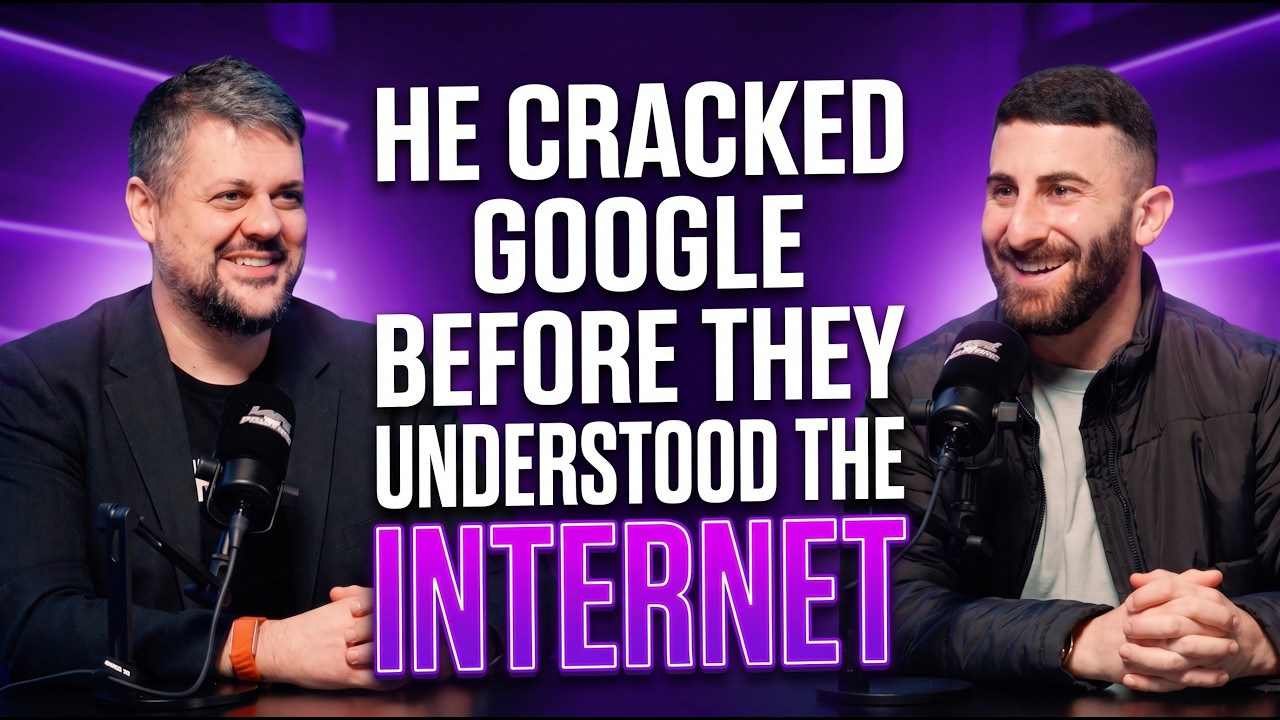
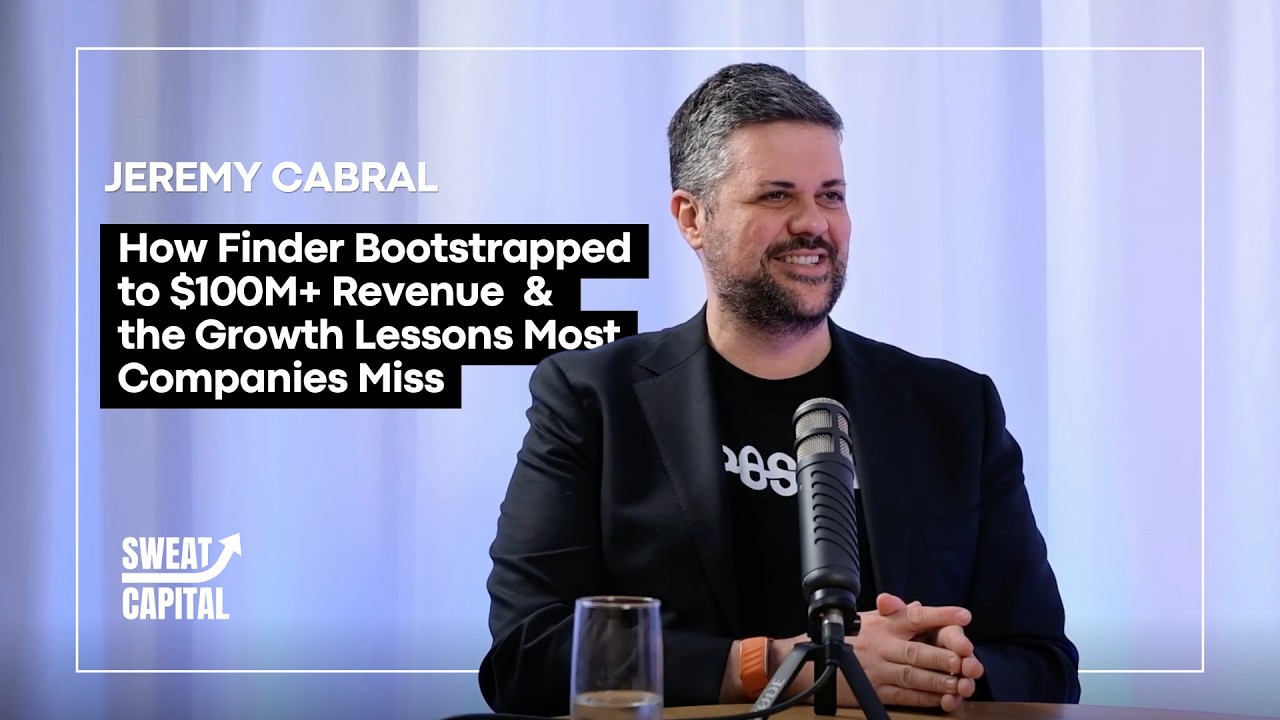
#132 Jeremy Cabral - Co-founder of Finder
Listen to the episode
#132 Jeremy Cabral - Co-founder of Finder
The Dion Guagliardo Podcast
About this conversation
Jeremy Cabral tells Dion Guagliardo how an early fascination with computers became a career in growth. He learned web design while helping his parents' business, discovered the commercial power of search, and later joined Fred Schebesta and Frank Restuccia to build Finder. The early company was intensely practical. Fred and Jeremy worked from a bench in Bondi, focused on performance marketing and reinvested revenue instead of relying on outside capital.
That discipline shaped Finder's expansion. More traffic meant more revenue, which could fund better content, technology and new markets. Every pixel needed to earn its place. Over time, the business moved from Australian financial comparison into more categories, international markets, crypto and a broader consumer platform. A later capital raise valued the company at roughly $650 million before the investment, but Jeremy emphasises that the operating habits were formed during the bootstrapped years.
He also explains the personal intensity behind the numbers. Running product, technology, growth and operations across time zones required repeated sprints and deliberate recovery. Executive coaching helped him make difficult decisions and recognise when the pace had become unsustainable. After stepping away from his executive role, he retained an advisory connection while exploring where his experience could be most useful.
AI became the clearest opportunity. Jeremy argues that transformation must be led by founders and senior executives because it changes how a company produces work, allocates people and competes. Finder moved from single-digit use of AI in code to roughly 40 to 50 per cent, illustrating how quickly a committed organisation can shift. He sees brand trust, proprietary data and distribution as important defences as software becomes easier to create.
His current work combines a fractional co-founder model with founder communities. He supports growth and operations inside selected companies, while Executive Ark and an AI-search community create spaces for leaders to share practical systems. The consistent thread is the same one that built Finder: find the constraint, move quickly and convert learning into a repeatable advantage.
Key ideas from the episode
- 1
Bootstrapping made every pixel accountable
Finder's early growth depended on performance marketing and reinvested revenue. The team could not carry ornamental work, so product and distribution decisions stayed close to measurable customer activity.
- 2
A growth flywheel creates expansion options
Traffic generated revenue, revenue funded stronger content and technology, and those assets opened new categories and countries. The system made each successful market a platform for the next one.
- 3
Senior leaders must own AI transformation
Jeremy treats AI as an operating-model change rather than a software rollout. Founders and executives need to decide where work changes, how people are supported and which gains matter.
- 4
Trusted data becomes a defence
As code becomes easier to reproduce, brands with consumer trust, structured information and established distribution retain an advantage. Those assets take longer to copy than a feature.
- 5
High intensity requires planned recovery
Global time zones and a broad executive remit created repeated periods of extreme work. Coaching and recovery helped Jeremy sustain performance and make clearer decisions.
- 6
Fractional co-founders work inside the constraint
Jeremy's advisory model is hands-on across growth and operations. The value comes from helping a founder diagnose and remove the current bottleneck, not merely delivering recommendations.
Chapters
- 0:23Dion introduces Finder co-founder Jeremy Cabral
- 2:50Learning growth through the family business
- 5:52The origin of Finder
- 8:00Bootstrapping from a Bondi bench
- 12:46The raise at a $650 million pre-money valuation
- 16:44The intensity of global growth
- 18:03Sprints, recovery and executive coaching
- 22:52Why AI transformation must be founder-led
- 28:45Brand trust, data and strategic options
- 33:50Becoming a fractional co-founder
- 36:55Building Executive Ark and AI-search communities
Full transcript
9,203 wordsBut we, I think, I don't know how long I didn't sleep for, at least one night. I remember going through all the way at least to the following evening pushing Finder globally into all these markets. And that just required capturing a moment that others weren't willing to go for. I'd run these simulations of like, how willing is Able and Committed as a competitor to go through what I'm about to go and do and achieve this outcome? And in situations where I was like, I just don't think they are, I'll just go harder.
Welcome to The Dion Guagliardo Podcast, where I interview business people who run or have sold businesses worth a few million dollars all the way through to billions of dollars. While most of my time is spent managing investment portfolios for people after they've had a successful exit, I've always been fascinated by the entire process and hearing the insights that successful entrepreneurs and business people have learned along their journey. At Fortress Family Office, we're an investment portfolio manager and we manage portfolios for high net worth families. If you'd like to know more about not only the way we approach investment markets, but our philosophy on life and business, feel free to subscribe to my weekly insights note. Go to www.fortressfamilyoffice.com and hit subscribe. In this episode, I interview Jeremy Cabral, co-founder of Finder. Finder is a comparison website and was founded in 2006. Growing to annual revenue of over $100 million and a valuation of $680 million. Throughout the episode, Jeremy talks about his early interest in technology, his journey with Finder, his work ethic, as well as his thoughts on the future of AI and the impact it will have on companies in the future. He also talks about the historic importance of adapting quickly to to new technologies, as well as a look at his own personal projects. If you enjoy this episode, feel free to leave a review and share with family and friends. Jeremy, welcome to the show. Thanks for joining us.
Thank you for having me.
Why don't you start by telling us a little bit about your early days as an entrepreneur, where it started?
Sure. My early teens, really. I was at home trying to convince my mum to allow me to get an AVN as a young kid. And yeah, it looked like me wanting to launch businesses doing All sorts of random things, fixing lawnmowers, selling bath bombs, anything I could really think of. I was just obsessed with the idea. But my first business really was building and repairing computers. So I did that for friends and family and also my teachers and anyone that was willing to pay. So it was a fun little business. And yeah, I can't remember exactly what age I was when I got my ABN, but essentially got a reseller account with a company in Parramatta in Sydney and would buy these parts and figured out how to build these computers and sell them. And yeah, that was my first kind of real go at building a business.
So you're always gonna be in business. That wasn't in question.
Yeah, I think so. I was very much influenced by my parents. My dad, as a migrant in Australia, really had to build his way forwards and he was a great salesperson, led sales teams nationally for mailing equipment companies. And so I learned a lot about him around how to sell, that's for sure. How to do things like generating leads. I remember door knocking, cold calling, all this sort of stuff when I was probably 16 years old, 15 years old, doing mailbox drops, like literally whatever it took. And I was very fortunate to learn how to build websites at a pretty young age. Built my first websites probably in the year 1999. 1999-ish sort of thing. I'd learned how to build websites through reading this book on HTML. And yeah, so very quickly after that, besides the kind of academic knowledge, I helped my parents build their first website in 2001. And they sell merchandise, so things with company logos printed on it. And I built this website, which was pretty interesting because at the time, if you wanted to sell merchandise, you'd have a catalog, like a printed catalog, and you'd have a CD with images on it. And so if you wanted to see the images, you'd give a client both and you'd mail it to them. And I found a way to digitally host all this stuff. And we actually had supplier catalogs logs on our websites when suppliers didn't even have websites. So I scanned them in. My very early days was actually optimizing PDFs to rank really well in Google. So we ended up doing a bit of that sort of optimization and getting literally each day probably over 10 leads a day, sometimes even more. And our competitors weren't getting any leads online maybe a couple of months sort of thing. So yeah, it very much taught me about the value of building digital businesses and the scale of what you could achieve. And it laid the foundations for me ultimately going to build my own thing later in my career.
And that sort of stuff these days, there's plenty of places you can go to learn the formula, if you like, for how to get There's a lot of ways you can learn that sort of stuff. It wasn't quite that way back when you were doing it. So that was a lot of trial by doing.
Learn by doing, I would say. I was also very fortunate that my brother, when I was in year 7, he was in year 12. And so he had a lot of geeky mates. And so if they would come over my house, I would watch what they were doing in building computers and things like that. They were always pushing things to the limit. There's this concept of overclocking your computer where they wanted to play games that they didn't have the right hardware to play. And there's this kind of interesting point in time where software developers and game developers were building games that were limited by the hardware. So in order to play them well and smoothly, you had to overclock your machine. And so that was the piece on the hardware side. And then I was really lucky in that my school— I grew up in southwest Sydney, but for me to be part of this kind of gifted and talented program where, you know, all these schools around the state had people go on this camp. And at this camp, I learned about website building. I got my own email address in year 5 or 6 or something and was just taught about the most expansive place, the internet, really, where you could just learn and do anything you wanted. But it certainly was very early growing up. I was the first kid in my grade to have a computer. Computer, the first to have dial-up internet. And I was just really lucky that my dad being such a successful salesperson was winning competitions to get a family computer or weekly I'd go to the local computer store and literally line up to buy dial-up internet. That was how it worked. So yeah, early enough to all of these technology shifts where I've just always really enjoyed just applying things early, but it's definitely learned by doing.
So there's your early days and that's your apprenticeship if you like.
Yes.
Take us through to Finder and around that phase.
Yes. How I came across Finder was I was following Fred on Twitter, Fred Schebesta. He's one of the founders alongside Frank Restuccia. And at university I had a subscription to a marketing magazine and Fred used to write a column at the back of the magazine. And so there were a bunch of things that he had written about that caught my attention. So I wanted to follow more about what his opinion on things. And so following him on Twitter, I saw a tweet one day where he was like, should I get the Nokia N95 or the iPhone? And as I mentioned, I was always very early to buy or apply technology. And I said, I just got the first iPhone in Australia. It had been released days before. I think it's game-changing and what we're about to experience is like nothing we've ever experienced before. And so we ended up catching up, we got onto LinkedIn. And we caught up at this conference and he was like, hey, I would love you to work in my business. And he at the time had 3 agencies, 2 of which were sold. About a minute or 2 into the conversation, he said, look, forget that. I've got this new idea and I've got these ventures that I'm building. The idea is effectively building these marketplaces or platforms online where people can come online like Finder, which at the time was Credit Card Finder, compare products, and we can help them with information and comparison tables, figure out what to buy. And so I had a mission at the time to unpenalize Finder or Credit Card Finder in Google. It had basically been banned banned from Google because it was like a speeding ticket, I guess. Like when you do things like buy links and whatever, Google doesn't like that. And I remember he said, look, create me a plan on how to fix this problem and if you achieve the outcome, I'll pay you a bounty. And yeah, he called me up a couple weeks later and said, what's your BSB and account number? And I was like, oh, well, okay. Yeah. He's like, website's back. And I was like, this is amazing. And then we caught up and he's like, I want you to do this full-time with me. He was in the earnout period of the kind of the businesses he had sold. And so I came in and just went all in. The company grew quite a lot over the next few months and then it got to a position where both of them could be full-time in the business as well. And yeah, I guess the rest is history. We just went category after category launching all the personal finance comparisons, insurance, telco, utilities, hundreds of comparisons. And it was quite a journey.
I had Fred on my show, I think was maybe my third guest, maybe 4 or 5 years ago. So I'm familiar with Finder and a little bit of the story, but I'm really interested in when you looked at what he was talking about around the concept and at what point did you think, yeah, this is the future. This is something that could be really big.
Yeah, I think Fred's a visionary. He spends a lot of his time thinking about what's coming and in working on the website, Like I was always very focused on the fundamentals of growth and like how to make it work each day. When I realized this is something like something serious, like we were sat on a bench in Bondi Beach together watching the waves and we're sitting there making money as we were just chilling out together. I was like, this is crazy. I don't understand what sort of business this is, but if this is able to happen right now and we're small and our growth rate is what it is, this is massive. And I think that alongside that, like when you start getting all this traction, you realize the importance of what you're building and you've got this responsibility to Australians and now globally Finder to ensure that what you're building is the highest quality possible. And that kind of all collided at the same time in a way that just really forced us to raise the bar and I guess raise the ambition. We always would set these crazy goals which seemed unachievable. Like imagine when you have 10,000 people visiting the website a month or 100,000 or a million visits and at the time you just kind of laugh it off. This is crazy. But you go back to your computer and build as if that was true. And we virtually hit every goal we set out to achieve. It was just a crazy growth flywheel really that with relentless focus on the inputs you can get to serious outcomes. So yeah, it was start of that realization. And then just each and every year we'd always set these crazy goals and always achieve them.
What was that like in terms of— you can see there's a lot of growth with that, right? So a lot of startups, especially tech startups, might look at VC and those options around bringing money in to grow. You obviously, I don't think, did that. Didn't do that for probably 15 years or something like that. Yeah. What I know, what was the thought process there? Was it just that it was self-sustaining and you were growing fast enough that you didn't need to raise money? Or what was your thinking there around why you did or didn't do things?
I think it starts with the fact that the business grew off a channel that was, it wasn't free traffic, but with organic Google organic, effectively once you build a website or a page that did well on Google each day, you would get this free traffic and it would come into the business. And assuming you had a certain conversion rate at each visit, you were able to generate a bunch of revenue without having to pay for it. So it wasn't capital constrained with that particular channel. I'd say also that we were very much performance marketers, so spend a dollar to make at least 2. And we just kept on putting the money back in and started off on a very small budget on a monthly basis, a couple thousand dollars a month sort of thing. And then it just gradually kept increasing. And I guess our data-led approach to growing the business meant that we paid very careful attention to every single page we published, every single ad that went live, truly every single detail. And it's just part of our DNA to be bootstrapped. So yeah, I guess that's really what it was about. It's like it just, we didn't know anything differently. And if you go back to that time, very few businesses in Australia were, in my view, in the tech sense, kind of defining the, it wasn't really a predefined path to go and raise, especially for the type of business we were building. Remember, yeah, Atlassian raised, was it like 2011 or something like that from Accel? They raised, I can't remember how much they tipped in, but it was like a, there wasn't many stories around it, at least that part. Yeah. Yeah.
It came after you guys, right?
Yeah, exactly. So like some early kind of tech businesses. So it wasn't part of the playbook. It's interesting because I think we, in a parallel world, there was also some competitors building out in the US and UK and some were from Silicon Valley and were funded from fairly early in their journey. So I think a lot of great things came from the fact that we're bootstrapped. And certainly later on, I think the ambition required funding to go to like its true potential. And I still think Finder as a business has so much optionality of where it could go from here. And certainly many of those pathways would, I think, be one where you consider funding to accelerate that. So it's Yeah, there's no right or wrong in this sort of stuff, but I think for us it was just being really strong at performance marketing meant that we were able to cash flow fund the business.
And having that cash flow funded, what were the main advantages of being able to do that compared to others that weren't in terms of is it autonomy? What are the advantages that you found?
I think it's just that you treat every dollar with such care because you've gotta be efficient. And so it meant that every single pixel on the screen mattered to us like so much, right? Like really in the beginning, some of our biggest competitors weren't even comparison websites, they were the banks themselves. And so if you're going like, I remember Fred He was running our AdWords and some of the bidding wars he would be against the banks. If you think about the psychology of that, like really what's playing out is a bank's got an agency, someone in a role that's getting paid a salary and they've got metrics they need to hit and they're not incentivized to win the same way that a founder is. So I really think that's what it came down to is like we were able to carve out this kind of space for us to win and grow market share from that mindset outwards. I think also Frank is a very competitive guy, Fred as well. Frank's an incredible tennis player. He's always been into sport. And I think that kind of competitive mindset when going into those situations really permeates through the decisions you make day to day in business. Yeah, I just think ultimately it was a game of psychology where we were a little bit more committed and crazier than some of our competitors and we really went for it.
Fast forward 15 years, there was about a $30 million raise.
Yeah, end of 2021.
Yep. Yep. At about a $650 mil pre. Take us through the thought process there, not just in terms of why raise the funds, but who you brought in as investors and rationale as to what you're looking for.
Yeah. So really at the time there was a big battle happening where Everyone was seeking to be whole of wallet—the banks, fintechs—and this digital wallet was naturally somewhere Finder needed to move towards. It's like spent most of its life really trying to help people compare financial products, and you have this friction where the customer is needing to take actions, and there's just too many steps in the chain to make that happen. The thesis was like if we can build out this ecosystem that allows Finder to have integrations and more control of the wallet and the movement of money, that we can really help customers get to the goal more efficiently. So we really went for that. We took a route that was. A bit more unconventional with products around crypto trading. And we had a yield product which was generating yield in various ways. But ultimately one of the paths had some crypto involvement and we felt that it was a moment in time and it was just a shot that we wanted to take. And we had discussions with all sorts of investors. But I think ultimately by having that investor come on board, it was someone that could see the vision and really understood that Finder was a well-trusted brand in a space where there are a lot of brand new fintechs with a lot of promise. But I think trust was a prerequisite that would see a lot of those businesses succeed or fail. And we went for it and I think we had enormous traction. And so I think the product market fit was there. It's just, yeah, it's one of those bets that we just had to take.
You then scaled the business into 80 countries?
Is that right? Yeah. At its peak. At its peak. Yeah. We had a large footprint and largely off the back of this crypto opportunity because what I did inside the business was I was always spotting opportunities and signal, like where whenever there's a large amount of new information, new products and services released, there's a need for aggregation. People need to understand how to make decisions around this stuff. They need information standardized in such a way that they can know the factors that go into making a call on what to ultimately apply for or select as a service provider. And 2 things happened at the same time, which laid the foundations for international expansion of Finder. The prerequisite, prerequisite to all of it, we bought finder.com off somebody that was associated with the squatting and domain ownership of seinfeld.com. And if it wasn't for such a well-known court case, we wouldn't have ever been able to find who owned finder.com. But it turns out this guy in the Cayman Islands was willing to sell it. So we bought that. And then a The way to test the potential of the domain was really in a few ways. We took the opportunity to grow the domain when streaming providers like Netflix launched globally. And I remember doing this matrix in a spreadsheet of everywhere Google is live and every country that Netflix launched into overnight. They went into 130 countries. I think Google was live in 76 or something like that. Wherever there was an overlap, we wanted to be the source of truth of where you could, like all the streaming provider options where you could watch these TV shows and movies online. And the idea was by hitting a trend, we would grow the domain strength by getting a lot of news kind of websites linking to us. And it worked. We ended up getting to the top of Reddit in so many countries, Reddit Philippines, Reddit UAE, literally everywhere. And it brought in these links into the domain, which is part of our flywheel in SEO. And shortly after, I think it was 2017, February, I had just gotten married, went to New York and saw this crypto trend taking off and decided to take it on as a personal project. And we launched Finder into the foundations that were laid through this streaming kind of global launch. We were effectively in many of these countries the first platform to go and find information on how to choose a crypto exchange, how to buy Bitcoin online. And as a result of that investment we made, we had enormous success. We became a top 10 referrer of new customers to some of the biggest exchanges globally. And in Australia, we definitely were the number one provider of new customers as well. So it was just a wild time. And I would say it just came off trend spotting, which has always been something that Finder has been very good at. just has this kind of playbook that we roll out anytime there's something new where we can capitalize on it very quickly and roll it up the business. So yeah, that's the international expansion. And alongside all of that, we definitely had some more measured and tactical plays like our UK launch. We hired our CEO, John Ostler, who we previously had known, and the US launch as well between that period of 2015 and 2017. But this kind of rapid expansion beyond those markets was really driven by Crypto Comparison.
How did you manage such rapid expansion? What were the hardest parts? Or yeah, take us through that.
Oh man, I work hard and I have always From a really young age, for whatever reason, I don't know the origins of that. Maybe again, just observation. Watch my dad and mum how hard they worked. Always done that. Yeah, I remember having my first calls at six a.m. and last calls at midnight or one a.m. for three or four nights of every week, with very small gaps in between for a twelve-minute dinner or something like that. It was just insane. So certainly it was a physically grueling exercise to try and run a business with nine offices around the world or nine cities that we operated from. So every single time zone there was always something on and something needing to be done. I was also responsible for a deep. Decent chunk of the company running growth, product, tech, and operations, data science design, international expansion. So it was like really broad remit, partly by design because for me, I really want to remove the friction in decision making to make it easier to get things done. But yeah, the challenge, man, is you really, as you go and do these things, there's often not a predefined playbook, and it comes from just really pushing yourself to be a better version of yourself every couple of months, learning from the mistakes you're making, the wins, and doubling down, networking and chatting to others and see what they. But certainly, yeah, you have to be really passionate to wanna choose that path.
And in terms of that hard work, that can be that work ethic. It can be a blessing. Of course it can be a curse, right? In terms of burnout and those sorts of things. How would you define that as a strength and how would you look at that in terms of it being a weakness sometimes too, or a challenge?
Yeah, I'd say that most opportunities that have led to great things in my life and in business required a sprint, something where I was willing to go to all lengths to really achieve the outcome. And that could look like literally being up late and mastering some bit of technology, AI, I'm not sure has certainly been the definition of my last nine months or so, or just being more willing than a competitor to win and capture an opportunity. I remember when the Netflix stuff launched globally. What I did was I came into the office and I saw that it had launched in all these countries. And so what I did was I told the team, "Hey, I'm gonna need you to go home because I need your laptops," and we're locking in here, and it's gonna be a long one. But we, I think, I don't know how long I didn't sleep for at least one night. I remember going through all the way at least to the following evening. Evening, pushing Finder globally into all these markets. And that just required capturing a moment that others weren't willing to go for. I'd run these simulations of like, how willing is Able and committed as a competitor to go through what I'm about to go and do and achieve this outcome? And in situations where I was like, I just don't think they are, I'll just go harder. It was like, it was an opportunity to win market share, to get ahead and create competitive distance. And so for me, I just think it's a playbook that I use. And then as you mentioned, it does come with a cost. You certainly have to have these pit stops and pull back as For me, one of the key habits that we implemented as an executive team was having an executive coach. All of us, depending on kind of the intensity and at points in time, but I certainly would meet weekly with my coach Craig Hall and still do actually. The way I talk about it is he is almost like a personal trainer. It's like with a personal trainer, you get taught how to do the reps and the exercises early on in your training experience. You can deadlift and bench press, whatever. But I think if there's someone that's there as a constant measure of what's going on and keeping you from kind of going off I think that's really what it's about. It becomes, especially when you feel like you don't need the help, is when you, I think, can benefit from it the most. It's like proactively having an exhaust, something that allows you to get things off your chest and yeah, just stay on top of it. It's using the health analogy. Often people don't take action until it's too late. And I think that's actually about those proactive reps where yeah, I've certainly had massive benefit by doing that.
That's one of those things, right? A weekly note out to clients. And this week's one was around about that type of thing where I was talking to my son and he was making a sort of a decision that had that, it was a bit more short-term thinking than long-term thinking. And I laid it all out. I delivered a parenting masterclass and he turned— he's 23— and he turned around and said, I'm gonna do what he was going— wanted to do straight up. He said, that all sounds like a future me problem. And that was his thinking of future me. So yeah, there's an inkling of people to put some of those things off for the future, right? But you just can't kick the can down the road on those things all the time, especially when it comes to health and fitness and those sorts of things, right?
Totally. It gets harder with Finder. I traveled so much, often half of the year, and keeping that consistent habit on the health side of things was one of the toughest for me. I go through this roller coaster with my health where you're on and then you're off. And so yeah, it's definitely become a bigger focus of mine now to try and have that level of consistency for sure.
Traveling and airports are a killer for that. Yeah. Um, so fast forward now, I'm keen to talk about some of the things you're doing now, especially in that AI space and those sorts of things, but you're no longer involved in Finder, or where are you at there?
Yeah, so I'm still an advisor to the board. So when it comes to things like strategy, M&A, certainly people, I'm there supporting crew as they want to catch up and talk through things and I still can't go a day without looking at what's happening on the surface and spotting things and sharing ways to optimize or improve. But day to day, I don't have any operational reports. So it's a big change for me. And with that has obviously brought a huge amount of capacity, which I've been deploying really first and foremost towards R&D, like really trying to figure out what's the future look like? What do companies of the future look like? The ones that are winning, the ones that are losing, and what's the path for a business right now to get to that winning position? I think that literally everything's been flipped upside down and it's about looking at everything with a fresh set of And defining playbooks that I think will be sturdy enough to get through at least the next few years. And yeah, having a heap of fun as a growth advisor, effectively looking under the hood of all these businesses. And you start to see all these patterns of again what's working, what's not. And I think that's really exciting for me at least. I just had this itch of like trying to understand. I just need to figure out like okay, I've done this finder thing for a very long time. What does it look like in other industries? And you start to realize there's so many similarities. It's ultimately, in my view, and it really zoomed out. sense, it's like I can't unsee the fact that almost everything boils down to the same fundamentals. And that's certainly been a really fulfilling thing for me is just to get that access to the information and the data you always had curiosity around, and you can finally get a look under the hood.
Take us through some of those fundamentals that you're seeing, if you can. I look at AI, and I personally think it's the single biggest technological advancement that we've ever seen, bar none. That's where I think it's going over the next however many years, maybe decades. But I think there's a lot of people in business who underestimate still how much disruption is coming into every business. It might come in waves and stages, but I think there's a lot of people really underestimating every business will be disrupted in some way. A matter of when they get disrupted, some sooner than others. What do you see?
Look, I'm of the same perspective. I think that I've been in forums where everyone talks about, oh, I'm using AI, it's great at some things, but it'll never be good at this. And feeling a level of comfort right now when they don't realize where we're at on an exponential curve. Literally model releases are every 6 If you went back to January last year, I couldn't convince an engineer to use vibe coding solutions to ship code for production websites. It's now the default, and it outperforms what most engineers could have done in months in a single day. Right? So suddenly there's this democratization of technology where now anybody can build anything that they've ever set out their minds kind of ambition to go and do. And suddenly the number of competitors increases dramatically. Suddenly opportunities that companies weren't going for. For in the past can now be a part of the roadmap. And so for me, we're just so early in this journey. We're like, I dunno if anyone remembers MS-DOS, but MS-DOS was like this black screen when you boot up your computer and like it was just such a— and that's honestly how coding's happening right now, these basic terminals. But yeah, where we go from here is hard to really imagine. For me, everyone asks, what's your 10-year view? It's like, I can't find a 10-day view sometimes moving so quickly. But a few key things, like one is that all of the world's data and information will have been trained on by 2028. That's the kind of expectation at least. So if we are in this position where there's been exponential improvement in the performance of AI, you can only imagine what 2028 looks like when it's literally consumed all of the world's information. I think that where I stand right now in business is it's as much as it is about having a good strategy and treating it like a reality as it is building the right culture to be adaptive. For me, it's like I am betting on just being faster and quicker to adopt technology than others. And I think that's really what most companies need to strive for right now is creating a level of speed to adopt and also creating time and space within their organizations to do this. And it's probably one of these moments where I look at it as a founder-led piece where, you know, you might have a large organization, but I remember something that was really critical was, I'm not sure if it was Larry or Sergey from Google came outta retirement essentially and started shipping code again. And like they literally, that was like a critical moment in time, like back on the tools, shipping code in an organization with literally thousands of engineers. And I think that's the way to do it. do this is you've gotta look at all of the parts of your business again from scratch and start rethinking about challenging your assumptions of what's genuinely defensible in a world where AI can, can eat so much of it, right? And yeah, so for me, I've certainly thought about distribution, which is a really important part of Finder's story, is how we effectively built such strong distribution that we became a key platform where brands would acquire new customers from big banks, insurers, et cetera. And I'm rethinking what distribution looks like in an AI world and how do you have an audience that can sell products and services to. So I'm very big on community-led growth. And then I think that you've got to start really thinking about what the challenges to your business is going to do. There was something I did, it was January last year, so we're going back, you know, 18 months or so. There was a competitor that was up and coming and I flew down to Melbourne and sat with him as he was coding a competitor to Finder. And I was observing and he's literally, his auntie's making us tea and biscuits. It was the weirdest thing. I was sat at his house and I was just watching how he was building because for me that was very telling and insightful because if If he as a team of, he's literally one person, has managed to pull off what he's done in the space of a week, then what's possible for somebody that's got, what's possible on the planet here is like that literally anybody can start building out businesses and we need to start moving quickly. So we went from a position where less than a single digit percentage of Finder's code was written with AI to within a month or 2 of that moment in time to over 40 to 50% of the company code was written with AI. And that was a monumental shift for us towards the perception of what was possible. And it took, I guess, that founder-led initiative there to really push us to adapt and evolve. to the reality. And I think that what my position on AI is, is that we should only assume the model's gonna get better continuously. So we need to commit to adopting it. And even if it's not perfect now, if we change nothing, just by having AI in place, the model provider's gonna solve for the quality of the execution over time. So it's more about just knowing that you've gotta persist. You've gotta include it in every single process or system in your company needs to have some level of AI consideration. And yeah, in my view, that's what it looks like to have a chance to Adapt and hopefully thrive through this moment in time.
It's one of those things. AI right now is as bad as it's ever gonna be. It's only getting exponentially better from here. And I think that was one of the things that people have underestimated, probably continue to underestimate. In the early days, they'd, I remember even a couple of my kids would come to me and go, oh, look what we did with AI. It got this wrong. That's ridiculous. Yeah, it gets it wrong now. Give it 12 months and it'll be doing that expertly every time. That's the glimpse. It doesn't matter if it gets things wrong or can't do it. It's like those people you're talking about saying, oh, but they won't be able to do this. Yes, they will. It's just a matter of when they can do it. It's just, it might not be able to do it now. They'll be able to do it. It doesn't matter what it is. At a certain point, robotics will intersect with the AI and all the manual stuff's done and all those types of things. I look at from a big picture point of view. I manage money for people in my day job. So I'm looking at different companies that are going to be disrupted. And I look at the companies that are going to do well from it. Some of the AI type companies. I look at the companies that are going to have AI overlaid throughout the business. A little bit like when the internet came out, suddenly banks were doing everything online. It was major beneficiaries from that sort of stuff back in the day. But then you look at companies that will be disrupted that you want to steer clear of. And then ones that maybe like toll roads, that's going to take a bit longer for them to be disrupted, for example. So there's those different categories. Levels of where companies sit. But I look at something like a— I'll just use an example, and you'll know about this better than what I will— a flight center, something like that. Now, they might look at this and say, oh yes, we're going to bring in AI to build our business and all that. That'll all sound great in the short term, but eventually AI is going to eat that business completely. That's my view and how I look at it. It's not even a defensible business because eventually you'll just type in whatever prompt of your travel and it'll book it exactly how you want it. Maybe not in a year, but whenever it is, at some point your whole holiday will be booked exactly how you want it. Why do you need them? I presume it'll go straight to the hotel And the Airbnbs or whoever it is you need. So that's how I see that for a company like Flight Centre. It's a major company. I value it almost at zero because I don't think it's defensible and I think it's gonna be disrupted. Do you see that type of thing happening for companies like that, or am I too simplistic in my view?
I think that Flight Centre's got something that competitors don't, and it's brand and it's trust. So that's a critical piece. And then the second is that at this point they still have optionality and the ability to evolve as a company. So I think that there's certainly a world where you are 100% But there's also paths that a business like that could go down where they adapt and build. They've still got massive scale as a business, and if they can negotiate exclusivity with certain providers or deals that aren't available on other platforms, I think that's interesting. And if those deals aren't available through any sort of agentic solution, I think that could bring people directly to the platform. You can look at the effect of, if you go back in time, like Groupon and all this sort of things where people went direct to the platform. So I think that's interesting.
Yeah.
That's a play that is certainly available to them. There's also a piece there where there's a lot of APIs that aren't yet public that are required to kind of power a booking of something.
Yeah.
And there's just interesting deals that play out in moments like this. If you look at OpenAI with news publishers, for example, many of them are blocking OpenAI from crawling their websites. The ones that actually achieve good successes in appearing in ChatGPT are those that have a commercial deal in place. And so I'm curious to see how Companies at certain points to start putting up brick walls to stop some of this AI coming in. And yeah, it's a fascinating thing. They've also got a huge amount of data based on how much people have used Flight Centre over the years, and there's certainly opportunity in mining that and looking for opportunity to evolve the company. But yeah, I do think it's, they can't do nothing. It's one of those situations that requires a transformational moment and a commitment to some bets to prove out from here which one has the most legs. But yeah, it's certainly very interesting.
Yeah, that's one of those things, and I think that's completely right. You mentioned brand and trust, and I assume that's probably the key differentiator that we're going to find that has become so important across the world in brand when everything becomes commoditized, which is ultimately what tends to happen. Even knowledge is becoming commoditized. Brands and trusts are what matter, and they do have brand and trust, so they're obviously not really valued at zero. Yeah, no, you can speak for quite a bit. To make a point, right? Exactly. But the concept is if they stand still, that is what happens. They're going to have to make the right moves and evolve their business model in a transformational way to survive. And there'll be plenty of companies in that position that quite possibly don't. There were many companies, I don't know if you remember this, but when newspapers were the main, they were great. Great businesses. They were the Warren Buffett type businesses, newspapers going back 30 years ago or however long it was. They were great profit engines. And there were many of those newspapers that sat there while online media started to grow and they sat there and said, oh, we're not going to have an online presence yet. And I remember seeing that, you know, I was very early in my career and I just remember seeing that they were sitting on their hands. It was these old heads that were just, no, we're going to hold the line because it's not profitable yet. Obviously a really bad move. And those types of disruptions happen and to great companies too.
Oh, totally. And look, it's certainly a moment like that. I do remember this moment where some publications did very well because they were the first to build digital offerings and so on. And the key thing in this moment in time is really the business model that needs to be considered, right? Because the business model can be an enabler or a blocker towards transformation that needs to happen. I remember one of the pieces as well with social was like, and still today, a lot of brands and publishers are not using social to the best of their ability. And the reality is that the publications that started winning were these independent, small, tiny publications. That would literally post the same bit of news but native to the platform in an Instagram story format or a reel or whatever it was. And yeah, I think that at this point in time there's certainly gonna be opportunity for companies that kind of solve the very niche things that consumers want. And we're in a moment in time as well where people can solve the problems they want for themselves with their own technology too. It's like literally like personalized software is like an incredible movement that is happening as we speak, right? I built so many little bits of tools and my own personal CRM And it's just wild to see what's possible. I do think though, we are gonna go through this stage where there's a lot of trash created as well. Like where you, yeah, of course, a bit of consolidation and cleanup phase will certainly happen. And also I often think it's like, what were people doing pre-vibe coding and all this sort of stuff? Like CEOs spending 12 hours a day building OpenCLaw setups. What were they doing before all that? And I wonder if they go back to what they were doing and ultimately we see just the individuals that were potentially gonna be disrupted upskilling and driving some of these things again in a way that is more normal. I still look at this This is an opportunity in time where that's not wasted. If a CEO went and spent 12 hours figuring out OpenCLAW, I actually think that's phenomenal. It's understanding the pieces, understanding through your own experience what's genuinely possible today, because it's only a fraction. Like we are not using models, AI models to anywhere near to their current potential. And so given the fact that they are dramatically improving literally every 6 weeks, I think it's about being dangerous enough that you can delegate with some of these things whilst you can. do have the opportunity to delegate. I think it's about being very careful with the people capital you have and constructing teams to be the right type of characteristics. The people that are curious, that are persistent and relentless, and just want to learn and apply things immediately. Yeah. The companies that I think have teams that can think laterally, think creatively, they're going to be those that truly win in this moment in time.
Jeremy, take us through what you're doing now and also a little bit around the thought process around going from Finder to the new opportunities and that sort of— what was that like in terms of just the thought process and what made this the right time? Sure.
Yeah, absolutely. So I think for me, as I mentioned, like I've always been someone that adopted technology early and the realization for me back in 2023 was, wow, this is not going anywhere. And to remain ahead, you need to create space. And I think that I'm fortunate enough that I can still contribute to Finder's strategy and this kind of direction, but even more fortunate that I have the space to truly adopt this technology and see not only for myself what's possible, but what's possible through advising a number of companies on their growth strategy and AI. I think that for me, I'm really trying to teach businesses right now as a growth advisor what I've learned in— we bootstrapped Finder to over $100 million revenue, and obviously we raised some money as well. But for me, it's about getting the foundations right before you automate and knowing what to automate in what order and understanding what's genuinely possible today and where the technology is going directionally. So for me, I carved out this unique niche where I almost describe myself as a fractional co-founder where I ran so much of Finder. And I'm technical, but also a growth marketer and an operations guy. So it's this unique blend and confluence of things that I'm helping businesses with. And I think there's three streams that I think about daily: growth and operations is like my bread and butter. I did that forever. There's this trend around AI broadly, and I built a community called Executive Arc. You can check it out where the idea is to help executives make decisions around the right vendors, the right transformation strategy, and how to apply AI in the business. It's a free online community. Community have launched. And the third stream, which is a bit of a Trojan horse, is around AI search. What I mean by Trojan horse is that right now search is evolving. Google's dramatically changing. It's hard to see the differences, certainly in a few months from now between Google as an experience and ChatGPT, Claude as well, where this AI mode is happening. It's basically meaning you're getting less traffic to your website, so your old ways of measuring things don't apply anymore and suddenly new things matter to your company. So I'm spending time in teaching people about what they call generative engine optimization. So how you get your business to turn up in AI search. And it's a Trojan horse because I believe you can go and automate every aspect of your business, but if you do not turn up in one of these mentions, you have zero chance of succeeding. I'm not gonna guess the timeframe, but I would say within 12 months, the default experience for many of these platforms is gonna be agentically performing the task on behalf of the customer. So if you're in a chat, you go and say, use your flights example, book a flight from here to Fiji. If that platform detects a business That ranks well or is mentioned and that business has an agentic solution to go and complete that task, I think that those experiences will be prioritized. And so the prerequisite to actually performing in business is really performing in AI search first and foremost. So companies really need to retool right now, rethink which agencies are they working with, what's their internal team structure look like, what's the roadmap towards ensuring we turn up in AI search. And that's the opportunity right now that a lot of companies are really asleep at the wheel at. And I'm doing a bunch of executive Briefings, helping teams internally understand how this works and kind of sit above agencies and as a support to founder or C-level and their executives as this kind of connective tissue to help them figure out strategy. So yeah, that's me.
Yeah, that's fascinating. And how long have you been doing that for now?
It's hard to kind of track time. It must be like about 8 or 9 months.
Yeah. Okay. And what sort of feedback are you getting from people in terms of demand? Because presumably everyone's interested in this and many people wouldn't know where to go or what to do.
Yeah, honestly, it's been overwhelming. I've had over 400 companies reach out for advisory, so that's pretty crazy. My AI community Executive Arc launched a week ago and has had over 100 members join. And I launched an AI search community about a month or so before that, which has had about 180 members join. So I think that these topics are just red hot. People are looking for support and I really spotted that opportunity and I'm a firm believer in bringing people together to figure out solutions collectively. And I'm really just trying to share what I've learned, not only my Finder journey, but in the last 9 months or so. And give playbooks to people, mental models, ways of approaching solving these problems together. And yeah, having a lot of fun doing it.
Jeremy, that's fascinating. I'm really keen to see where this all goes. I'm conscious of time, so I'll stop it there. But mate, thanks very much for coming on the show and fascinated to see where things go next.
Yeah, thank you so much for having me. That was a great conversation. Appreciate it.
Thanks. Thanks, Jeremy. Thanks for listening to this episode. I hope you enjoyed the show. If you did, we would really appreciate it if you would leave a 5-star review and share with family and friends. Thanks.