Lost and Founders
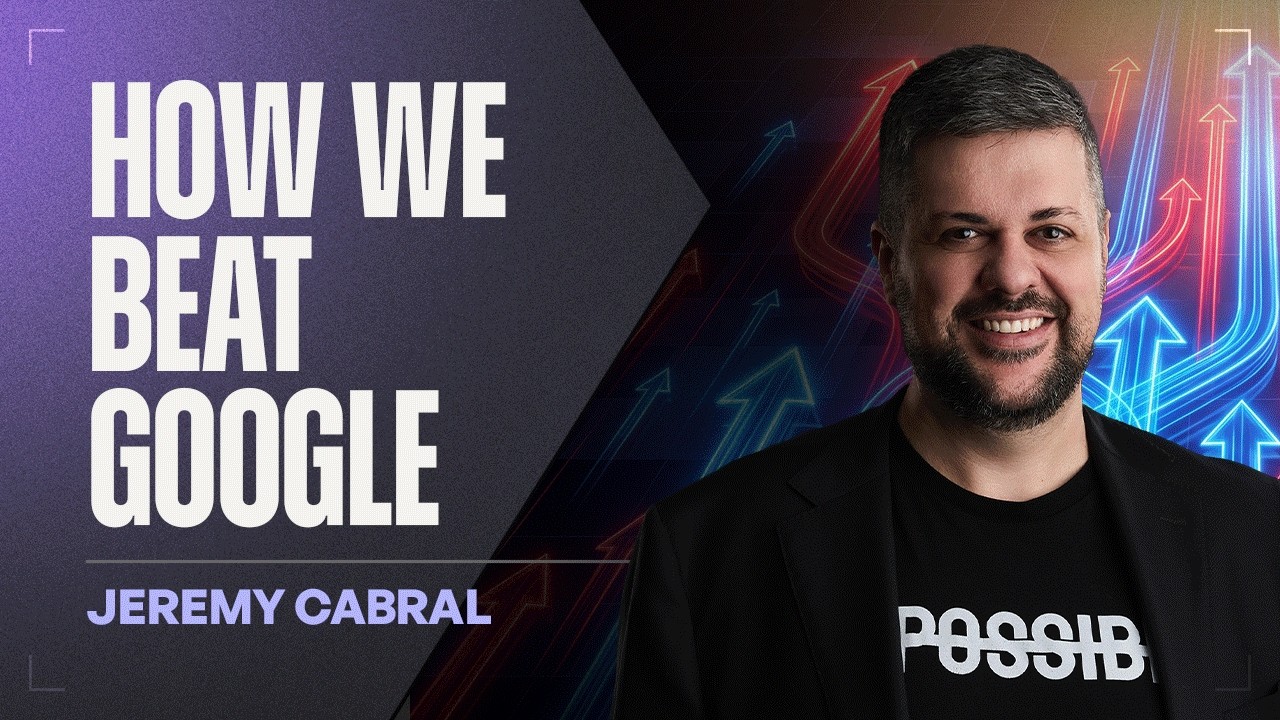
He Cracked Google Before They Understood the Internet
About this conversation
Jeremy Cabral's internet career began well before most Australian businesses had websites. As a teenager, he learned to build pages, then created a site for his parents' merchandise company. Scanning supplier catalogues and optimising PDF metadata produced 15 to 20 digital leads a day when competitors might receive only a few a month. That early feedback taught him to study crawlers, patents and every useful piece of search research he could find.
A Twitter exchange with Fred Schebesta led Jeremy to Credit Card Finder. His first assignment was to reverse a Google penalty, which he solved while still at university. The founders then wrote the Hive Empire manifesto and designed an organisation before they had the people to fill it. Each comparison category had an accountable business manager with autonomy, while Jeremy broke work into systems. A writing operation eventually produced 180 articles a day. A product database and a documented virtual-assistant process expanded into a distributed team of more than 200 people. Combining comparison tools and editorial guides on the same WordPress pages helped every useful page contribute to revenue.
Finder bootstrapped to $100 million in rolling annual revenue by March 2020 without recurring revenue. The model demanded daily performance and made every page, sentence and button accountable. Its hardest moment came after a sweeping Google penalty removed the company's domains from results. A chance lunch with a Googler produced useful guidance, and recovery two and a half weeks later prompted a permanent shift towards brand quality and long-term search practices.
Jeremy also discusses the emotional cost of leadership, a later regulator dispute and his decision to leave Finder's operational role. Watching an AI-native founder build a competitor in days convinced him that the technology's potential exceeded incremental adoption. He moved outside the organisation to learn faster, advise founders and help lift the share of AI-assisted code inside Finder.
In parallel, he lost 20 kilograms and completed a marathon after being warned he could not. His current work centres on early-stage founders, product-channel fit, AI communities and a venture-studio model. The through line is obsession paired with rapid feedback: launch while rough, solve distribution early and keep going until an impossible problem yields.
Key ideas from the episode
- 1
Early SEO began with scanned catalogues
Optimised supplier PDFs turned a slow mail-order sales process into 15 to 20 inbound leads a day, giving Jeremy direct evidence that search could transform a business.
- 2
Organisation preceded headcount
The founders drew the future company, put their own names in most boxes and gradually handed autonomous business units to hungry people with room to grow.
- 3
Manual work became the moat
Finder documented product maintenance, content publishing and metadata tasks, then built a 200-plus-person distributed operation before open-banking feeds made the data easier to obtain.
- 4
A penalty forced a quality reset
After Google effectively removed Finder's domains, the team's eventual recovery became the moment it committed to brand building and a long-term search strategy.
- 5
Bootstrapping sharpened every decision
With no recurring revenue, Finder had to earn each day again. Jeremy says that constraint made the team granular about every investment, landing page, sentence and button.
- 6
AI fluency requires applied work
Watching a founder build a Finder competitor in days changed Jeremy's view. Reading about the tools was insufficient, so he moved closer to builders and hands-on implementation.
- 7
Product-channel fit prevents elegant failure
Jeremy sees founders over-engineer before validation and focus on product-market fit without proving distribution. The best operators design product and acquisition together.
Chapters
- 00:00From teenage tinkerer to search operator
- 06:26Scanning catalogues and discovering SEO
- 09:45What changed in search and what did not
- 15:09The tweet that led to Finder
- 18:44Designing Hive Empire to scale
- 21:04Building content and product-data systems
- 27:20Bootstrapping to $100 million revenue
- 29:24The Google penalty that nearly ended Finder
- 37:27Leaving operations to pursue AI
- 39:32From vibe coding to 50 per cent of code
- 48:51The founder mistakes Jeremy sees most
- 59:05A venture studio built around distribution
Full transcript
12,866 wordsJeremy Cabral. He cracked Google before most businesses even understood the internet. But before Finder became a $100 million revenue business, Jeremy was a kid scanning product catalogs, uploading PDFs to the internet, and accidentally discovering the power of SEO before most businesses even had websites. He helped build one of Australia's biggest comparison platforms, survived brutal Google penalties, scaled a global team, and proved that bootstrapping a monster business was possible. But this conversation is not just about Finder. It's about obsession. It's about building before you are ready. It's about backing yourself when there's no clear path forward. And it's about Jeremy's next chapter— AI, founders, personal transformation, and making the impossible possible. Jeremy Cabral, welcome to the show.
Yeah, I'm not sure what else there is to say, man, other than like happy to be here and be chatting with you.
You're very humble. Um, so Jeremy, thank you very much for coming and sitting down. Like, I want to unpack your story. So obviously Obviously, probably most known for your role at Finder and being one of the co-founders and scaling that to the monster international company that it is today. But obviously, it didn't start there. So if you don't mind, I'd love to like go all the way back and like just tell us here sort of as you're growing up, like what drew you to sort of entrepreneurial— what drew you to sort of the entrepreneurship and also your love for tech and gadgets? Because clearly, you're a tinkerer. So yeah, tell us.
Yeah, look, I think from a really young age I wanted to earn an income. I think the earliest I had a job was as a soccer referee when I was 12. And yeah, I don't know why, I just wanted to earn money basically. So I did that at first and then pretty soon after that, or around that time, I was really lucky. My dad was a successful salesperson. He became a He migrated over from Portugal, didn't speak a word of English, somehow learned sales and he was selling kitchens and then mailing equipment and then ran a mailing equipment business or several in Australia. I think he worked for literally every single one of them at some point. So I think I was around him who, he obviously hustled really hard and come home late and was always pushing. And yeah, I just had this kind of itch all the time to start a business. It was like the weirdest thing. I was like, watching Oprah with my mum and she was like, Oprah was talking about some bath bombs thing. I was like, Mum, I want to start a bath bombs business. Repairing lawnmowers, literally anything I could think of to make money. And then eventually she agreed, I'm going to let you get an ABN, because I was hassling so much on that. But along the way, because my dad was quite a successful salesperson, he'd win these competitions. And so we got access to computers. I think I was probably one of the first in my grade to get a computer, which was pretty cool. I think I'm trying to exactly remember how old I would've been, but the photos at least had teenage— was it Mutant Ninja Turtles?
Yeah.
I was wearing this jacket from— it's like an Amstrad or something like that. It was like a really early computer. So I was always building out computer games because back then you'd have these these books and you'd have to literally type in the code to have the game run. So there's games like Mr. Heli and all these sort of, yeah, Solitaire. I think we coded in Solitaire into the computer. It would take days before you could even play the game. So yeah, that was kind of my first kind of exposure to computers. And then you got the 286 and a 386 or 486 and all these computers that were, I guess, finally fast enough to do something useful. And then a bit later on through school, one of my teachers or somebody at least got me into this program where I was able to get access to the internet through, it's like a camp or something like that. So I went away for a week, I think it was, and we learned how to build websites. I got my first email address and it was at a website called start.com.au, which is pretty random, but I think it was one of the first ISPs or something like that in Australia.
Yeah.
And so I had this email address, I'd built websites, learned how to use Dreamweaver, this kind of tool.
Wow.
And I had real no— sorry, no real use case for it other than just the learning. So it was quite an academic thing. And then my sister had this assignment. I remember it was around the Sydney 2000 Olympics and she studied to be a teacher. And one of her assignments was basically build a website. And I was like, I know how to do that. She's like, what do you mean you know how to do that? I was like, I just know how to do it. So I helped her build this website. She ended up getting some awesome marks, probably 100 out of 100 or something like that. And that early exposure, I guess, taught me something pretty useful and I didn't realise the significance of it at the time, but that kind of early testing of how to build websites and so on allowed me to build a website for my parents' company. And that's when I really started applying my learning and I guess understanding of tech towards business, probably 15 years old. building out their website and so on. So yeah, it's— Man, that's so crazy.
So early on computers as well. I mean, my family is a little bit different. We got access to computers and the internet like much later. I think like it would have been early 2000s. And so by then it was already a thing, but I had a computer before I had the internet. So I used to just play all the games that were built into like Windows XP or whatever, you know?
Yeah.
But yeah, it was You know, just, I think the fact that you, like, when you got access to it, you're just so amazed with what these things could do, and it made you want to learn everything about them. I would just sit there and play with, like, all the settings and try and learn everything I could about that particular computer.
Yeah.
And then obviously when you get access to the internet, like, the first thing that, uh, you know, you end up doing is, like, you know, people were talking about, like, LimeWire. You could download all this music and all this kind of—
Yeah.
Probably gonna get arrested for this, but, uh, yeah, it was, uh, The internet in the early days and computers in the early days was wild, man. So like, so insane. And, uh, but yeah, it was, um, and then so from, from there you go, you go into like, um, building websites and, and then, you know, I think at one point you, you also helped build your father's website for when he eventually started a business. Am I right?
Yeah, yeah. So that would have been, I think, 2001. Um, they have a merch company and basically, yeah, I built out this website. Um, using iframes and all this dodgy kind of code. But it was pretty interesting because nobody in the space had a website at the time. Actually, not many businesses in Australia had a website at the time. It was quite new. And so for them, I think it helped them get more attention from clients. It's like, oh wow, you've got a website. That's really cool. And one of the first things I did, which was spotted this opportunity, is they used to buy these printed catalogues and in order to have a client choose products, you'd have to send the catalog physically in the mail to the client. They'd open it up and they're like, yes, we want this product LL817 or something, um, and then write you an email and— or over the phone kind of agree that, um, and it was just such a slow process. And you'd pay for these catalogs as well, and I thought that was just crazy. So what I did was I scanned these catalogs and I started putting them on the internet. And my first kind of SEO was really optimising PDF file metadata. So you could actually get a PDF file to rank on the internet for commercially valuable keywords like custom printed rulers or whatever.
Yeah.
So yeah, it's pretty random, but that led to a lot of growth for the business. We've got probably somewhere in the vicinity of 15 to 20 leads a day as a company when competitors at the time were lucky to get a couple a month from digital sources. So these suppliers would come and meet with me and I was like 16 years old, 17 years old and they'd be like, what's going on? Why are you selling so much of our product? And I'll meet my son and I remember there's a guy from BIC Pens, the brand. I was like, wait. And he'd just come and meet with me all the time. Can you do another promotion on these pens? And I'd build this custom thing and sell so many of them because I think we ranked for custom printed BIC Pens or something like that.
Yeah.
Yeah, we became really good mates actually through the process. But yeah, it was just a, I don't know, I just felt like I think I had just such early exposure to the technology, understanding the fundamentals. I used to read about literally from an academic level, how did crawlers work and all this stuff at a fairly young age. And so for me, it was almost a test and learn to see if I put this page on the internet, Does it actually, you know, come back and how do I optimize this thing? And I didn't actually understand what I was doing was at all a useful thing. But then, you know, pretty soon after I was like, wow, this is pretty legit.
Yeah. Well, like, I've never seen anyone who's like been that invested in SEO and the— I guess because it's changed like, and when it changes, it usually changes at a wholesale. Like it's not just a small tweak. It's usually like you have to reinvent yourself. Literally an SEO expert. 5 years ago could be totally irrelevant today. So I want to ask you, because like now you're also like leading the way in terms of thought leadership on like AEO or GEO, whatever you want to call it, the sort of AI search engines. But what have you noticed? Like you've been— I would say that you're like, as far as SEO, AEO goes, like you are the guy. Like certainly, certainly in this country, like, um, you are the guy. So tell me, like, what have you noticed like from the very first days that you were doing it until now? Like what, what have you— what are the trends that you saw and All those things. Yeah.
I mean, if you go back to 2001, literally you just put text on a page and people used to hide text, put white text on a white background and you'd be able to rank for any keyword you wanted. It was pretty crazy. In 2006, I was talking to this guy, Rand Fishkin, who— and I was at uni just trying to figure out definitions for some terms that didn't yet exist. I was like, what do you call this? What do you call that? Really for me, the thing, the habit that I built back then, and it's not really changed, I've just applied it to different kind of things in my life, is I read everything I possibly could around SEO. Literally every day, hundreds of articles I'd scan. I don't know if you ever used RSS, it was Google Reader or something like that? Yeah. So this RSS feed reader, and I'd literally just scan the headlines and dig into anything that I felt was new, information that I hadn't learnt yet. And studying all the patents as well, you come to understand fundamentally what drives these businesses. The thing that I find interesting is a lot has changed, but a lot hasn't. Really, for me, it's that Google is trying to represent the offline world and what people want to turn up in position 1, or now in these answers, generative engines as well. The thing that's, I think, important here is that people play a long game. I think that a lot of people in the SEO space or GEO space looking for that short hit, like they're used to paid ads and trying to get a result straight away, but it's actually a long game. You've got to invest into quality over time and that's difficult to keep investing and then wait for a result that maybe comes. I would say that Google's gotten really, really good at detecting quality. And I think that probably the key reason there was the invention of the Chrome browser or I wouldn't say the invention because they borrowed a bunch of tech.
Chromium.
Yeah, exactly. I used to work with the Firefox team and so on. But I guess the release of that product gave them a huge amount of data. The user engagement data actually is the number one way for Google to determine the quality of an experience that somebody's having. So if they can see someone going from a search through to a website and completing a task, that's ultimately what the number one thing is that they're trying to solve for with their ranking algorithms and so on. So yeah, I think the fundamentals are still there. It's more that the surface area has changed a little bit. Probably I see it as progressive, like really since probably 2018 is when we started seeing this kind of shift towards generative engines. Google would start showing these answer boxes at the top of results and everyone's like, whoa, like you're literally putting an answer there. You're not sending clicks to my website anymore. And we're really heading to something called zero-click marketing where You're going to end up with your brand like literally showing up in a result and maybe get no traffic at all, which is kind of crazy.
Yeah, that's pretty insane to think like just how fast that's changed too. Like what has it been like a couple of years really in terms of mainstream?
Yeah, literally. Yeah, probably 3 years since the shifts have been— the shifts are happening faster. That's the thing, right? It's like you see this, you know, that was like probably like an 8-year kind of progression. And so I see it as quite slow. But if you look at the last kind of year or so, Google's shifting really fast to try and keep up with ChatGPT.
So yeah, yeah, that's crazy. And so what are some of the, like, the things that you've done in SEO that surprised you? Like, what are the— like the— you spoke like there's sort of like, what do they call them, black hat. And then there's all these different techniques and the long, slow burn game is the game that like many business owners just don't want to play, but it's actually the right way. And then there are these sort of tactics that I've heard, whether it's like doing too much programmatic SEO, just like creating all these like, you know, pages that say, you know, best plumbing business in whatever and they're duplicating it for every single suburb in Australia. Probably for a short period of time you can get some results, but then I'm pretty sure that Google and the other crawlers, they're catching onto that sort of stuff, right?
I mean, 100%. The most famous case of that recently was Forbes was releasing pages like best plumbers in a city literally all around the world because they have such a strong domain in terms of authority, like the links coming into it and just in general, it's a big brand. They could rank for anything and they just got this massive penalty so that they're kind of struggling to recover. And there's a subsection of the website, I think it's called Forbes Advisor or something like that. And yeah, so that section of the website no longer performs as well as it did. But yeah, Google's certainly caught onto it. Whenever they get publicly embarrassed is when they take action immediately and big action that's hard to reverse. So Yeah, the game is still, I think, very much one about being a high-quality brand. And that looks like others that are important, other entities on the internet that are important linking to you, referencing you, and making sure that the content you have is genuinely delivering on the promise. If you say in a title tag, best whatever, best plumbers or something like that, and you go to the page and then you're just putting your own brand number one and there's no methodology in how you determine that, that's probably not going to work for a long time. So yeah, I 100% think it's a long game and you've just got to solve for quality.
Tell me, so you go through this tinkering phase, you start building websites, and at this point you're mostly just doing it for fun. Obviously your father's business, you had a vested interest there, but how did you go from that to then you've built one of Australia's biggest companies, certainly in the online comparison side and one that scales internationally? Bridge the gap for me.
Yeah, cool. So at uni, I used to read Marketing Magazine, and at the back of the magazine, Fred, my co-founder, had a column and he'd talk about something each month, digital related often, because he had a few agencies, sorry, 2 agencies, Freestyle Media and Freestyle Web. And yeah, I'd read these articles and then I found him on Twitter and I think we were both pretty early to Twitter. I was in Twitter in Australia in 2008.
Wow.
It was early enough that you'd have in-person meetups called tweet-ups. I was like, oh, you're a Twitter user as well? It was so funny. And yeah, he put out a tweet one day which was like, should I buy the Nokia, whatever it was, like N95 or something like that, or the iPhone? And I was like, pretty early to buying this iPhone, probably in the first couple of weeks post-launch. And I was like, dude, this is a game changer. This is the phone you need to buy. Literally, It's just going to change how marketing works. So we caught up, I think we had one LinkedIn DMs or something like that afterwards, and we caught up at this conference. And in the first couple of minutes he was like, hey, you know, I would love if you can come in and help me with my agency. He's like, you know what, F that. I've got this new idea and I've been working on it and it's basically the goal of it is to take the traffic back from the Yanks is what he said. Like there's no big platforms in Australia, marketplaces that solve for at scale what people are looking for in comparing financial products. And I think there were websites like about.com and all these kind of random websites that even Yahoo Finance from the US used to rank in Australia. It was just an absence of Australian relevant content. And he was like, look, I just want you to come in and support building this. And gave me an assignment effectively to unpenalise the website. And I was still at uni at the time and I didn't sleep for that entire night basically. I remember I was driving on the M7 after kind of sending him the file at like, I don't know, 9:00 AM saying, here's the thing. And I had to actually pull over and sleep so I could get to uni in time.
Wow.
I was just like cooked. And anyway, he's like, yeah, that was really good. Go and apply it. And I did. And he had this concept of a bounty that he wanted to give me if I got the result, which is getting the website unpenalized. And I was like, cool. Let's do it. A couple of weeks later, he calls me up and he's like, what's your BSV and account number? And I was like, what do you mean? He's like, the website's back. And I was like, damn, okay. And so he transfers me the money, we catch up at his apartment and we just had this discussion and he was working on this document, which is effectively almost like the manifesto of what Finder would become. At the time, it was called Freestyle Business and we were kind of jamming on a name for our holding company. Hive Empire is what we came up with. And the goal was about building this—
Hive empire?
Yeah.
That's good.
Yeah. It was like the hive mentality of people coming together as a collaborative engine to drive. Yeah, exactly. To build out this business. And the internet empire was the goal. And it became this manifesto. And we actually had this document, which I think every HR person that's worked at Finder has tried to remove it from every contract because it's a bit spicy. It goes into quite specific things on mindset and ways of thinking and ways of operating and pretty much tells people, if this is not you, forget about it. Pretty much go to seek.com.au kind of thing. Anyway, so we built this manifesto and we drew out this org chart.
You still have this, right?
Yeah, it's in there, but I think it's been tamed, filtered down a little bit.
I want to see the OG version.
But yeah, and then we built out this spreadsheet very much inspired by What was the book? I think— oh man, I can't remember the name of the book. Maybe like— oh man, you know, in the concept in the book anyway, they talk about, um, the manager and the technician. And the goal is pretty much inspired by McDonald's and like how they scaled their company. And, and how do you essentially build out this org structure that allows you to kind of scale your business, right? And so we draw out this org structure, we put our name in virtually every single box because there's only a few of us, right? But it was the beginnings of, I think, something that made Finder really special. It was conceptually what we did. We had this job title called business manager, and we literally, in every single comparison we built, whether it be credit cards, home loans, personal loans, we gave each individual total autonomy. And they had their own budget, their own decision-making authority, their own domain name actually. It wasn't even finder.com.au at the time. It was Credit Card Finder, Savings Account Finder, so on. And I think that kind of hive empire mentality was like literally bring together a bunch of people that are like, I think in a lot of ways rare birds that had potential but didn't have an opportunity. And we gave these really hungry young people an opportunity to go and build out what became a pretty massive, I guess, group of websites and then eventually Finder.
Man, that's such a cool story. I think anybody who's kind of seen that brand and just knows you know, how catchy all the marketing is, whether it's the jingles or the brand or the, um, you know, I think a lot of people at different points in time have, you know, asked a question on Google and knowingly or unknowingly have been sent to Finder to like do the research and the comparison. And some— it's incredible to see. Certainly like Finder and, um, these sorts of, uh, companies that do the comparisons have inspired even my business, you know. Like you, you look at it and you go, okay, like this is valuable. This is adding value to Australians. It's helping them save money. And so yeah, I think you inspired a lot of other businesses too through the success of that. But so what year did it start? And then like, give me just like the, the summary of like, you know, whatever the year was, and then like, by this year we've done this, and then we have this many people, and like, this is how much revenue we're hitting at this point. Like, these are the milestones. Like, give me like the shorthand.
Yeah, so The third entity freestyle business was I think July 2006, and that essentially was housing experiments. And there was 20-odd experiments, one of which was Credit Card Finder. And I wasn't working in the business during that period of time. And then around, I think it was Feb '09 or something like that, was when I was chatting to Fred. And Credit Card Finder had a bit of success probably in the last 7 months or 8 months prior to that. And it was like, you know, had some pretty awesome results, like good traffic. And, um, but it was bumpy, like had this, this penalty and so on. And when I came in, um, you know, it was, I guess, at a position where I was like very hands-on and I couldn't see it scaling. It was kind of— I'd go into like, well, firstly, I was at home and we didn't have an office. And, um, I remember I had this like $35 IKEA glass table and like, like, you know, just barely like, you know, kind of able to type on my computer and I was so tiny. And then I was like, I need to get into an office. This is driving me insane. So we go into this coworking space and we start, you know, kind of really thinking about setting up this thing for scale. I used to go in there and each day I'd write every article. I would manually change all the product data like one by one. Like there's no database. It was kind of insane. And I looked on LinkedIn at the time and I saw one of my competitors had about 30-odd employees. I was like, there's no way if I run the business like this, we're going to be able to beat them. You just can't. There's no efficiency, there's no alpha or no edge in what we're doing. And so at the time what I did was I started breaking down all the units of work and I was like, okay, so we need to write content. I'm going to hire a freelance writer and get them to write the content at high quality and at scale. So hired them. That started working out really well and that helped her effectively become an agency. She started writing all this content. It got to a point where her and her team were publishing and writing 180 articles a day for us, which is pre-AI. And we just literally feed the hopper with keywords. It was like, here's the things we need to write. We'd write these briefs and get really specific. And then she was just smashing it out. Her and her team, it was phenomenal. And that gave us the content scale because literally, as I mentioned, there was just this absence of content on the internet. So publishing content was a key part of our success. The second was around this product data piece. Literally, I remember manually editing every single page. If there was a rate change, imagine you're publishing so much content and you're still manually changing all the rates. It was absurd. And sometimes you miss a page, one of the providers would be upset. Yeah.
And especially with regulated financial products. Totally.
Yeah.
It gets real murky.
100%. Yeah, exactly. The ACL concept just came out in, I think around 2009. And so yeah, they're really paying attention to intermediaries and all this sort of stuff. So yeah, on the piece of the database, eventually we built this database, CCC-T was what it was called, Credit Card Comparison Tool. And we could start scaling out the maintenance of product data. But I The thing I did at the time was I hired a VA and I remember like basically each day I would teach them something new and then I'd get them to execute the task and teach it back to me and like with the documentation and like record, it would do a screen record and like, okay, cool, like you've done that thing. And we had this spreadsheet, we just kept stacking every single task. And then I'd say, okay, cool, now I need you to teach somebody else and that process is going to run through that person. So Literally, that's how we start. And this spreadsheet has something like 40 or 50 processes in there, like adding a product, editing a product, changing the SEO metadata, publishing a page, like every single part of the business. And that led to at one point a 200-plus person team around the world in the Philippines, Mexico, Poland. And they were the engine room that allowed us to maintain product data in the absence of APIs. No such thing as open banking back in the day.
Yeah.
And banks didn't give us feeds or anything like that. So it was It was very much a manual process to go and get all this information onto the website.
But truthfully, that was probably part of the moat, right? Because any business that wanted to stand up a competitor had to have a significant amount of resources to capture, maintain, you know, all of the product data information. And even still to this day, like there isn't really like a central place you can go to get all the product data.
100%.
That forms part of like many other businesses' moats being able to do that.
Legit.
Yeah.
And we built a bunch of tech that helped us kind of really scale it out and The unique thing about us is I remember seeing a structural inefficiency in our competitors where their websites would have this comparison application and then a blog section. And I was like, that's really interesting. And an engineer would never want to merge the two because that's not good tech, right? But Finder is actually built on WordPress as its core, which is kind of crazy. But what it allowed us to do is merge the two experiences together. So you'd have these guides and comparison experiences on the same page. So if you're publishing literally thousands of pages, every single page had the opportunity to be monetized. And that was really unique to us. It meant that the volume of traffic we could send to a partner was far higher than anybody else. And when you send more volume, you can just have far better products and a better panel. And that led to this experience on Finder, which made it market leading. So that kind of margin from the organic allowed us to fund ads and then it's kind of became this flywheel that grew the business. So that was kind of the story, I guess.
That's very cool. And then so from, um, it was around just after COVID or something, you guys, um, because this was all bootstrapped, right?
Yeah, that's right.
Which, which is just insane, like the scale that Finder achieved bootstrapped. Like there's too many companies now where they're just like raising capital on a pitch deck and no, no working product or anything. But I know your philosophy, and I've, um, Fred's obviously got a book that says like go live. And like very much the philosophy is go live with the minimum viable product as fast as you can get it to market, take feedback, make it better, and just keep iterating. And don't wait for the product to be perfect. So like, how the hell did you guys bootstrap it? Like that's the— I think the question that everybody's gonna wanna know is like, how the hell did that happen? Like that's just—
Well, I think the core early innovation was figuring out the Google algorithm. By investing mainly blood, sweat and tears sort of thing. And you get this position where you start ranking for commercially valuable keywords and then you have an affiliate/referral model where if you rank for a valuable keyword like best home loans or best credit cards, you send traffic across to a brand and you get paid for that. That was the funding source. It was just like the business made money to fund itself. And yeah, I think that's a fairly unique thing. We bootstrapped all the way to March 2020, rolling 12 months, $100 million in revenue.
Wow.
And the thing about Finder is at the time we had no recurring revenue. So you start a new day, you had to generate the revenue and it was kind of just a wild thing to be able to kind of hit those numbers, right? We did raise at the end of 2021 and had a big ambition for the roadmap and what we wanted to build out from a product experience standpoint. And yeah, so it's been certainly a fun ride. I think bootstrapping is like, yeah, I think it just forces you to be so granular with your focus. Like every single dollar, every single investment you make needs to work. Otherwise, you're cooked, right?
Yeah.
So I think that just was built into our DNA that every single landing page, every single sentence, every single button, We just had to optimize everything to make it all work.
Tell me, like, through— obviously there's some really good times in there, but when were some of the moments where you thought, like, maybe we've backed ourselves into the corner? Because I think, like, a lot of people see this success and just think, oh, it's just like they were early, they, you know, got some things right. And, you know, a lot of people like to pass it out or pass it off as, like, luck. I've heard so many people say that sort of shit. And you and I both know that that's never the case. So like, can you tell me about some times where you're like, fuck, I think we've made a mistake here, or we've backed ourselves into a corner? And like, what was the process like to get from that? Because I'm sure a lot of business owners now with how tough everything is could like use some of that inspiration.
100%. I mean, you know, I looked up and I saw a samurai sword on the wall, so I'll tell the story. Um, basically in the early days of Finder, like, we were taking shortcuts with SEO and, um, Up until about 2011, I think we just do things that were kind of allowing us to get results fairly quickly. And then we had this massive penalty from Google, which led to a total annihilation of the website. Literally, we were— we had multiple websites. We weren't under the Finder brand at the time, but none of our domains would even turn up in Google at all for any keyword other than their brand name. So we were done. Yeah, I remember working on that issue for Literally, we dropped tools and I built this spreadsheet and brought everyone in the team. I think it was 12 or 13 people. The company at the time was fairly small and worked through every single page and every single bit of documentation, every single page over and over again and just tried everything I could to recover the website and I couldn't find a way forward. And then by random chance, I had this, I went to a conference. It's not a random chance. you pay to be in the room.
Yeah.
And the random chance was that I remember the conference organizer was like, hey, do you mind if someone sits across with you to have their lunch? I was like, oh yeah, no problem. And the person sits down as a Googler. And I was like, oh sweet, this is pretty handy. And they had just presented on the fact that they are releasing webmaster transparency reports and effectively improving communication with webmasters. That was like their product release. And I was like, wow. I have no idea what's wrong with my website right now. Can I give you some feedback on your product? So I do that. We connect on Twitter over DMs and basically get this guidance, which led to Finder being unpenalized about 2 and a half weeks later. But I remember it got to this situation where I had gone to bed at like 6 or 7 in the morning and I was done. I was like, there's nothing left I can do. Literally nothing left I can do. But I'd fill out this form And yeah, I remember waking up at like 2:30 or 3 PM in the afternoon and just kind of rolling over, looking at my phone and seeing that email from Google and just erupting with happiness and calling up Fred and Frank just going, we're effing back. This is like, we're effing back. And it was just like, it was a turning point for us because from that moment onwards, we committed to becoming a brand and playing the long game. And It's much harder to scale that way, right? Like, you're having these sort of, you know, seeing people around you still using short-term plays and winning. But that was kind of the first moment. And I'd say there were definitely tough moments, you know, throughout, like, you know, people-related issues where, you know, you've got like a situation where you transition from like a family to a sports team, you know, like, you know, that kind of mentality of like, you know, we've done things for a long time together, but, you know, Yeah. We've got to make decisions on promotions or, um, you know, even letting people go based on performance. And it's not like, you know, just about, you know, time in the seat sort of thing. Um, so that was certainly hard for me. I'm quite an empathetic, empathetic leader. And, um, um, I think going through those moments as a personal kind of challenge, I found that quite difficult. And, um, yeah, I mean, we, we had a, you know, an issue with the regulator like more recently, you know, a couple years ago. Is that about the crypto? Yeah, exactly. With our wallet product, our Earn product that we'd released and went through federal court, ended up beating the regulator. But that was a really drawn out and stressful time as well.
And the trouble with those things is instead of it being innocent until proven guilty, it almost operates from a PR standpoint in the opposite way.
Totally.
It's like if you're fighting that battle, Your, um, even though you won, right, the damage was, was effectively done, right?
Yeah, yeah, totally. It was really disappointing.
Yeah, yeah. And I think, you know, um, meanwhile, meanwhile, there's like all these other scammers out there in the market that are going through unscathed and yeah, like off the radar. But because you're— they almost like use brands like Finder as like a bit of a scapegoat or like a We're going to make an example of someone like a household name so everybody knows how serious we are. Like, optically, I think that that's just totally wrong. You know, you've got people who are obviously trying to do the right thing and, you know, are definitely a strong net positive to consumer financial services.
Mm-hmm.
Like, what is the alternative? Like, no doubt in my mind, products like Finder drove interest rates down for customers. There is no question in my mind, like, over— you look, that level of comparison and competition, if that wasn't there, banks could be doing whatever the hell they want.
Yeah.
And so I think a product like Finder has been able to keep lenders and banks honest. And like, not just financial products, everything else that you guys do as well. It's like, you know, having the comparison drives the prices down for the consumer. So you look at a business like that and like the regulators coming after you guys, it's like, Totally crazy.
Yeah.
And I get it. Crypto's like a bit scary for some people and like there has been some like sort of rug pulls, but like we're not talking about that. We're not talking about some like business that's like trying to scam its customers. We're talking about a business that's like fundamentally trying to teach people how to save and like creating a reward system and like—
Yeah.
Anyway, so I remember reading about that and like, you know, putting my face in my hands, like just thinking like, how dumb is this? Like, this is so stupid.
Yeah, it was tough for us, man. And I think it's a good call out. It's hard to quantify the impact of a business like Finder in terms of driving that competition. But certainly for me, it's something I'm really proud of is that you had to really get to the top and start to own a space for your brand to be considered seriously by providers. And yeah, really educating the brands, this is what consumers are looking for in a product. Yeah. You know, I think it had a massive effect that I'd love to know one day what it actually was. But yeah, I think, yeah, I've been interested.
Like we've tried to quantify that a little bit in our business as well. Like there's really no way to do it. I know like one of our competitors does it, but the way they do it is like very misleading or like maybe, maybe it's not intentionally misleading. I'm not going to throw that at them, but, but it's definitely not an accurate way. Like they compare it to like the medium, the median result that comes up in their matching solution.
Yeah, I've seen that as well. Like, yep.
And it's like, you know, you don't know for sure that's what the customer was going to pay. And so I would always rather like just not say that. I know the number's tens of millions of dollars that we've saved customers. I know that's the, that's the number. Like, it's significant. It's 8 figures plus. But it's hard to like be genuine and say, oh, this is the number because like, Yeah. there's so many different variables and there's also so many different products and like you don't know for certain if they didn't use your product, whether they would've arrived at a similar conclusion or not. So yeah, it's hard to quantify, but it's definitely tens of millions of dollars. And for Finder, I imagine it's billions and billions of dollars.
It certainly could be in that quantum. But yeah, it's also, again, you make a claim like that and then potentially there's regulatory issues around that. But yeah, it's tough.
It's like, what methodology did you use to calculate that? Yeah, it's kind of pretty weird, but it gets murky when you're trying to like make claims that like aren't easily verifiable. But, um, I want to ask you, like, you know, I can see the shirt you're wearing. It's got like the big strikeout impossible. I've seen you wear that shirt quite a lot, and I've really, really loved seeing you from like, um, from like obviously, um, stepped out of sort of like the executive style role in Finder. And I've, I've noticed this like personal, um, health journey that you're on. I've also known— I've also seen how much like time you're putting into like young or early-stage Founders now. Like, tell us about the, um, the transition away from Finder and like all the great stuff that you're doing now with Founders.
Yeah, look, I think, um, for me, going back to the start of our conversation, I've always loved being at the front, you know, the kind of leading edge of tech, right? And, um, remember when, you know, ChatGPT hit, I was like, oh wow, this is going to be gnarly. And I had— sorry, I had access to, um, GPT-2 like prior to that, and my mates were doing some cool stuff with it. Just the API, right? Before the actual chat interface.
The interface, yeah.
And yeah, I just remember kicking myself going, man, I wish I was able to go all in. There were other priorities inside the company at the time and I just couldn't apply myself in a way that I felt was like the opportunity needed. And so that was kind of the first piece running through my mind. And I obviously spent a lot of time to stay up to date and But there's a difference between reading about something and applying it. And what actually led to this transformational journey for me was I was at an event and a dinner called Season Opener that my friend Taryn Williams runs. And basically sat next to a guy who was like, actually all dinner we weren't hanging out. And then because he's busy in other areas like networking and he comes towards the end, he's like, sorry man, we didn't get to chat. I've got to go to this concert. I was like, oh yeah, which concert is it? He names this, he's like, oh, you wouldn't know the band. I was like, uh, try me. Anyway, tells me the band. I was like, dude, that was like one of my favorite bands growing up, like literally when I was like 16 years old. So anyway, buy a ticket, go to this concert with him. And I really, at that, that night, I reconnected with like, I don't know, this energy of like, you know, my young self. And it just, I just kicked off this journey, dude. Like, you know, I think shortly after that I did this crazy thing. I did like a 10-day water-only fast. which again was like pretty gnarly. But like I had a family member with some health issues and I was like, you know, driven by that as well, like trying to show them the benefit of like if they were to, you know, do this with some treatment at the same time, it could actually improve their outcomes. Turned out to be a total red herring and they had like, you know, this false diagnosis. It was crazy.
Yeah.
But yeah, that kind of just kicked off this thing and I, you know, I started just hanging out with people, started really, you know, applying myself and learning this tech in ways that, and just kind of realising what was possible. I remember the craziest thing I did was I flew down to Melbourne and went and hung out with this guy who was building a competitor to Finder. And he was vibe coding this solution, which he had built in a few days, which is in the car insurance space. And I was like, how did he do this? This is insane. And anyway, I went and hung out at his house, literally watching him build and giving him thoughts on how I'd approach it. And his auntie's making us tea and biscuits. It was like, this is crazy. But I came back to Finder and I was like, this is game-changing. I don't really want to hear the idea that vibe coding is just junior engineer quality. I think we can do far more than that. And we went from single-digit code percentage being vibe coded essentially to over 40, 50% of the code being written. So we dramatically improved the output. And I think for me, I kind of had arrived on this realization that to fully capitalize on this tech and be relevant not only for myself as an individual, but to really drive long-term outcomes for Finder, I needed to be on the outside of the business. And so yeah, part of the kind of in parallel that the physical transformation journey I was on was about having the mental resilience to be able to go and do that. So I committed to doing this marathon. I remember I was in Chile December the year prior and the doctor was like, you can't run a marathon, man. Like, you'll die. And I was like, I don't really handle it well when people tell me I can't do something. I was like, no, you can't do that. I'm like, I don't know, man. So come back to Sydney and do like every test possible. Like, you know, got a calcium test of the heart, VO2 max, like all my bloods, blah, blah, blah. Turns out, like, you know, I actually have nearly perfect heart health, which is surprising because I was, you know, very overweight and still overweight. But I just committed on this journey. I couldn't run, walk 2 kilometers. I literally was like barely making it. And I just, you know, put in the reps and like each time got better and better, then ended up running this marathon kind of around the same time as I was wrapping up with my operational role at Finder. So it was quite momentous for me. And it really helped having that kind of grind of smashing out, I don't know, literally I think I did like 800 Ks or 900 Ks in my prep for the marathon.
Wow.
And on the other side, well, kind of during that time as well, I was sharing my story with startups and founders and it was really resonating. And then I kept on getting called back. They're like, hey, can you hang out more? The founders want to catch up with you again. And so I mentored some startups through Startmate. I became, became the product-led growth stream leader. And yeah, just, man, the amount of people I hang out with at startups at this point, it's been phenomenal. And I feel like the average age—
It's like I bump into you everywhere now as well. Anywhere there's like a startup event, Jeremy's there for sure. I love that. I love that you're like using this opportunity to like give back. Like, certainly, um, yeah. And it's not— I don't mean that in like sort of like, oh, you're a charity. No, no, no. I just mean like Your time, your knowledge, your expertise is incredibly valuable. Like, the, the number one thing that startups need in the early days is someone who knows how to monetize properly, who knows how to grow, who knows how to do that and scale like properly. And I mean, what a shock. It's like having the unlimited money and weapons in Grand Theft Auto.
Yeah.
Like, it just makes the game so much easier. So You could, you could go through and try and fumble your way through it, you know, pretty much the way that I did. Or you can have somebody in your corner like Jeremy who's like been there, done that, you know, an absolute wizard when it comes to automation, AI tech at the bleeding edge. And then also usually you don't have those skill sets together. You usually have the technical skills or the growth marketing, scaling like revenue ops style skills. To have both of those is no doubt in my mind an absolute cheat code.
Yeah. And I mean, thank you. Very kind of you. I feel like for me, I really love that 0 to 1, that kind of figuring out the wires when connected, you get the engine going sort of thing for a company. And that looks like the same thing in my mind as in a startup or a scale-up, right? It's just a different scale problem, but it's ultimately still this missing thing that's stopping You're getting traction on a channel, on a, you know, whatever, a funnel or something like that. And yeah, I just get pretty obsessed with these problems. I feel like the average age of the person I hang out with right now is like 19, 20 years old as well. Like, have you been to like Aria or like this hacker house?
No, I haven't.
You should go, man.
Man, I do need to go. But you know what? The crazy thing is if I see that, I'm gonna like have a midlife crisis.
Yeah, that's kind of me, I guess, in some ways, right? I, um, yeah, just like, and it just kind of becomes a snowball, right? You're just hanging out with all these cool young talented people.
Hacker House is like peak form for me. I think like, I'm married, I have 2 kids, but like I always say to my wife, if she ever leaves me, I'm gonna go full Hacker House mode. Like, you won't see me. I'll come— you remember like in, um, in The Dark Knight Rises in Batman where like he's, he's like very ungroomed? He's like, I'm gonna disappear for years. Bruce Wayne's gonna disappear for years and come back with Yeah, yeah, yeah. But, um, you know, we're looking at a new office now and I'm like, uh, we— there's like lots of empty sort of like offices or meeting rooms and we don't need that many.
Yeah.
Um, so I'm thinking like some of them are going to be bedrooms for sure.
Sleep pods.
Yeah, well, if, if for nothing else, when, when people come, when our team members come from interstate, then like they can stay there. But, uh, yeah, not, not sleep on the job, but like it would be cool like when you're in like those modes in a business where you're at like full sprint, you race to the finish, you're like doing all-nighters anyway, you may as well do an all-nighter at the office. Yeah. It sounds disgusting if you're not an entrepreneur. If you're someone who loves what they do, that sounds like the best thing ever.
Seriously, man, I was in San Francisco, I think back in March or April or something. And it's like in the office they had like multiple like mattresses just like on the floor so you can go have a nap, like peptides, like it was like everything, like a full supplements desk. Like it was insane. Like Um, and I think that's fairly normal, like, for SF, right? Um, but yeah, I don't know, man.
I think peptides is funny as hell, man. Like, that, that's like a different level of commitment.
Yeah, yeah, exactly.
But I love that. Um, I, I, I— so you've done that, like, you're doing the health thing. You're also training for a marathon again now.
Yeah, I left the prep a little late, but, um, yeah, 12 weeks and 5 days prep for a marathon. That should be at least 20 weeks plus for me, but yeah, I'm getting there. That's good.
You're hitting the milestones that you need to at the moment.
That's what my app says. Yeah, it's like I'm still on pace and whatever. But, um, let's see. I think it's more about the, the preparation and the journey. I'm gonna rock up on the day. If, if I, you know, can run and finish, then I'm happy. You've got like 7 hours to do it. Last year I did it— I'm slow— I did it in like 5 and a half hours. So let's see how we go, but I'm sure I'll get it done.
No, that's exciting. And the, the, uh, Nothing's Impossible, like the strikethrough impossible Where does that come from? Is that because the doctor told you you can't do it, you'll die? Is that part of it?
No, I think, so at Finder we have this thing, right? Like where, like at the 10-year mark, like everybody gets a jacket. And on the side of my jacket, it says, making the impossible possible. And I think there was like some early interviews that Fred, Frank, and I would have with like the press and Fred or Frank or both of them had said something like, When you've got a complex problem that's unsolvable, you give it to Jay. Jay's my nickname. Whether it be like an algorithm thing or like buying finder.com off the guy that was squatting on it. There's just random missions I go on and I just find a way every time. And often it's just like you don't have a clear path and it's like the moment you give up, the solution appears.
Yeah.
At least give up for the day, right? Yeah, I certainly couldn't rationally see how I was going to complete a marathon. Um, but you know, I lost 20 kilos in 4 months and, and, you know, kind of just somehow got there. It was just an absolute grind. And, um, I'm pretty sure I'll do it again. Let's see how we go. Yeah.
Oh man, that's amazing. That's inspiring. I've never done a marathon. And, uh, yeah, I'm not a big fan of running. Like, I have some knee problems and stuff, so like the idea of long-distance running doesn't really, um, sound very pleasant. That's probably why I should do it.
Yeah, honestly, I didn't find it that pleasant either.
I don't know why I do it.
It's kind of crazy.
But yeah, the, the long-distance running, I will— it is on my bucket list, so I will do it. Um, I think it's something I definitely need to, to do in my life. But yeah, just, uh, I'll get to it. Uh, yeah, uh, write it down, hold me to account. But, um, what do you, what do you see like with founders? Like, what are some of the biggest mistakes when you've worked with this, especially these young guys, but like, uh, and girls? Um, what do you see them is the most common mistake that they do?
Yeah, I think over-engineering something and waiting too long to get that validation and feedback loop, just consistently a problem. It's striving. And look, I think there's multiple ways of playing the game. That's my disclaimer here. But I'm the sort of person that likes to go live when it's rusty and it's not perfect. But you get that early signal and you're like, oh, that's interesting. It's worth investing in again and continually iterating. So that's definitely one. And the second is they might strive for product market fit, but they don't have product channel fit. And I think product channel fit is one of the most critical things. The greatest founders I see are people that have nailed a solution, have some sort of edge or kind of moat in the business they built, but also have solved for distribution. Take Eucalyptus, Tim Doyle. was a wizard at ads over at Koala. I think he was employee number 1 or 2. And moving into building out YouCan, Pilot, and all the brands there, he had this kind of, I wouldn't say loophole, but he had figured out the legal and compliance way to kind of market these products online and effectively do something like that as an e-com style play. And that combination of being able to solve for that and also have the distribution through He'd run dozens of creatives per ad, which was unusual at the time. This is pre-AI, right?
Yeah.
But just built this factory of generating creative and creative that performed very well. So I think when I study these businesses, I can just see when there's an absence of an understanding of the marketing side or distribution. And so that's definitely another thing I see. And I feel like for me, it's I hate to say it, but like you go from the people I've observed that have crushed it the most are the ones that go pretty hard at business in terms of sprints and have periods of rest, but like they just don't sleep sometimes or just like push beyond like what most people would normally do. And if you perform at a level that's beyond the average, you get above average results.
Yeah.
And I'm not an advocate of like long-term doing that. Like I definitely believe that's not sustainable. But to achieve most of the things I've done in my career, it definitely required just physically pushing to limits that were unreasonable for most.
So I think it's required, especially in the early days when you almost need to bring a lot of progress forward. That's kind of how I look at it. It's like, yeah, let's say you're working 40-hour weeks. Yeah. Then you're going to get 40 hours worth a week worth of progress. If you're doing, let's say for 6 months, you're doing 60, 80, 100 hours even. Yeah, you're going to bring so much of that progress forward, and, and it does compound as well. It's not like a 1 1 2 scenario, um, because the feedback loop that you mentioned earlier is, is something that if you can create this sort of, um, flywheel of feedback and making the product better, it actually accelerates.
Yeah, totally.
So, um, so momentum is real. Like, we've seen that in our business. There's been moments where like we've had what feels like everything going right, but like there's just no momentum. It's like we're from a standing start. And so the progress doesn't feel real. And then we have like moments where things don't feel like they're going that well, but like as in we're not winning some accounts, we're not winning some partnerships or whatever, but like we've got momentum in other areas.
Yeah.
And then things just accelerate. And it feels like there's no other explanation other than like momentum is like so important in business. Sometimes you've got to put your foot on the gas even harder, even when it might be scary. You've got to double down and keep that momentum. You can't wait for the flywheel to stop because it takes so much energy to like restart that inertia.
Mm-hmm.
But yeah, I think like that definitely seems like a thing. Like the mistakes I see a lot of founders make is definitely like trying to perfect things, like you said, and not going live until it is perfect. But then the other one is like they, they get a little bit of success And then they, they actually start to think they can take over the world and do too many things, you know. It's like, oh, I had some success here, so I'm going to start these 5 other things. And like, you know, but you just end up diluting your, your, your offering or like your, your abilities. So those are probably the 2 most common things I see like in people that make mistakes. I think the one thing that has probably protected loan options from, from complete failure over the years Um, and, you know, we've had some, definitely some tougher times, but, um, has been the fact that I don't have a side hustle. I don't have a second interest. I'm like, this is the only thing I do, the only thing I care about. You know, obviously I care about my family, but like in terms of business and career, like this is everything to me and that's the only thing I'm going to invest time into. There's so many people that like offer me, hey, look, I'll give you equity, like I'd need you to be an advisor on this, or like we want to get you involved in that. Yeah. I'm just like, no problem. Like, as in, I appreciate the kindness that you're offering here, but I physically cannot commit any time to your project. Yeah, because I'm committing all of it over here. And I think they get it. Like, I just end up telling them, if you ever need to pick my brain on something, then I'll do that. And I don't want anything for it. Just like, pick up the phone. But I can't like commit to, you know, a certain amount of hours a week to help you. Or like, it's just not— I don't have that sort of time in my schedule. But, you know, hopefully one day I'll get those opportunities to sort of like, you know, where possible, especially young founders, when they ask for my time, I always give it to them. But like when they want me to be involved in their project, I'm just like, I'm not, I'm not your guy. Like, go and find somebody else because like, I just can't give you— it's, it's selfish if I take it from you and I'm not going to be contributing. And maybe they think I'm contributing, but I don't think it's— I'm contributing.
Yeah.
Unless I'm like committing 100% to something. So, and then probably what I want to ask you is like, where to next? Like, what's— have you got anything on the horizon that you're planning under wraps for now? Or like, yeah.
Yeah, look, I think for me, I've been pretty obsessed with this flywheel since probably like, I mean, for years, but I'm evolving it on how to build out your personal brand and distribution and apply it to ventures. That's kind of for me where I'm really focused. And I'm unlocking piece by piece. I worked on LinkedIn initially and then Instagram more recently, building some communities. I've got an AI search one called AI Search Leaders, an AI community called Executive Arc. And for me, I'm loving just having the opportunity to kind of, as I learn something, share it with an audience. And I think that's really cool. For me, I guess it's like I really want to go through this R&D process right now where I kind of establish an edge in these spaces, like AI search and AI. And I feel like I've landed on a couple of things that are pretty interesting. In contrast to what you're saying, I feel like I'm the sort of guy that likes a few ventures at the same time. I just love the, I guess, variety. I think working on Finder for 17 years, it probably was this itch I needed to scratch sort of thing.
But I also think that you're at a way different point in your career. Like, you're so much further along than I am. I haven't like really had— like, I've had some success, but I haven't had success. I've had some success, if that makes sense. So, um, I think it'll be very different for me. Like, if, for example, Learn Options did get to a certain level of scale, and then like, you know, I was like— I had some level of financial freedom, it would be very, very different scenario. And then I would be more open to like— because I think like where I want to end up is actually doing Almost like a venture studio. That's like, yeah, yeah, that's like, that's for me, that's, that's goals. Like, I don't want to be in the weeds. I want to help build amazing products and help people get products off the ground and guide them and coach them and like help them market and help them like go to market and help them do all of these things. But I don't want to be working like in— I want somebody else like who's young and hungry like I was, and I want to back those people and give them the the capital and give them the resources and give them the tech and give them the know-how to do it. So that's where I imagine, like, that's where I want to, you know, end up. Internally, we have this special projects or, or, um, like a division. And, and it's the same like in Batman, uh, in Bruce Wayne, like Wayne Enterprises. They have this line item on the P&L which is like R&D, but it's called the Applied Sciences Division. That's literally the name of my holding company called Applied Sciences. So we have a division internally, it's called Applied Sciences, and that is like where we brainstorm and work on all the crazy wild shit that has like a 10% chance of success. Yeah, but we're going to do it. So everything like all the latest and greatest AI we're testing, we're doing all these things. We're trying to build like supervised autonomous loans, like SAL, like, you know. Um, so we're trying to build this where, um, you know, we can take the output from our brokers, which is currently at an average of 28 settlements per broker We want to take that to like 50, 100, like potentially, you know, infinite. Like just however big the funnel is, we can process them with infinite scale. So like that's the sort of the wild stuff that we love working on. And like it's nice to have that like vision of where we want to end up because even if you don't get 100% of the way there, if you can get halfway, 70, 80% of the way there, like you've made serious progress and serious innovations in that process. But I think that's why I'm saying that is like, um, not saying you've achieved everything. I'm sure you still have many, many goals. But like, as far as like the way I look at you is like, like Jeremy's the guy, you know what I mean? He's, he's like, he's— you've got to a certain part in your career where you can like— you probably have the skills, the knowledge, the expertise, the capacity, and the people around you where you can like execute on multiple things. Young founders and even people like that are— I'm almost 6 years in, but like people who are in that sort of, you know, all together in your entrepreneurship journey, 20+ years, um, including Finder, 17 years. So like you have the discipline to like be able to work on all these things and like partition them properly so they don't like, you know, uh, blurred lines between them, etc. I don't think I'm there yet.
So yeah. I'm still refining it, but I definitely The venture studio concept is something I'm very passionate about. And as I said, in terms of the feedback from founders, not solving for distribution, I guess the community plays in some ways solving for distribution ahead of these ventures being launched. So I guess that's letting the cat out of the bag a little bit. But yeah, certainly got that on the cards.
That's amazing.
I'm excited for some of the ideas I have that hopefully over the next few months you'll start seeing launch. The thing is, can I do another— I'm launching a lot of things at the moment. Some people are just going to be like, what is this guy doing? Right? But for me, it's like, you know, probably what people aren't realizing is the support in behind the scenes, um, that's powering a lot of this. So yeah, it's, um, it's exciting to see what's possible with, um, some of these ideas that I've got.
Yeah, cool, man. Very excited to, to watch your, um, your journey or your next chapter. Um, it's, uh, you're one of the, like, yeah, you're absolutely one of the G's. Um, like, gentleman, smart, switched on, following everything at the bleeding edge. very curious, which I think anybody watching this will pick up. The fact that you were like learning computers, no, like no help. You just like decided to go and find out how to read and create games on, you know, computers before, you know, I think anyone who listens to that and the fact that you were scanning RSS feeds for like any new bit of information, it reminds me a little bit of like all the most successful people that I've ever like interviewed. They always have the same characteristics. They become completely obsessed over like—
That was me.
Yeah, yeah. So So yeah, it definitely reminds me of that. But I'm very keen to see what the next chapter holds for you. And, and but like, where can people find you? Like all your social channels?
And yeah, I mean, on LinkedIn, Jeremy Cabral for sure. I think it's, you know, search me on Instagram. I've got this orange profile pic, which you'll probably find anywhere. Yeah, my website's jeremycabral.com and yeah, hit me up.
So I have like a bit of a tradition on this podcast where I make the founders like do a 60-second pitch. But I'm not quite sure exactly what you're pitching. So what do you think? Is there something that you can pitch or maybe you want to pitch?
Yeah. Well, for me, I'm really excited about my Executive Arc community, basically bringing together decision makers in AI in Australia. It's a free community and we've got really cool speakers from Notion, Google, Immutable, and other big brands. And yeah, if you're keen to check it out, you can go to executivearc.ai and Yeah, we'd love to have you a part of it.
Amazing. Thank you so much, man. I really appreciate you coming on, and, uh, it's been an absolute pleasure to chat with you. I've enjoyed our conversations on and off camera, and, uh, you're the man. Thank you. You're very inspiring, mate.
Oh, thanks, man. Likewise. Cheers.
Thank you.