The Mentor with Mark Bouris
$100M+ Founder on How to Implement AI in Your Business
About this conversation
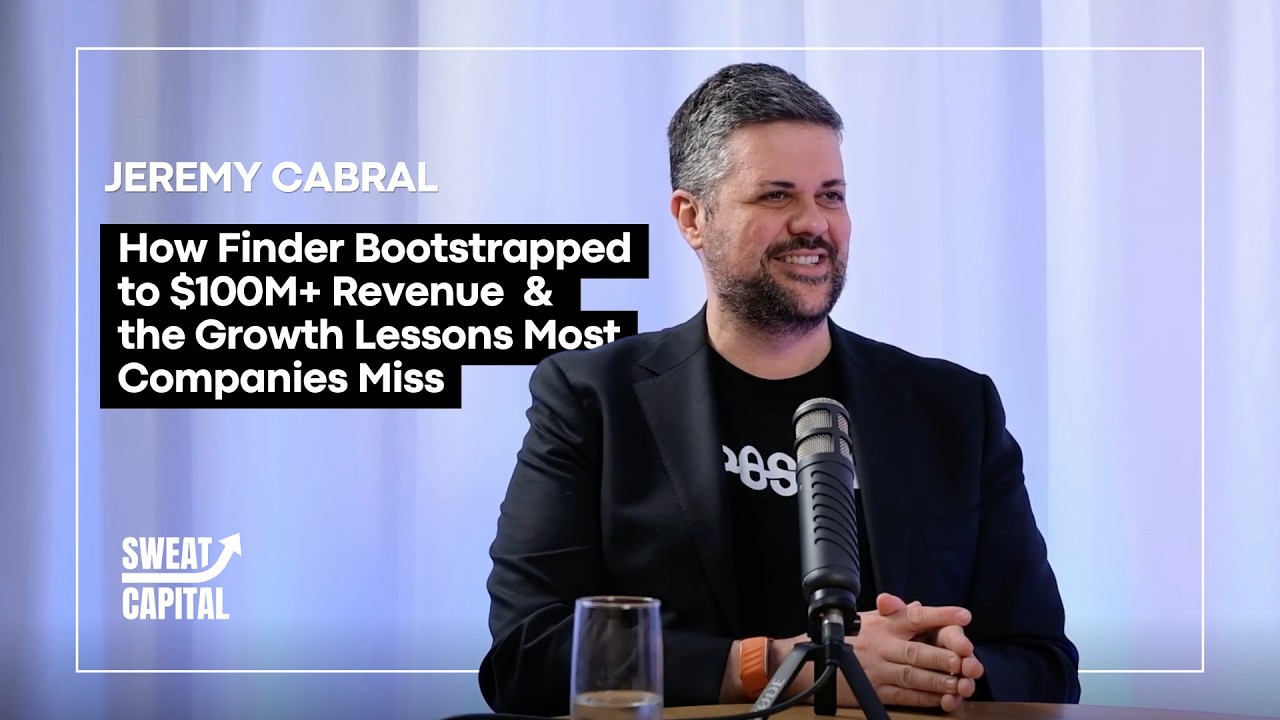
Jeremy Cabral gives Mark Bouris a practical introduction to connected AI agents and what they mean for business operations. He begins with a personal example: an agent pulls information from his sleep tracker, fitness wearable and connected scales, then sends a daily health summary. The point is not the gadgets themselves. Once authorised, software can retrieve information from separate services, combine it and deliver a useful action or report without a person opening each application.
For businesses, Jeremy recommends starting with the workflow rather than the tool. A company should map how it finds a customer, gathers information, makes a decision, completes the service and follows up. Each step can then be assessed as a discrete problem. He uses mortgage broking as an example, showing how agents could research prospects, request documents, check policies and prepare options while a human broker retains the relationship, judgement and regulated responsibility.
The most valuable input is often the knowledge already held by a company's best operators. Jeremy proposes creating a small cross-functional group made up of people who understand sales, operations and delivery. Their task is to explain how the business really works, including exceptions and judgement calls, so those patterns can be documented and used to build internal tools. This can extend scarce expertise rather than simply cutting headcount.
Jeremy is clear that human moderation remains necessary. Trust, relationships, privacy, security and accountability do not disappear because a task can be automated. Businesses should take calculated risks, give systems the minimum access required and keep a person in the loop for consequential decisions. At the same time, he sees waiting as a serious competitive risk. Teams adopting these methods now can operate at a lower cost and run more experiments while slower competitors are still discussing a distant strategy.
The conversation closes with the personal side of adoption. Jeremy immersed himself in fast-growing technology communities, built tools directly and accepted that early learning could take ten times longer before making later work dramatically faster. He also used data and AI to support his marathon training after a poor health assessment. His core recommendation is to create protected time, choose a real workflow and learn through a focused sprint rather than occasional prompts.
Key ideas from the episode
- 1
Connected agents turn separate data into an action
Jeremy's daily health report combines sleep, activity and weight data from different services. The useful change is the automated synthesis, not another dashboard that a person must remember to open.
- 2
Map the workflow before choosing the technology
Businesses should document each step from finding a customer through delivery and follow-up. That makes it possible to identify discrete problems where an agent can remove delay or repetitive handling.
- 3
Capture the judgement of the best operators
Jeremy recommends assembling a small group of top practitioners to explain how work really gets done, including edge cases. Their knowledge becomes the foundation for useful internal tools.
- 4
Automation should increase expert capacity
In a mortgage workflow, agents can gather documents, research policy and prepare information while the broker focuses on advice and trust. The aim is to extend scarce human capability.
- 5
Human review remains essential
Relationships, regulated decisions and sensitive data still require accountable people. Jeremy supports human-in-the-loop systems and calculated permissions rather than handing consequential work to an unsupervised agent.
- 6
Delay carries its own competitive risk
Jeremy believes the next 12 to 18 months are critical because early adopters can lower operating costs and test faster. Waiting for a five-year strategy may allow competitors to compound an execution advantage.
- 7
Focused sprints build real fluency
Initial implementation can take far longer than doing the task manually. A protected sprint lets the team build context and capability once, after which the same workflow can run much faster and more consistently.
Chapters
- 02:39What connected AI agents can do
- 05:11A daily report built from health data
- 06:13Connecting AI adoption to business growth
- 10:10How personalised outreach agents work
- 16:52Creating space and a cross-functional AI team
- 18:15Mapping the mortgage broking workflow
- 21:01Trust, relationships and human moderation
- 25:27Cybersecurity and calculated adoption risk
- 27:33Why the next 12 to 18 months matter
- 29:35Learning from high-growth technology companies
- 34:24Applying AI to growth systems
- 40:07Using data and AI to complete a marathon
Full transcript
11,717 wordsJeremy Cabral, welcome to The Mentor, mate. About time you got here because you've been one of the co-founders of Finder. I mean, I've had Fred, but a long time ago. Quickly, just give me the little story about how you became a co-founder, how you, you, you got into that role.
Yeah. So, um, I met Fred on Twitter originally, actually.
So you're talking about Fred Schebesta?
Yeah. Fred Schebesta. Um, he put out a tweet like, should I get a Nokia N95 or the iPhone? And I'd bought the iPhone, I think a few days after it had launched in Australia. I was like, mate, this is a game changer. 100% get it. I think, you know, the tweet was very concise. And, um, anyways, uh, we ended up connecting at this conference and, uh, in person he was telling me about his current business, which was, um, sold into like a conglomerate of agencies, like about 9 agencies that got listed. But then, yeah, a few minutes later he was like, you know what, forget that. We have this new idea, um, that I've been working on as like a ventures arm that wasn't sold. And ultimately, you know, joined in that, um, that period as a co-founder to be able to To grow the business.
And you did.
And we did. Yeah. It was a crazy journey, man.
And Finder's like, it's out there, like it's global. It's a big business.
Yeah. Over the course of a year, like we probably have about 34 million website visits. Um, you know, pretty significant. Um, at its peak we were in over 23 countries, had, um, just short of 600 employees. Um, and over $100 million in revenue as, you know, a few years in a row. So it's, um, a pretty significant business.
Yeah. Are you still there or you all exited the business?
No, actually, uh, my operational role I pulled back from in around September last year. Um, and now growth advisor to companies and, you know, startups and scaleups.
Okay. So growth advisor and you're pretty young, but you're a growth advisor. I noticed your orange Whoop there, mate. What's going on? Yeah.
Um, so basically I love data, you know, data in business and, you know, when I got focused on my health, I really, you know, tried to track absolutely everything. I've got a Whoop, um, Eight Sleep, you know, for my bed and all my bloods and all that sort of stuff. All the biomarkers. Um, but yeah, I track, um, obviously everything that Whoop tracks and, um, I'm actually using it now to pull data into, um, messages on my phone using something called OpenCLAW, which is this new, um, thing that's been popping off, basically an easy way to integrate, um, AI through messaging. And, uh, yeah, it's been a whole heap of fun.
You maybe you could just for our audience, you could, you could tell them how OpenCLAW is spelled.
Yeah. So, um, when it first launched, it was called Clawdbot, C-L-A-W-D. I think Anthropic got upset because they've got their product called Claude with the AU. So anyways, rebranded a couple of times and then ended up being OpenClaw, O-P-E-N Claw, C-L-A-W.
Yeah, right. And what does it do for anybody listening to this? Because this is an important, OpenClaw is an important tool.
Oh man, it's unbelievable. So, you know, in the last couple of months, what it's effectively done is made AI agents very accessible to people and accessible in the way that It's available in your preferred messaging platform. So whether that be WhatsApp, iMessage, Telegram, um, you can effectively speak to this agent. And not only can it return your answers to questions like, you know, ChatGPT or Claude or Gemini, but it actually can go and code on your behalf. And it's all available through this interface. Um, the other significant thing about it is it's got all of these integrations out of the box that you can connect in. So if you want to connect in with your CRM or your, you know, website or, you know, email system, like it's just very easy to do. And so that's why it's, you know, I guess taken off because it's something that, you know, people wanted to use AI and they want to go beyond just using ChatGPT and really have these fancy AI agents that everybody wants to use. And OpenClaw made that very easy and accessible for people.
So, and how would I access it though? So like, do I have to download the app or what's the deal?
Yeah. So you can go to openclaw.ai. That's the website. And there's a few ways to do it, but effectively, if you are technical enough, you can install through terminal, like just copy paste one line of code and it takes you through an onboarding process to authenticate your various systems, your messaging platforms, email, what, you know, browser usage, things like that. And once it's set up, um, you, the end stage of that is connecting it into a messaging system. I started off using Telegram because I think that's kind of one that I rarely use. And it's, so it's a bit more secure in that sense. And then from there, you can just start messaging it and, um, assuming it's got all the access it needs, it can start executing on tasks on your behalf.
So that means you don't have to go to every single protocol, when you make everything available, you don't have to go to your Whoop, um, app. Everything comes into one place.
Yeah, exactly. So it basically can connect into these APIs, which is a fancy way of saying I've got a database, like say Whoop's got a database and it stores all your health data in it.
Your data.
Yes, exactly. Yeah. And so if you authorize it to get access to that database, and Whoop allows you to do that. Yep, it does. Yeah. So they've got like developer APIs. And so normally these would be available for somebody building an application for broader usage. But people are using this Open Claw thing to build their own applications effectively for themselves, which is pretty cool.
And effectively what you were saying, what you've done in relation to say your Whoop and, uh, Eight Sleep and maybe, you know, like, uh, stuff that comes from your pathology place where you get—
My scale, all this sort of stuff.
Yeah, where you're maybe a trainer. Yeah. Maybe you're a gym guy or you're a trainer. Um, you're getting everything put into one place. Um, and, uh, have you then, um, built it such that it starts to prompt you?
Yeah. So each day I get an update sent at 6:55 Yep. Tells me, you know, how long I slept, you know, how many calories I burnt the prior day, the workouts that I did or didn't do, which is a problem sometimes. Even connected to my air purifier, which is kind of insane.
Um, how do you get your scale weight on there? So have you got scales that, uh, allow access?
I've got a Withings scale.
Oh yeah, yeah, yeah, yeah, yeah.
And so basically, again, they've got like this API you connect in, authorize that.
Yeah.
And it just puts this, you know, message forward, um, wherever you like. You can, you know, start by messaging to yourself. And assuming you've got the right security in place, you can add it to a group chat and start messaging there as well.
Or you can send it to your healthcare professional.
That's right. Exactly.
Or you can share it with your wife or totally who might be overseas or whatever. You're just showing them so that she can actually see what's going on. Like, you know, are you remaining healthy? Or you might be a sportsman. You can share it with your coach. Or you can share it with your, um, you know, the sports physician in the organization or there's a strength and conditioning person in the organization. So this is a conversation about AI. Okay. The, the power of AI and that's your new deal. So, you know, when you're talking about growth, what do you call yourself?
Growth advisor.
Okay. Advisor. What's the connection between being a growth advisor and, um, the use of AI?
Yeah, I think a lot of people up until now have been particularly strong at, you know, a certain discipline, you know, maybe they're great at internet marketing or they're great at sales or whatever it is. And so they've got these systems which are manually operating right now. For example, uh, an email outreach, you know, business that, you know, some software that runs each day and kind of approaches 100, 200 companies, you know, trying to get them on a call. Yep. So that's, you know, how software is traditionally sold for things.
And so let me just stop you because I just want to simplify it a little bit here. A good example of that might be where somebody is using an email system to send out 100 emails and they might be trying to find customers or clients for, um, Knight Frank, one of the big commercial retail leases in Australia. And they might reach out to me overnight saying, look, we heard that your, we understand your lease is coming up for expiration in Chifley. And we have, you know, they might send this to 100 people in Sydney and they're an email, they're a marketeer through email. That's an example of, and they're using software to reach out to all of us.
Yep. Right.
Which I get, I get this stuff all the time. So that, that one person is expert at that.
Yeah, exactly.
Whereas AI may help them in terms of growing their business.
Yeah. So traditionally, you know, companies might've heard of software like HubSpot or, you know, these big CRMs where you kind of add a contact, you send an email and you put them in like a nurture sequence, you know, follow up over time. Now people are using AI to scalably identify all these companies to contact first, first, like a deep research process. Enriching that list with all of the information they can find online about that person, put— putting them into a sequence and then automating the follow-up. Um, it's just this whole other scale of what people are able to do. And so that's the sales example. You know, you've got, say, content generation up until now. People were, you know, a great writer that could write an article and, you know, get, you know, great views online. Now you can do this, you know, highly scaled out research and, you know, have a content pipeline built with AI that makes it much faster, not only to, you know, write the content, that's the easy part. It's more like, how do you make it fantastic? Because, you know, my perspective, if you've been using ChatGPT to write content up until now, you know, I think that the issue is like anybody has access to that. So you need to start in your, you know, thinking it's like, well, if ChatGPT makes it easy for anybody to produce an article with AI, that now has to be a 1 out of 10 article. So what does 10 out of 10 look like? It's, you know, all the kind of augmentation of this AI process. Like how do you give it the right data, the right kind of customer insights where that, you know, maybe that comes from like a sales call you've done recently, a transcript. How do you give it access to, you know, information and a knowledge base around how your company approaches things? You know, your preferred brand style, like there's all this information that's context that AI can leverage to make, you know, that kind of 1 out of 10, a 10 out of 10 quality article. And so that's really the step is companies going from using ChatGPT to building their own kind of automated systems that are AI powered now.
As you were talking there, I know I get these quite often because people sometimes they get emails overnight usually, but it says, look, hi Mark. And these are organizations who are trying to, they must have some deals with guests who want to be on a show. Like mine anywhere in the world. And what they, if they can get on the show, they must pay these organizations to get on the show. They're sort of like publicity agents.
Yeah. So I've seen this as well.
And they go, hey Mark, we've been following your podcast. We saw your podcast with Jeremy and it was really interesting.
They actually, they're highly personalized.
And you go, well, wow. Initially they've watched my show.
Yeah.
Then I think, no, they haven't. There's no way in the world. But the way they talk through it, There's obviously an AI element in this because somehow they've gone through whatever's available and, uh, sort of profiled me.
Yeah, exactly. So what they've done in that situation is like, they'll have your podcast, which has a feed. And the moment a new episode goes live, it basically detects that. And then it goes, okay, cool. So who was the guest? You know, Jeremy Cabral. What do we know about him? Let's go and look at his LinkedIn and do some research online and we can construct some sort of context around who Jeremy is. And then they know, okay, this is your show. These are the types of guests you've had on before. So they use that information to personalize the email to go out to you. So immediately it's not like a totally generic spammy email. So they've got at least some, somewhat your attention there.
They get my attention straight away. Well, they used to anyway.
Yeah. And the thing is from here is I think there's an opportunity to go even deeper if I was one of these software companies or agencies, but you are right. Like effectively what people are paying for is like Um, a SaaS, like, you know, where they pay like a monthly fee or an agency that can automate this outreach to podcast hosts. Um, for me, if I was to improve on that, like what I've been thinking about is like, who do I know? What podcasts have they been on? Are they, is that a podcast that I would like to be on? And how can I not only, you know, personalize the pitch, but say like, based on my, you know, last 5, 6 months of transcripts, what are topics I'm talking about that are interesting that might resonate with Mark's guests? And incorporate that. Like, you know, I listened to, you know, this episode. Um, I saw the most replayed moment was this. You haven't really touched on that in an episode before. Why don't I jump on, hear my, my thoughts on that topic, 3 to 5 bullets, you know, get inserted into the email. And then you're like, wow, this guy's done all his research, highly data-led. Like it's a no-brainer. It's going to be a great episode if he comes on board. So yeah, I think that's, um, the level you can get to with AI is actually that extreme amount of research and detail is possible to be able to put into that email and into that pitch as well.
So, 'cause what we're talking about here is, um, uh, on this example at least that I've raised is, um, they're probably, um, publicity agencies, um, who, uh, in the old days would've just literally got on the telephone and rung as many product producers like Sammy over here, and they would've rung them up and said, look, we're trying to get our client who's paying us a retainer.
Yep.
Um, and we're their publicity agent. I mean, Roxy Jasenko used to do this.
Yep.
At, um, you know, Sweaty Betty.
Yep.
And, uh, Roxy would ring up everybody. She'd be on a retainer of, you know, $2,000 a month. Yep. And, but on top of that retainer, she'd get paid per placement. Yeah. Publicity.
Mm-hmm.
And literally when we first started our podcast up, uh, when Roxy was running Sweaty Betty, Roxy actually would ring, ring our producer those days out at Southern Cross Stereo. And, um, we used to get quite a lot of guests from Roxy who she would be representing and she'd get paid more money if she got a placement for them.
Yep.
Um, sort of like, um, She's like a talent manager, but she would sell the talent into our producer. And because it was Roxy on the phone, you know, you had to pay attention because Roxy was great at publicity, generally speaking, and she had good clients. What you're saying now is AI is replacing that. It's taken the— and also it can look like it's written by Roxy, so it can get into Roxy's voice.
Totally.
Yeah. Good. By looking at all the stuff Roxy said and written and performed and blah, blah, blah across the across the planet. And, um, and, but you are saying is a real good quality AI. You mentioned SaaS. I mean, I just want to come back to that, but because some people are saying SaaS is a little bit outdated and that we've got to, um, ignore it. Yeah. Maybe we may as well raise it now.
Yeah, it's interesting. Look, I think, um, there's a lot of excitement around the fact that you can build your own software right now using AI. The issue is that people don't realize you're going to have to maintain that. And you're also taking your eye off the ball. Like you might be able to spend like 30 hours, 50 hours building your own software, but that's, you know, things that, you know, you could pay somebody else to do. So what about vibe though?
Like, uh, you know, we, you know, can it get to the high quality that SaaS is going to give you anyway?
I think that it can get really intricate and quite nuanced in a way that's like software that's literally personalized to you. Whether or not everybody should build that software is a whole other question. I think, um, As I said, this maintenance piece is a challenge, but ultimately I think the value in building software is in the subject matter expertise, like the domain expertise. If you have like this context around how something's done that nobody's built software around previously, like if you're a services business that approaches things in a proprietary way, I think that's an epic opportunity to go and build something that's your own bit of software that perhaps, you know, you're looking at that for internal use, but also, you know, you could, you could sell it into your client base as well. So. Yeah, I'm still very, very bullish on SaaS, but I think we're going through this phase of, you know, decentralization and centralization again is bound to happen where I think there's going to be this huge amount of mess from all this vibe-coded software. And then eventually people go, you know what?
Consolidate.
Consolidate again. And yeah, that's just how the cycles go all the time.
You know, I'm a novice to this sort of stuff relative to you, but can we just, do you mind if we just play a bit of a game? So let's say I run a business, which I do, which has a couple of thousand mortgage brokers across Australia. And I know these mortgage brokers, let's say that 80% of the business is delivered by 20% of our brokers and the balance is sort of, you've gotta have the balance, but the other, you know, 20% of the business is written by 80% of the people around the other way. And, but the top guys or girls, they have processes and they're not, particularly in today's terms, sophisticated, but they're effective. They know how to talk to you. They know how to find you. They know how to deal with the banks that they're trying to get the loan for you from. They know most of the policies of most of the bigger banks and they're just good with relationships and they're good at making you trust them and feel confident. Let's say that I said, well, wouldn't it be great if I could sort of somehow aggregate all the top tips and top techniques of my top 20% of brokers who write 80% of our business? You know, we write $3 billion a month. So, you know, we're talking about $2.4 billion written by 20% of the 2,400 people. You know, 400 people can write quite a lot of business, like a lot of business. So they must be doing something right. And I said, well, let's build an AI agent who is effectively an assist— AI assistant to the broker. How would you go about, how would you sort of start? And I just mean in big terms, I'm sort of the big milestones here. What are you looking at? How would you sort of sit down and think this through about the architecture of it?
Yep.
And I know, and I'm not trying to pin you to the wall here. I'm just trying to say, just from a, audience point of view, the sorts of things you would start to look at?
Yeah. So it's, it's an amazing opportunity, honestly. Um, as a company, I think that in this point of time, you need to create space for innovation. You need to create a pod, you know, the least amount of people possible to be able to get you to the goal.
Like, you mean, you mean personnel?
Yeah, personnel. So it'd be like, you know, your top mortgage broker, get them into a room for 4 months, your top, um, you know, Operator, like someone that, you know, in the backend systems know how, how that all—
How credit gets approved.
Yeah. Credit approved. Almost like your, um, your Mars mission of like who you take to Mars, like the, the bare minimum to be able to operate your company on Mars if you landed. Right. So you literally get all these people into a room for 4 months straight. And you have to have obviously, you know, some technical talent, either in-house engineering or a company that's able to build this alongside you guys. But what you're doing through this process is extracting IP. You're extracting your methodology, your systems, your processes. Much like in the past, we'd have a job description with, you know, key responsibilities and roles. And then for each of those responsibilities, you have these standard operating procedures, like here's how you do this thing, steps 1 to 10. And assuming you have all this context, the team can start looking at that opportunity and go, okay, cool. Here's how we do this part of the process. Let's go and build an AI automation that just does that bit there. And you progressively work through these opportunities that you've audited in that kind of That environment was—
so in other words, we might break it up into silos, but the first part will be finding the client.
Yep, exactly.
The second part might be extracting information from the client such that the client is the least inconvenienced in terms of data. The next part might be moving that information, that data electronically, obviously into the policy world of banks to find out which one would approve it before you submit it.
Totally.
Because you can download, we can download all the policies. We have access to all the policies. And then, so we then say to our client, you know what, St. George Bank would definitely approve this based on the information you've got. Clearly you've got to put a ring around this for security. But, and then you probably need the third pod would be the submission process because, you know, it doesn't happen that it's not, I mean, apart from Macquarie Bank, who's very literate in terms of digital approvals and stuff like that, really quick. Like their technology's great. The most of them, there's a lot of judgment still involved, less AI at the bank level.
Yep.
Not as much AI because you can apply AI at the bank level or someone who's got a job, had the job for 5 years, works for the government, doesn't have one problem ever missing a payment on anything ever. Isn't borrowing more than 80% not considered risk? Hopefully best off 2 borrowers, husband and wife perhaps. It's very, there's not many people in that category. Most people are in the exception category and they need to be judgmentally reviewed by an individual. So knowing how that process works, 'cause then you've gotta submit it, but then you want AI to take over that process too. Be saying to you or me, the broker, Mark, client wants his approval quickly because they've gotta settle in 6 weeks. The deal's been sent to St. George, but it's stuck. Him to get on the phone and talk to the assessor or whatever, whoever you gotta talk to. Is that what you're saying? Like put it into segments?
Yeah, it's like the way I see it is like solving discrete problems that your internal team can start using these tools because they've been automated. So progressively, like the finding clients, credit assessment, so on. And when you've built a whole suite of these, I think the end opportunity is about building your own AI assistant. And again, that could be internally used for your staff to be able to kind of take the actions which otherwise would have been very manual to execute on. But eventually you might be able to make that customer facing. So you have an AI assistant like your own ChatGPT that's trained on your business and your, your systems, your, your processes. You can actually start doing those things which would normally have been humans executing the task, but instead you've got AI there. performing that agentically is what they call it. You know, an AI agent that basically can orchestrate a whole suite of tools and agents to go and do those things on behalf of the person that's using the app.
Do you think that, um, agentic process or AI agents, um, will actually, in, in the, the case of the example I've just been giving you, will take over the actual broker himself or herself?
Yeah, I think that everything, a lot of this stuff is based on trust and relationship. Yeah. And, you know, a connection that you've got your broker, somebody you speak to. You know, over many, many years and they, they're going to look after you.
And they do it for you. They do. You're not actually directly engaging with the AI agent because the AI agent can't do it for you unless you engage with it. I mean, you have to get on either talk or type in text so it knows you've got to instruct it.
Yeah. Oh, at this point, yes, there's a lot of human moderation and necessary human in the loop, they call it, to be able to execute on these tasks. But some things are Moving towards completely agentic when there's like a low risk of error and, you know, great outcomes where an agent can perform that task. I think that is something that's becoming more and more automated. But as I was saying, I think that the trust and the relationships are the core piece here. And I think these, there's kind of a few options to a company, like they can become tools towards, you know, the team to be able to use internally. But, you know, really what it's about from here is like, how do you build A bit of an edge as a company, like an assistant or something, you know, some agentic processes or automations internally that allow you to achieve much more with less time.
Gives me more capacity.
Yeah.
Because, you know, up until more recently, our organizations use the Philippines because it's sort of, it's faster because instead of having one person on $180,000 a year working an administrative task in relation to the process of getting a loan approved, for example, for the broker who does does all the front-facing stuff, gathers all the data.
Yep.
And then everything else gets done behind the scenes. The broker doesn't do that. We, instead of using one person, $180,000 in Australia, we'll get 3 people with the same qualifications, same experience, same ability for $60 grand a year.
Yeah.
So, which is $180 grand, but we get 3 people can move, therefore they can do it much faster and much cheaper. And for, and we're sort of getting like double, double speed, if you know what I mean. So it's been quicker, but now AI is starting to re— I'd imagine what you're saying is AI is probably going to replace those 3 people over time.
Well, potentially.
Faster, cheaper.
Yeah, potentially. So, you know, at Finder, um, one of the earliest kind of innovations for me was like, how do I unitize the work, get the repeatable processes being done by lower cost individuals and labor? So In the beginning, um, actually I'd read 4-Hour Workweek from Tim Ferriss, you know, learned about all his ways of kind of, you know, ultimately work more than 4 hours a week, let's be real. But, um, you know, being very productive and I started with hiring one virtual assistant, um, which eventually became over 200 at Finder and it was a pretty scaled out operation in the Philippines.
Virtual being, yeah, virtual not being a digital virtual, virtual being a person but living somewhere else.
Exactly. Yeah. And, um, So such an effective team, like, you know, able to do so much 24/7, 365.
Yeah.
Um, and I think that the interesting thing is for a company to be able to scale out and do things, you know, to delegate like a task that, you know, can be done by hundreds of people, they need to first document how it's done. And that's the pre-steps to making AI work for your business. So, you know, I do think that, you know, certainly if, if, um, you know, some of these assistants or kind of support staff don't evolve, it's a bit of a challenge, but to your point before about having more capacity and being able to produce much more, I think there's going to be a huge volume of things that still need to be moderated and orchestrated. So my hope is that those individuals are retrained and reskilled to be able to operate AI on behalf of business owners. I think that's, you know, the opportunity that exists out there is, you know, kind of instead of hiring the next person as a traditional kind of, um, VA type model, which, um, is very typical out there, how can you instead look at this and go, you know what? I'm going to approach this from AI outwards. So I'm going to get this task done with AI. I'm still going to have a VA that understands how to operate for me, that particular thing, because, you know, I've got other things to focus on in my company. But yeah, going through that kind of habit of going, okay, you know what, as a business owner, I need to scale here. I need to be able to do something, you know, that's repeatable and not have to always have my mind on every single aspect of my company. And that's the first, most important step. Um, and, you know, the same, you know, kind of skill of delegating to that VA is what you need to be able to delegate to AI.
Is, are we talking about potentially big cybersecurity issues? Look, I think with most technology leaps, there are concerns around security and, you know, so the leap goes, the technology goes too quick for cyber security, but rather to catch up.
Exactly. You know, whether it be computers when they first became mainstream or the internet and the other, the same concerns existed back then. I think the risk of not taking action is greater than the risk of something going wrong.
The risk of not taking action in relation to security or the risk of not actually taking the leap?
Not taking the leap. Yeah. I think that is, that's what, you know, history has proven over time. There's those that take the risks are those that end up doing far better.
So that's a very good point, Jeff, because, you know, it's funny you should say that because, you know, I've been around a long time and I've often said to people, not doing something is just as, could be just as risky as doing something. If you don't do something, you could get left behind effectively.
Fully agree. And I think that's kind of, you know, obviously don't, don't, uh, be reckless, you know, take a calculated risk, you know, uh, do something in a sandbox in a way that's kind of, you know, um, you can see how it's working before you scale it out. And that's, you know, all the sensible things to do. But honestly, for companies at this point, my main fear is if they don't start now, there's going to be this huge gap that comes where the companies that, you know, lent in and really mastered AI and built it into their core processes. We'll be able to be operating at a much lower margin, much greater scale, and truthfully, potentially with less people. So for me, it's about, you know, fast movers will get rewarded in this, you know, this time. And I'd rather be the company that was moving quickly than the one that was kind of worried about security and the fear of things going wrong.
Well, this happened pretty quickly. So ChatGPT, everything else has followed it. There's a whole heap of them. And The speed at which has been happening is, you know, way beyond Moore's Law. And in fact, like it's only a couple of years really. Where is the risk if we don't make a start by mid next year? If we don't make a start for 2 years, I mean, what's our little window that we can sort of still ponder about it or is it too late?
Yeah, look, I wouldn't say it's too late, but we don't have time to wait. You know, in my mind, I'm thinking about the next 12 to 18 months as the most critical in business at this point. How do you kind of Start today is the key question. And I think that, you know, firstly, like to do anything that, you know, is important, you need to create space for it, you know, time on your calendar, you know, hire against that strategy, invest into it. And for me, that's the first step is like, you know, not going, is it, you know, too hard basket or come back to it later because I don't think we have that luxury of time to wait. And the risk is if we, if we do wait is that, you know, competitors that do invest in AI now, We'll just be able to operate at a much lower cost than your company. So yeah, I'm really pushing companies to move quickly.
Should everybody be doing it? Because everyone else is going to be doing it, you've got to be doing it too?
I think so. Honestly, that's my position on this is like, when I open my computer, I ask myself, or actually I tell myself, it's like, how can I do this thing with AI? Like I must do it with AI. It's like starting from, you know, whether it be Claude Code or one of these systems outwards. If I were to do this task, you know, how can I use AI to get it done? And, you know, it might take you 10 times longer initially, but I think that by doing that kind of upfront work to prepare the AI to have the context it needs to do the task with a high quality, you end up moving over 100 times faster. And that's the massive opportunity that's available to companies. And, you know, for me, I think it's relevant to a company, whether you're one person or if you've got thousands of employees. I think—
If you're one person, you definitely need to do it because you can't do everything yourself.
Well, that's right. And I think the opportunity is like right now it's a bit of an arbitrage. Like if you can get in there and move quick, you'll be able to, you know, really capitalize on things that your competitors can't. So for me, the way I'm thinking about this is like, it's not necessarily about having a strategy that's, you know, 5 years or 10 years down the line. It's more like, how can I just stay a little bit ahead of everybody else? And, you know, often that looks like just, you know, applying the things you're learning each day, creating the space.
Like for me, um, well, you just said that very quickly. Um, maybe you can give me a little bit more depth on that, applying the things you're learning every day. So what do you mean by that?
Yeah, so I did a whole bunch of sleep hacking and all this health stuff, and I was really health focused for a good period of time there. But I would say I've slept very little in the last 2 months. I've got Claude code to blame and all these AI releases. It's absolutely absurd. But, you know, for me, I told myself is like, look, if I can get to a position where I'm moving more quickly than others, I think that I'll be able to kind of crystallize an opportunity and kind of arrive at a beachhead where I'm like, okay, That's how I can work with AI today and have a huge unfair advantage over others. I spent a few days in San Francisco back about a month or so ago, and my goal was to get ahead and go, okay, cool. How are people using it over there? Because if I can get that kind of look into, you know, where the world's technology is made and bring that back to Australia, I think there's an opportunity not only for myself, but to be able to, you know, to be able to teach other companies as well how to apply AI into their everyday processes, into their growth systems. And, you know, for me, you know, again, it's about creating the time and space. Like, you know, that was a really intense trip to go and fly to San Francisco for 4 days and just come back.
Did you meet dudes? I mean, did you, how did you sort of, because you can't just get off the plane and go, hi, I'm here. Um, how'd you line that up? And what are the sort of some of the people you went and saw?
Yeah, look, for me, um, I think it's about getting into the room where there's companies that are high growth, um, which is not hard to come by in San Francisco, you know, people that are, um, very innovative and pushing aggressively. Like, you know, one of the businesses I was hanging out with, you know, they work 7 days a week. Like they're in their office on a weekend, morning and night. Like it's, it's literally around the clock.
They live there.
Some of these guys. Pretty much. Yeah. They've literally got a mattress in the corner. Um, mattress in the corner. Obviously, you know, I've built a pretty good network over the years so I can quickly meet the people I like, but, you know, being in those cities, like you can't not be, you know, exposed to this technology. I remember, you know, got off the plane. jumped in the taxi and then, you know, by the time I was in the city, I was in robo taxis going around everywhere and like, you know, there's not, not a driver in the car, which is totally total madness. But, um, yeah, I've just always done this over the years. Like, you know, whether it be trying to master, you know, search engine optimization back in the day in 2007, um, or, you know, whatever it was like, you know, crypto in 2017, I was in New York City. Um, I think it's just about being in the room where the people that are innovating and pushing hard. And, you know, that does mean a time investment, a bit of money spent to get in the room with the right people. But you'd be surprised, like when I was at South Start in Adelaide last week and there's a guy, Derek Sivers, who sold his company City Baby for $22 mil, probably around 2008, just pre-GFC. And he's someone that I've read his blogs online. I've seen him on the Tim Ferriss podcast a bunch of times. Um, he's just a great thinker, but you know, I was like, I had no idea he was going to be at this conference. Go to the conference and I was speaking on stage about AI and I was like, a shame I didn't get, didn't get to meet him when I was there. Anyway, as I'm leaving the conference in the stairwell, you know, there's Derek and I was like, Derek, have you got 5 minutes? He's like, mate, yeah, I do. And so canceled my Uber and, um, ended up sitting down for 30 minutes together. But like, that would never have happened if I wasn't in the same room. And I think there's these chance moments that if you—
What did you learn from him?
Well, I asked him a few things, but for me, I was like, look, when you exited from your company, did you think to go again? Like, what was your kind of next opportunity that you didn't go with? And I think for me, um, he said, play the momentum. And I was like, mate, that's good advice because for me, you know, I've thought about where the rising tide is. Exactly. And yet, like, I've had a series of investors approach me, you know, post leaving my operational role at Finder and saying like, what's your next thing? Like, let's do a jam session together.
Yeah.
you know, investors into big companies like Canva and others. And, you know, at the time I was like, look, you know, just give me a bit of space. I'm thinking, but, you know, in chatting to Derek, I was like, maybe I should just call them up again. It's like, hey, I'm ready for that chat. Um, and so I think that was one bit of advice. I think the second was like, you know, there's this, it's almost like a cheat code if you can kind of move quickly in these moments and, and, um, you know, there's interest around you and kind of your brand, like, you know, investing in your audience and kind of giving yourself a platform is really—
And it doesn't last forever too.
That's true. Exactly.
You've got to take advantage of it when it's there and you know when it presents, it presents.
Yep.
And yours is presenting to you at the moment.
Yeah, absolutely. Like, you know, one of the things for me that was a big priority in, you know, on the other side of Finder was, you know, look, I was kind of behind the curtains, you know, I really had a private Instagram account back in March last year and I spent probably 2 weeks, you know, going, am I going to make this thing public? You know, whatever. Eventually made it public. I'd done, I think, uh, in the year prior, um, I think 4 LinkedIn posts and now I post on LinkedIn every single day.
You on X?
I'm on X as well. I haven't focused on X for a while, but I do want to. Um, but you know, I've just done some Instagram video content. I started a week ago. I went from 800 followers to 3,000 in the space of a week. And, um, that's—
What are you talking about? What are you talking about?
AI and growth.
AI and growth.
Yeah, exactly.
Why'd you pick growth instead of say, Um, AI and admin or AI and back office. Why did you pick growth?
Well, I think that all of the systems, all the backend functions, you know, all of the functions inside a company ultimately lead to one outcome. It's like you're in a company to grow the business, grow revenue and, you know, grow margin. And for me, I think AI is—
Well, they're different though, Jeremy. So margin is, uh, cutting costs a lot of times about keeping your costs contained. Whereas growing revenue means more eyeballs, uh, more conversions. into appointments, more conversion from appointments into a transaction, uh, sitting at the bottom of the barrel, um, you know, coming in like that and, uh, and then, and then closing them. So more, more of every, every step.
Absolutely.
Growth, growth and revenue are different.
Totally. And so I think that growth systems have existed up until now, you know, and systems for operating a business. And when you apply AI to those systems, You can get to like insane scale. I think for me, it's like at a lower cost, much higher volume, things that weren't available to you in the past. Like, you know, if you want to build some software, you probably have to go and raise some money.
Yeah.
And now you can literally in one night, you're there building, you know, your own, you know, outreach flows on LinkedIn or, you know, you're building a little app that, you know, I built an app the other night, um, that compared fuel prices and in about 15 minutes.
Wow.
Like literally plugged into this API. I was like, cool, here's this, um, public API on fuel prices. And I was just prototyping like what you could possibly do with it. Um, that was on a Sunday night. I just thought, you know, this is an interesting thing and, you know, kind of shared it with the guys at Finder. And, um, yeah, honestly, it's just, um, I think with AI, the thing is the quality of the, the brief you give it, like the quality of the ask is where the quality of the output comes from. So, you know, there are people that perhaps weren't, you know, very technical up until now, but they know exactly what they want in business.
They know what works.
They know what works. And if they can, describe that in detail, I think is an insane opportunity for business owners right now where they can literally go and describe what they want. And, you know, in this software called Claude Code, which is, you know, very popular at the moment, you can go into something called plan mode and it literally just asks you questions back and forth, back and forth.
Does it prompt you with the questions?
It does. Yeah. And it just goes and it's researching, it's connecting into tools and all this sort of stuff. And it constructs a plan for you. And then on the other side, it's like, would you like me to start? And you just go, yes. And most of the time you just sit there smashing your enter key and before you know it, you've got this app on the other side that you've built yourself. So it's actually really impressive.
What's interesting about all this, Jeremy, is that I find AI actually creates more work. Sort of, it can create more jobs for you and make you more busy. And also take a lot of your time because it's so intriguing, but it's also, It just sort of drags you in a bit.
Oh mate, it's, as I said, it's addictive and it's been eating into my sleep.
But, um, that, and that's my point.
Yeah.
But what do you think about that in terms of reconciling that? Um, you know, 'cause yeah, you look back on the days of Finder, like that was mad. It was, uh, you know, like you guys are, you know, working crazy hours, getting crazy outcomes. Like, yeah, like jamming with all your mates and colleagues at work and getting this up and, you know, maybe, you know, building your, your, you know, your, your client list or your Use a list, but this is stuff on steroids.
It is, mate. And, and like, for me, the way I think about this is like, you've got to go through sprints to get hard things done. And like, you know, it's about the stimulus, like applied to a problem. It's like, if you can get above the average effort and apply it towards something, you're going to be faster to learn that thing, faster to adapt to, you know, whether it be like a physical transformation or whatever it is. And You know, I've spent most of my career just trying to be better than the average because I think that's where the edge is. And if you can constantly stay at that level, I think that's important. But in saying that, I said it's a sprint and you've got to create, you know, time for recovery. And I think that recovery is, is something that we're all starting to, you know, pay much more attention to nowadays, realizing that actually sleep is the number one thing, you know, um, time with your, you know, family and all these sorts of things like community generally, community, all that sort of stuff, social connection. It's also important. Like, I've got 3 values that I, I, my life is run by. It's connection, growth, and helping people. So I'm really in a fortunate position right now where I've literally spoken to hundreds of companies in the last few months, and I'm just trying to teach them everything I've learned, not only over the last 17 years of building Finder, but being so fortunate to be out there right now and just like traveling around the world and speaking on stage and chatting to these experts. I'm just in this position where I just feel so grateful that I'm building a platform to be able to share back what I've learned. And, you know, for me, you know, I've got a really supportive wife who, you know, I told her back in September last year, it's going to be a wild ride because I'm going to play this momentum. But, you know, in doing that, I think I've arrived at, you know, conclusions for at least now where I know how to apply extreme value using AI into a business. And, you know, I think it's, um, it's just the most important thing. But, you know, I met with my coach last Monday and I said, look, I'm ready to, you know, go back to some level of normality. I booked a trip up to Byron. Um, you know, I'm going to have, you know, some chill time to kind of recover. But, um, that sprint, you know, really going hard at AI gave me the opportunity again to slow down a little bit and recuperate. And to be honest, I'm probably going to sprint again sometime soon.
Well, you'll have to.
I'll have to.
That's because there's going to be someone else out there knocking on your door. They're going to listen to this podcast and say, hang on, I can do that. But like, there's a whole cohort of people we've got to be careful of who are going to be so good at what we do. And AI is going to get them there faster. They don't have to wait 30 years to become experienced like us.
Mate, it's, I think you bang on and, and you know, what you're talking about there is a culture around this. You know, it's, it's a, a culture in a city, um, and a culture in a, in an industry like, you know, particularly in technology where people are focused on performance optimization.
Hmm.
I ran a marathon last year in August. You know, I, um, I was in Chile December the prior year and I remember, you know, I did a VO2 max test, the first I'd done. And the doctor over there who was a doctor for the, um, women's, uh, national soccer team said, Mate, you can't run a marathon. No chance. And I was like, all right.
Because your VO2 max is too low.
Uh, well, yeah, well, basically it was like, mate, you'll die. You'll have a heart attack.
Yep.
You know, um, I was just, you know, really heavy. I was like over 130 kilos, I think. Um, but when people tell me I can't do something, that kind of fires me up a little bit. So anyway, came back to Sydney, um, literally bumped into the head coach of the Sydney Marathon, Ben Lucas, at a cafe. And, um, I know Ben. Yeah, I do. Yeah, he is a legend. Um, so I was like, mate, look, I literally just thought I'd, you know, I decided to run a marathon like yesterday. I bumped into you in a cafe and I'd met him, you know, 10 years prior, but not since then. And I was like, can we do this? And he looked at me, he's like, yeah, you can do it, mate. I was like, I'm pretty sure inside he's like, there's no chance this guy can do it. Um, but yeah, I just, um, set out to, to get this goal done. You know, I, um, over 4 months I'd lost 20 kilos and I just systematically delivered on the thing. You know, I was like, break apart all the pieces here. Like it's my weight. You know, it's a relative VO2 max basically, which is a combination of like your, your body weight and your actual, um, volume of oxygen that you can kind of take in. Um, then you've got like, you know, the actual running. It's like, you know, I've gotta be careful because, uh, you know, as a heavy guy, if I'm running out on the road on, on concrete, I'd probably injure myself. So I did actually—
You're just breaking it up into its components.
I literally did. And I, I, I ran nearly all of my prep on a treadmill up until about a month ago.
Did you use AI to help you break this stuff up?
I did actually. So I gave AI my, my DEXA, so my, um, you know, bone mineral density scan, and it has like all the, you know, body fat and all that sort of stuff. My bloods, my DNA test, my gut, um, health, uh, gut microbiome test, my training program, like literally everything. It was just all hooked in. And over the course of my preparation, I prompted ChatGPT over 3,049 times, including mid-race in the marathon itself, where I was like, here's how I'm feeling, what should I do? It's like, mate, Take a step back for a couple of minutes and then go again. So yeah, it is extremely powerful. And I would say that was a fairly basic use of AI back then in August last year. If I were to do it again, which I'm discussing with Ben right now, like, am I going to run Sydney again? Honestly, I'd be scared of the level of kind of AI assistance I could get. So it's obviously still somebody needs to physically run the marathon. That's like at this stage, it's not going to do it for you. But I think it's like when you've got everything stacked up against you, like, you know, You're, you're too heavy. You're a busy guy. I was still inside Finder operating, you know, a huge company. You've got to make the most of every little allocated time you can. So for me, I literally describe it as like the minimum viable preparation for a marathon and I got it done. Um, but injury-free, which is pretty remarkable.
And, uh, enjoyed it enough to be prepared to do again.
Oh, absolutely. And for me, it's like, you know, I love the data and I'd love to run again and go, you know what, I'm lighter now. I'm much fitter. I've got, you know, better habits each day. I'm, you know, I'm doing cardio in the mornings and when I can, I squeeze in the weight training. I probably should do that in reverse, more weight training. That's what certainly my trainer's saying. But yeah, for me, if I can get to that opportunity to run again and see comparably like how I did, I think it's really key. And I'm the sort of guy that needs big goals, you know, something that can draw me in to make sure that I'm focused on it. Normally something very difficult that most would say no to or never even attempt to do. You know, I was thinking about doing Kokoda in April, but, you know, a few circumstances meant I couldn't do it this year. That's, you know, 96 Ks over 8 days, pretty grim conditions. But for me, I was like, you know, what I was thinking about, I was like, that's a great opportunity to write a book or at least transcribe a book, you know, going through this really tough time, like not internet connected. Yeah. So I just love things that challenge me and things that can push me to another level. You know, over the last 17 years, you know, in building Finder, I was always telling myself I need to be a better version of myself every 2 to 3 months. And I invested into, you know, weekly coaching with my life coach, Craig Hall, absolute gun. And, you know, there's so many facets to that. It's like, you know, physically, obviously we've been talking about that spiritually, emotionally, mentally. Like there's, I think, really different facets to what drives performance for somebody. And often it's important to have goals in different facets of your life because, you know, one area might be going down or not how you want. So if you can go, you know what? At least I went to the gym today at 6:00 AM in the morning. I trained, I've ticked that goal.
Yeah, it's a win.
That's it. You've got something that's working and something you can say like, it wasn't a wasted day. I actually moved forward. I progressed each day. So that's something that's really driven me in the way I kind of set my goals and what I set out to do each year.
And who would've thought AI can assist you in achieving life goals? I mean, it, 'cause everyone just thinks AI's about business, it's about being more productive and maybe people losing their jobs. There's a sort of negative innuendo or nuance on it. But actually AI actually can be used just to make our lives better. I mean, it's funny, you know, you're talking about agents, but I think that the, the, uh, standard protocols are getting so bloody good. They're actually building agents about you as it, as they go.
Well, that's, that's the remarkable thing here, right? So an example is, you know, say search. Google existed forever and it wasn't actually personalized up until, you know, quite late in its journey. But now if you—
Because it was normalized.
Exactly right. Until they built Gmail and the Google accounts and Chrome and all this sort of stuff, it wasn't personalized. But if I went and Googled something and you went and Googled something, we'd probably see different results based on our history in using Google. And so the same thing's happening with ChatGPT. You know, it's only been around for a few years, but, you know, initially we probably all saw the same thing. But now as each of us use it, we're all effectively getting our own personalized version of ChatGPT or Gemini or, you know, Copilot.
So is it feeding me though? What are, what are things I want to hear?
Or It's, yeah.
I mean, I don't know. I get not confused, but I just get worried about that.
Sometimes AI hallucinates and it wants to tell you the right answer all the time.
Or what it thinks you think is the right answer.
Yeah. And the interesting thing is if you challenge it, like it's so confident in its answer and sometimes you challenge it like, oh yeah, you're right. Actually, I am wrong. And now that on second look, here's the correct answer. I think it's tuned to be useful and make people feel good. Like, it's like any product has an algorithm behind it, like whether it be Netflix or Google or YouTube, and it's designed to make the user want to keep using it.
Yeah.
You know, spend more time in that app. You spend more time in the app, they can sell more subscriptions of ChatGPT. They can sell ads in ChatGPT. They can build more functionality into it. Like you said, like potentially building these agents to go and complete tasks on behalf of people. So, you know, it probably does say what people want to hear a lot of the time. But you can configure it to be a bit more stern and you go into the settings and say, look, you know, don't just tell me what I want to hear, be ruthless and tell me the honest truth every single time. And you'll start seeing your ChatGPT evolve a little bit and probably arc up, if you can say that. So yeah, my ChatGPT is quite direct, whereas my wife's like, you know, she calls hers babes. Like, hey babes, can you help me out with this thing? And like, you know, she's talking about all sorts of stuff in there. Um, whereas mine's like, Jeremy, full stop, da da da, like 3, 3 words, like very direct and like gets to the point. Um, because I think that, you know, I just don't have time for these lofty, you know, responses. I just want to get the answer.
That's very good. Have you tried to compare the same question with 2 protocols?
Yes, I do.
I do now. I, I, I tried, um, I, I use Claude and, um, Microsoft's Copilot. I use them both and I just try to get, I just want to see the different, I want to see if there is a difference in the answers. Um, there is.
Yeah, absolutely. So, um, each provider, whether it be Anthropic, which owns Claude, you know, Google owns Gemini, um, OpenAI owns—
Microsoft owns, and Microsoft owns Copilot.
That's right. Yeah. They all have models that are constantly being advanced every day. Literally, you know, from Thursday last week, there are a couple of big releases from Anthropic. So if I was sat here on Tuesday, I would have said something different to what I've said on, you know, a Friday podcast. So I think it is important to use them all and understand what they're good at. You know, say Claude's fantastic for writing naturally. It sounds more human, more like your, your voice. I'd say that Gemini is fantastic for deep research. If you want to go and open up literally hundreds of websites, if you put on pro mode and turn on deep research, it might take 20 minutes to run that prompt, but you'll get this incredible, you know, 30, 40-page report on whatever you want. It'd be like an industry deep dive. Literally, it's just this huge amount of research. It's almost like a white paper really that's producing. And so yeah, playing with each model and kind of just getting a feel for what's working, but also not sticking to your habits, you know, because I think that they, they are constantly adapting. Like, I was a heavy ChatGPT user up until Gemini released its flash models. And then I was like, this is the most incredible product ever. And then, you know, now I'm like, you're pushing so much context into Claude that like, it's hard to not use Claude. Um, I do think there's an opportunity for, you know, almost a universal memory that kind of lives above these models. And I think that, um, as they kind of get more and more personalized, making the personalization, the memory in each platform available to another interface is a pretty cool idea. Because yeah, it kind of, you get stuck in these ecosystems and it, you know, sometimes you just wish that one had the context of the other. A lot of people are migrating from ChatGPT over to Claude right now and kind of pasting over their conversation history. But it's still not perfect, you know, with a, with an AI model, have this thing called a context window. So even if you gave it all of the history, It's just too much context to put into one, um, kind of API response effectively when they're giving you that answer.
So, um, how do you transport, how do you migrate across from one to the other?
You can go into the settings and export the data from ChatGPT and you can, uh, you know, add it to, into a new conversation. Also, Claude's built a website that has official instructions on how to do this as well. Right.
Okay.
Um, you can look, yeah, you run a prompt inside ChatGPT and it, you know, it can push that information across. So that means that out of the box, Claude literally has a little bit of context around what you, you know, and do. Um, but yeah, not perfect. As I said, I'd love to see better solutions on this front.
Well, mate, it was, it's been a great conversation. I really enjoyed it. Um, um, it's a long way from what you're doing, what you have done in Finder. Um, it's very exciting. Um, you're on a wave, a big wave. It's what I call a rising tide. Um, and you're right, momentum's important. And, uh, um, Jeremy Cabral, I wish you the very best in your endeavors going forward, mate.
Hey, thank you so much, Mark.
And go AI.