Never Not Building
I Bootstrapped a $100M+ Company Without Funding
About this conversation
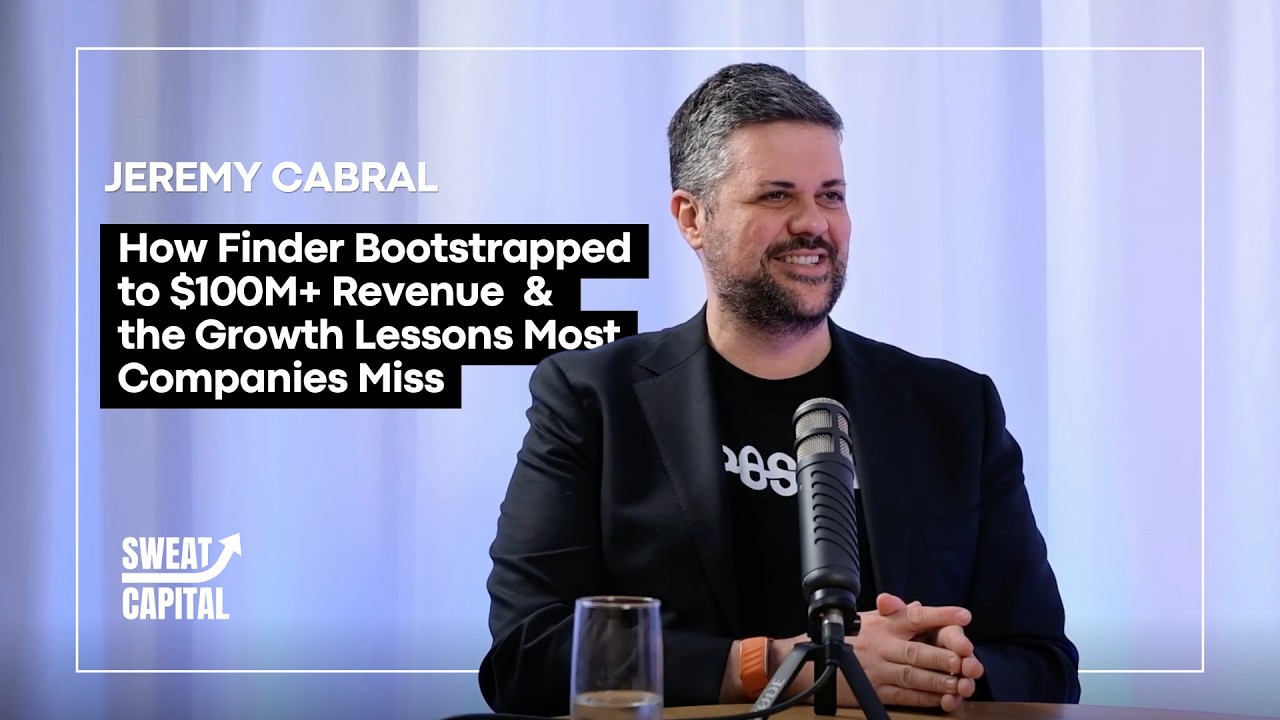
Jeremy Cabral explains how a small affiliate marketing experiment became a global comparison company without relying on outside funding. Credit Card Finder began among roughly 27 ideas being tested by Fred Schebesta and Frank Restuccia. Jeremy joined to help reverse a Google penalty, then built the content and operating systems that allowed the successful experiment to compound. The team treated webpages as productive digital real estate: research demand, publish a useful page, learn from performance and repeat the process across categories.
That model only worked because trust remained central. Finder earned revenue when customers chose products, but Jeremy says the company only succeeded when the customer made a good decision. This mattered in a market where some comparison competitors were owned by insurers. Editorial independence, clear comparison logic and a willingness to forgo short-term revenue protected the repeat use and brand credibility that the flywheel depended on.
The conversation moves from traditional search to AI discovery. Jeremy argues that businesses need enough accurate material online for answer engines to understand their expertise. Small firms can build this footprint by transcribing genuine conversations, turning first-party knowledge into useful content and improving it beyond the first acceptable draft. Technology reduces production cost, but publishing weak material at greater speed does not create an advantage. The standard still has to be exceptional usefulness.
Scaling also required an organisation that could execute. Finder created category-focused pods, hired ambitious graduates and built a culture around going all in. Jeremy describes a system for retaining strong people by understanding what motivated them and creating a meaningful next challenge every 12 to 18 months. Founders also need to re-enter the details when dashboards and reporting no longer explain what customers or teams are experiencing.
Jeremy is candid about the cost of sustained intensity. International expansion involved months of travel, minimal sleep and rebuilding teams in new markets rather than copying the Australian playbook. A health scare affecting someone close to him later sharpened his own priorities. He lost significant weight, trained for a marathon and applied the same habit of breaking an impossible goal into measurable components. His advice to builders is to find one action that proves demand today, then design the system that can repeat it a thousand times.
Key ideas from the episode
- 1
A successful experiment earns more investment
Credit Card Finder was one of roughly 27 ventures being tested. The founders committed further only after traffic and revenue showed a real signal, a pattern Jeremy recommends for avoiding expensive assumptions.
- 2
Customer success protects the comparison model
Finder's revenue depended on referrals, yet Jeremy says the durable rule was that Finder only won when the customer won. Maintaining independence built trust in a category where ownership could create hidden bias.
- 3
AI discovery needs a factual public footprint
An answer engine cannot confidently recommend a company it cannot understand. Jeremy recommends publishing real expertise from transcripts, customer questions and practitioner knowledge so systems have evidence to retrieve.
- 4
The first draft is only one out of ten
Lower production costs make average content easy to create. Jeremy's test is to treat the first competent output as one out of ten, then add evidence, utility and detail until it genuinely exceeds what already exists.
- 5
Retention requires a new path every 12 to 18 months
Finder kept strong operators by understanding their motivations and repeatedly creating a bigger challenge, broader scope or new skill path before the existing role became stale.
- 6
International expansion means rebuilding locally
Jeremy found that a successful Australian playbook could not simply be copied into the United States. The founders put boots on the ground, learnt local expectations and rebuilt relationships, teams and execution capacity.
- 7
Impossible goals become systems
Whether scaling a company or completing a marathon, Jeremy breaks the objective into inputs he can measure and improve. Progress comes from controlling those components consistently rather than staring at the distant outcome.
Chapters
- 00:27Building Finder without funding or shortcuts
- 02:08How Credit Card Finder emerged from 27 experiments
- 06:14Webpages as compounding digital real estate
- 11:08Protecting customer trust and editorial independence
- 12:45What AI search changes for business visibility
- 15:10Turning transcripts into a knowledge asset
- 22:45Category pods and scalable team design
- 32:43Content marketing and remarkable PR moments
- 39:27Why the flywheel mattered more than valuation
- 41:25Rebuilding the business in new markets
- 47:14The health scare that changed Jeremy's priorities
- 52:43Leaving Finder and advising the next generation
Full transcript
12,837 wordsWhat's that one action you can do today, prove out your idea, and then how can you do it 1,000 times over? Clearly we had a big responsibility to turn it into the biggest financial comparison and education platform. Given the amount of eyeballs on there, it had to be really high quality.
It's a huge business, man. 650 employees. That's ridiculous.
We only ever succeed if the customer succeeds.
I think it's a lot easier to win than people think, but it also takes a lot longer to succeed than people think.
How do you do something so remarkable that you get above the noise that people just cannot believe what just happened?
Our guest today didn't just build a business. He built a global platform from the ground up with no funding and no shortcuts. Jeremy Cabral is the co-founder and former COO of Finder, the comparison site that grew from a humble credit card blog into a $100 million-plus revenue company used by over 35 million people worldwide a year. After leading Finder through rapid global growth, Jeremy hit a tipping point and decided to rebuild from the inside out. He dropped 20 kilos, ran a marathon, and shifted his focus to helping founders build smarter. Today, he advises startups on flywheels that drive lasting momentum in their business. If you're building a brand, chasing momentum, or trying to scale without burning out, this one's packed with real lessons straight from the trenches. Jeremy, thank you so much for joining the podcast today. You don't know this, but I'm inspired by what you've achieved. We— I come from a background of just building companies that have already existed. Yeah, sure, it was competitive, but all that. But you created a company that built this global brand, this massive amount of revenue from absolutely nothing. So I'm inspired by you, man. So thank you so much for joining the podcast.
Thanks, man. And you probably don't know this, but I think that in terms of the agencies and people that built out companies like yours, yours always stood out. Like for me, I just saw the scale that you've achieved as well and just, yeah, well done.
Appreciate it. Thank you so much. Jeremy, you co-founded Finder. Massive conglomerate company now. Tell us about the early days, mate. Where did the concept come from? I wouldn't even know how to start. It sort of reminds me of Airtasker. I'm like, how do you start a business like this? So I'm keen to hear that.
So credit to Fred, he has always been ahead of the curve and he spotted this affiliate marketing opportunity. And there weren't really many affiliate marketers in Australia, but he had a mate in the UK and he was always looking abroad in terms of business models, right? And so Fred and Frank had 2 companies that were sold into a listed group and it was like 9 agencies got rolled up and the 3rd housed all these experiments. It was about 20-odd experiments and they're all affiliate marketing based essentially. I remember one was like wirelessinternetaccess.net.au, totally random, but 3G dongles, you plug into the side of a laptop, had just been launched in Australia and literally it was like one affiliate deal, I think with Vodafone or something. And the website was dedicated to selling these dongles. So yeah, that was like a whole bunch of experiments, a lot of which were actually exact match domains. So if you have a keyword that people type in, it's a domain that directly matches it. So, you know, people wanted wireless internet.
I remember these days.
Yeah, exactly right. And so credit card finder was actually the most highly searched exact match keyword. And so that's why that domain was chosen.
Okay.
And so yeah, Fred had started working on it and Frank as well, and through this kind of ventures arm. And I joined basically to help recover credit card Finder from a Google penalty. And, you know, I had at that point, you know, I still had kind of hadn't proven myself at the top of the game. I felt like academically I was probably one of the strongest in the country, which is weird to say, but I was absolutely obsessed with SEO. I'd read hundreds of articles every day and had built my parents' company's growth engine off the back of SEO as well, but really wanted to test myself in the biggest league, which I felt comfortable with in the sense of like there's lots of kind of black hat sort of things like, you know, online gambling and all this stuff. And I'm sure I could have done that too, but I felt like something with purpose, something that, you know, helped people do something that was going to be good for themselves, comparing financial products.
Yep.
That was what it was about. So it came from an experiment and one that did very well. And very quickly we had a big responsibility here in Australia to, to turn it into the biggest financial comparison and education platform. Given the amount of eyeballs on there, it had to be really high quality.
It's funny you say that. And I remember when I first started in SEO and digital marketing, I started like a weekend, a week in, and I was like, there's— this is easy. We can rank any— I don't know if you remember Build My Rank. Yeah, I do. Yeah. So I'm like, I remember calling my dad and I'm like, Dad, like, I can Rank any website with Build My Rank. What should I do? I'm thinking insurance products, something. I had no idea. So those were the good days.
100%, man. Yeah, I think it's so interesting because at the time it was just— so Fred and Frank were still in the earnout period of their businesses they had sold and I was kind of there working on it myself mostly. And I just started running these simulations. I was like, all right, cool. If I'm another company, what am I naturally going to do and how would I naturally operate and how can I do something that I guess goes against what they're normally doing, like zig when others are zagging, so to speak? And yeah, I remember there was this competitor who had about 32 employees. They're all finance background people. And with SEO in terms of publishing content, you have this feedback loop. You publish a page, you suddenly get a page ranking, you get this traffic. It's a bit of a dopamine hit. But yeah, for me I was like, all right, nobody's really publishing a lot of content. I'm going to smash out content and make it like this Wikipedia of finance, essentially. And yeah, I think the great thing about SEO and probably still exists today is that feedback loop and quickly seeing the success is really motivating, man. So it's an addictive thing.
Yeah, absolutely. So Finder really blew up. You were in the business a long time. How did you know this is a viable product? I've gone from a few people starting this company to, I think it was like 600 staff or something ridiculous.
Yeah, I think nearly 600, man. How do we know it's a viable company? I think we were having this chat just outside, but I see web pages as just real estate. It's something that Once you've earned like that plot on page 1, you can decide what to put on there. And I think the feedback loops are very, very fast. So for example, like, you know, if you— I think what worked for me is like I was like, okay, I'm going to put a page live on this particular topic and you're going to have some content on there and it's going to rank and you have an idea for a call to action. It's like on the page might be a comparison table or it could be something else. And when you get that traffic coming in and you get that single, like that first conversion, That's when you know you're onto something. And from there it's like, how do I scale it? How do I go well beyond kind of what I just did overnight? Like, you know, do it 1,000 times over over the next kind of few months. So for me, I think that's, that's really what it is. Like, it's sometimes overcomplicated in terms of the way people describe things, but I think it's like, what's that one action you can do today and prove out your idea? And then how can you do it 1,000 times over? And that's how you get to a scale that's, I think, you know, ultimately what Finder got to in the end.
Was it always about affiliate marketing? And for people that don't know what affiliate marketing is, because I don't know how big it is at the moment, I'm guessing it's still pretty big, but I remember back in the day it was like AdSense and it was like sending traffic to— it was just crazy. Was it always going to be about affiliate marketing?
Well, it's interesting because the model itself is affiliate marketing. And I think the reason why it existed in Australia was that agencies were trying to give clients a performance-based outcome. So the crazy thing with Finder is we would build all this traffic to the website not knowing if we'd make money. So you're making all this investment of time and effort upfront and hopefully you get a return. But ultimately, ultimately in the affiliate space in finance, it's, it's, I don't like to even call it affiliate marketing because you're helping customers get a product. And so that conversion is ultimately somebody getting success and especially in finance and insurance and so on, you've got to do a good job in qualifying the customer and matching them to the right product or they're not going to get approved. And in affiliate, the good thing is that if they don't get approved, you don't get paid. So in the end, it was really about how can we build this education platform and a series of tools like tables and calculators and all these things to qualify our customers to feel confident that they've chosen the right product. And then ultimately, we only ever succeed if the customer succeeds. So I think that's a pretty cool thing.
Was there ever a time where you just felt like it wasn't working and you're like, oh, stuff this? Like, I know even in my business a few months in, I'm like, fuck me, it's just too competitive. It's too hard. Was there a time where you're like, we're putting in all these resources and it's not paying off? Because obviously it would have been a, you know, back then there was no AI content.
Yeah, exactly. So the interesting thing was, so we had Credit Card Finder and then we bought all the separate exact match domains. So Savings Account Finder, Personal Loan Finder, Life Insurance and so on. And so when you start a domain from scratch, like day one, SEO is not going to work. It takes time to build that up. And so you're grinding and grinding often for months. And then when you finally have that inflection point, you're like, wow, Google's seen what I've been doing and they reward that.
Yeah.
I think that's like when you go, that was worth it. But For those months you keep going, you keep telling your crew, it's like, it's all good. This is how SEO works. You know, every day just keep publishing good quality stuff, build some great links to your website. Google will come and you'll get rewarded. And you're placing a bet on, you know, how the algorithm works. It works as well. So yeah, every time I felt like it was going to work— sorry, it wasn't going to work. And then when it did, I think you kind of stop looking at, you know, all these industry people and kind of what they're saying around Google's algorithm. You start backing yourself.
Yeah.
And you start building your own proprietary way of doing things. And I think that's when people really started inside Finder realising that we had a playbook that others weren't applying and they kind of stopped looking outside the business and started going, okay, we just need to work really hard and scale this thing we've invented essentially.
So your business model was just about people finding the right product, right? And I'm sure there would have been a lot of people hitting you up saying, we'll pay to be right at the top. How do you get to a point where you're like, look, it's probably really good money to get someone right to the top? And I even remember back in the day, there was this SEO affiliate website that was getting heaps of traffic. I can't remember what it was. And my competitor was paying 10 grand a month to do it. But obviously you're sending the wrong people to the wrong provider.
Yeah.
How do you differentiate between that? Because you want to make sure you're sending the right traffic to the right people, they're making the best decision so they can keep coming back, right? How do you get to a point where you don't take that money and you make sure you're doing right by the customer? Because that's obviously going to cause longevity.
Yeah. So I mean, one of the interesting things that's not really widely known is some of our competitors are actually owned by insurance companies. And so they have a natural bias to the products that are on their panel. So an early decision that I made was to be as close to whole of market as possible. So we invested into listing products on our website that we had no commercial relationship with and showing them in tables. And I think that was a tough decision because we knew that we were going to make less money by doing that. But ultimately, I think from a customer experience standpoint, it meant that we had a better selection of products. And I think that built a lot of trust because you'd have multiple tabs open and be like, oh, Finder's got this product, it's not listed on the others. And I think from my standpoint, that's what I look for in terms of a comparison is trying to see those those products and a whole of market view, or kind of at least as close to as possible, is important. So, and yeah, as you said, like there's the piece around like, you know, brands obviously want to try and appear higher. But from my standpoint, I think it's holding the line and ultimately it's about having the right products and giving customers the right tools to be able to self-select ultimately what is the right product for them.
How has AI changed that? Now, we both know that Everything's a robot at the end of the day. It's all based on some sort of tech backing it. One of our competitors we saw created a table and said, what's the best 10 digital marketing companies in Australia? Thankfully they put us in too. But this stuff appears on AI search. How is it changing that model? Because your business probably now more than ever is super relevant on AI search.
100%, man. There's a company called Profound, which is probably the leader in terms of LLM visibility tools. I was catching up with their CEO and founder in New York. I can't say his surname, but his name, it's like James Calder or something. Anyway, he told me on the side after he just spoke, he was like, man, people are paying crazy amounts of money to be listed in listicles. So included in a listicle like best mortgage broker in Sydney or best whatever. And seeing that pattern now is obviously, you can see a lot of people are gaming that sort of stuff. But it's fascinating if you kind of look at, it's probably a little bit of a technical thing, how ChatGPT or Gemini ultimately gets its answers. It has this concept called fan-out. So it's running a whole bunch of sub-prompts, like when you kind of initially ask it a question. And often one of those is a best prompt and it's based on the most recent information it can find, or like looking for reviews on a product or a service as well. So naturally a website like Finder is going to be really important to be listed on because the The LLM is going to have a better chance of finding your business and seeing that it's a company that should be included in the answer.
Do you think all businesses should be focusing on this model right now? Because it is like, we do see it's a lot more about educational queries right now, but is there a lot of businesses that should be putting a lot more focus on content? Is that the play?
Well, here's my frame, right? Imagine you don't have any content on your website. Sorry. No content on your website, there's like no footprint online about your company. How is a large language model, which is trained on the internet, going to reference you? It just can't. So you have to publish content and you have to publish content that's going to give you a positive reputation. You've got to manage your reputation out there. Things like Google reviews, all this sort of stuff is ultimately all leading to LLMs better understanding your company. So I don't think it's optional. I don't think it's optional at all. I think that you need to create a strategy that ensures that you're putting out thought leadership, expertise, and things that are really going to be positive signals for an LLM to reference your company over a competitor.
So obviously a lot of these big enterprise-level companies have heaps of leverage right now. They've got bigger teams. But for the small business owners out there, how can they leverage it? Because they need to be pushing out content. It needs to be frequent. We're talking about building a brand right now. You need to be pushing out content. I'm lucky I've got a team to help me do it, but a lot of small businesses don't. Is there a way they can leverage that to push out more content to be seen by Google and these LLMs?
Yeah, so I think that one of my tips is using transcription to be kind of a base of knowledge to be able to create content from. So this pod, for example, is going to have a transcript. You could probably cut it like 25 different ways and have blog posts. You could have social posts and all these sorts of things. You have customer calls, which obviously you need to make sure that there's permission to record these things. But customer calls, I think if you can mine them for unique intents, problems, objections for whatever service you're trying to sell them, I think that's really critical information. It's things that when you look at these tools like keyword research tools and so on, they always have lagging indicators. And you have to have a certain amount of volume against the keyword for it to be kind of showing up prominently, right? So from my standpoint, you can really mine these conversations for unique intent, unique problems to solve. And I think also if you're, you're not naturally creating content, if you can kind of be in conversation and record those conversations, it's a great way as a start to use it as a base for creating content with AI.
So I think that probably now small businesses more than ever can utilise technology to be able to do a better job. Even as our business has grown, You can't manage 1,000 clients manually. You can't listen to every call. So I think in saying that and reverse engineering it, a lot of small businesses can leverage technology. We just started using a company called Sturdy based out of the US. I don't know if you've heard of them, but basically what we can do right now is we can listen, well, we get the transcription of all our clients' communication, emails, text messages, phone calls, everything. And we get pinged when something goes wrong. And I believe small businesses can utilise that because for a big business to roll that out, it's going to take time, right? So I think more than ever, small businesses, owner-operated businesses, they can actually leverage technology to get in front of that a lot quicker than big businesses can. Would you agree?
100%. And so, I mean, that problem you just stated there is like, it's near impossible to humanly achieve that outcome, right? So you've got all of these words and like being able to look for a signal of something that's negative is, I think, critical, but also the positive stuff, right? It's like, why is this salesperson closing so well? Like, what are they saying on these calls? Like, why are their customers having such great experiences and always raving about this person? And looking to replicate what's working is also a critical thing. And I think it's, you know, I often think it's like just the waste of oxygen, like people having these conversations, which is so incredible, and they're largely undocumented. And so like generations have passed where who knows what they even said to each other. I mean, we can see kind of some legacy through books and whatever, but it's just lost conversations. And so from, I don't know if this is where OpenAI is going, but if they can imagine being able to document nearly every conversation of a generation and what human knowledge and intelligence could really do when applying AI towards that as a thing, I just, I think it's gonna be remarkable. Jony Ive from Apple's over there now. And they're going to build a hardware product, if transcription's not at its core, I'd be very surprised.
Yeah, I think that now more than ever in any generation, in 100 years' time, they look back and see everything, which is cool. Like we said it before, building a personal brand, you want your kids to be proud of you, you want to document the journey. So for the first time ever, I think you have to utilize this technology. I think it's— as a small business, you can actually scale and globalization exists. You know, we can get to reaching out to a million people online. When, when did that exist before? You know, as much as we, as much as we want to cry about it, people are like, well, it's very hard to buy a house and it's very cool. Let's stop having that conversation. I get it. It's hard to buy a house right now. But for the first time in history, I believe a small business owner can jump online, create some good content and scale their business a lot bigger than what they could 5, 10, 15 years ago.
100%. And I think that's the exciting thing here is like, in order to have technology as a company, especially your own proprietary tech, it's a big, huge investment. Like one developer's in a 6-figure-plus salary and they take time to do it and maybe they're not going to do it right. I think that vibe coding and some of these AI tools have ultimately leveled it out in that any company can build its own software. Any company can start using AI and automation to kind of not have this huge workforce that you need to kind of achieve something. You don't have to go and raise a crazy amount of money either. So in saying that, right, like if that's now the case, you need to almost as a frame go, all right, so if everybody can do this, how am I differentiating? Like what is it that, you know, say with a piece of content produced by ChatGPT, if you just generic straight prompt it, single shot, like, you know, you're gonna get some pretty generic slop, but it's probably better than anything you could actually write yourself, right?
Yeah.
But what I always used to say to Finder crew is like, that looks amazing, but it's now 1 out of 10. What does 10 out of 10 content look like? And you've really got to go through this frame and start pushing harder and harder. I think there was Brian Chesky from Airbnb had this concept of describing like, I think that the traditional rating system of a hotel goes to like 7 stars or something like that, maybe more, I'm not sure. But He had this framework of going like, what does an 8-star experience look like? 9 stars, 10 stars, 11, 12 stars. And they kept on describing this Airbnb experience of like, you know, you kind of rock up to your Airbnb and like there's a basket there waiting with some fruit and wine. And it's like, oh, that's cool. That's probably 5-star. If you get picked up at the airport in a private car, you didn't know that someone was going to be waiting with a sign. It's like, well, that's like 7-star, man.
Mm-hmm.
That was a delightful surprise. There's a concert that night, sold out, but they knew you were staying in town and they pre-booked you tickets just in case you wanted to go. And it's like, this is insane. There's Coldplay in town, whatever. And it's like, that's a 9-star thing. Like, it's like, hey, there's a couple of tickets just on the counter. That's insane. And then it's like 12 stars, like Coldplay's there waiting for you at the airport, picking you up and you're going to the VIP. And I think it's like conceptually apply that same frame to anything as a customer experience content. And I think you can really push the boundaries of what is already out there. And again, like, don't compare yourself to most of the companies out there. In my view, you gotta like, it's self-actualization, compare against yourself and really treat the goal being like, you know, it's just you want to create the most remarkable experience. And I think that remarkable content means that you're remarking to somebody else about it. And yeah, so for me, it's like, yes, I love AI. But It's also about pushing the boundaries beyond what you think is possible.
I think that's a very good point. You just made, sort of blown my head right there because that's something small businesses can actually do is that they have leverage against the big businesses to be able to give the royal experience to their customers. Whether they have 1 customer or 10, they can do that. But let's just say they get to 1,000, 10,000, 100,000 whatever customers, how do they keep that experience? Because even for you guys, you went 0 to 650 staff. I know how hard it is to manage staff. And it's like the Chinese whispers effect, right? Is that you want to make sure what you say gets to the end customer, but you can't manage everything. So let's talk about your business for a second. How did you make sure that same, the core of what you wanted as a business and your customers getting the best experience stayed? throughout that whole process?
Yeah, I think probably one of the interesting things we did was an org design hack. So early on, for each category on Finder that we compare, we created a business manager, someone that had total responsibility for all aspects of that business. They would be responsible for the product data, the content, the commercial relationships, and so on. So it was like housing a whole bunch of ventures or startups in the one company, but we own them all. And I think that scaled accountability, responsibility, and care. And I think that was really noticed by our partners because they were like, wow, you guys go so deep on each of these categories. How do you do it? And so it was a structural advantage in the way we organised the company. It's interesting also as well, I think as a small business, if you want to— everybody wants to work with you. You're the person that in the beginning there's like they were chatting to you and then suddenly you get to scale and it's hard to get your time. So from that, my answer in that situation is I think building a personal brand is really critical so they can feel connected to you even when they're not in the room with you. So they're following your journey. They know exactly how you're progressing in your company and they're proud to go on that journey with you as one of your customers. So yeah, I've really noticed it lately. I'm, you know, it's more this building out my personal brand on LinkedIn at this point. But when I go in the room with somebody, they know so much about me and it kind of becomes a conversation starter for them. You know, it's just a fascinating multiplier effect. If you can work on your personal brand, I think you can remain more connected to your customers more easily.
Very good points. And before we get on to the scalable part of your business and how you grew it so, so large, for everyone out there, especially the young people, it's like, what is the one thing or one skill that they could utilise right now the one thing that they could utilise right now that they need to learn to be able to take advantage of the competition or actually scale? Because there'd be a lot of kids out there that would be confused. It's like so many moving parts, everything's growing so fast. Is there one skill or one thing that they should do right now to be able to go, okay, cool, I'm going to take advantage of this position and try and be better than everyone else?
Yeah, people often talking about niching down and I think that's important. I also have an opposing view as well, but niching down being, okay, I've got this target customer I want to try and sell something to. And I think it's about, it's not necessarily about selecting who that customer is and going like, that's who I want to work with. It's like, how can I do that thing far better than anybody else that's ever spoken to me about that particular thing? I have a story from when I was I might have been 17 or 18 or something like that. I don't know. I was hustling, working inside my parents' company. They sell merch. And I remember a lead came through, uh, for a company called Fisher Paykel. I'm sorry, don't have to— everybody knows Fisher Paykel. Um, and they had this corporate golf day and they needed like 30 polo shirts and some other stuff. But like, she contacted me at like 1:30 PM. It's like, I need it delivered in the CBD by 5:30 or 6 PM. And I built these hacks to kind of get every single part of the process so optimized that I knew I could say yes over the phone that I could do it, which is unheard of. Like, this is normally like takes a week, 2 weeks to do something. And so what I did was I optimized each step in the chain. I was like, all right, cool. I need point-to-point couriers that will take the polo shirt to the embroiderer, and then I'm going to meet at the embroiderer's office and watch them on the machine until it's done. And I'm going to hand deliver this thing into the city. And I remember like hand-delivering it and she was just like, how? Like, this just makes no sense. So I think it's about getting above the noise. How do you do something so remarkable that you get above the noise that people just cannot believe what just happened? And I think that's your advantage of being a small company or like a solo founder or whatever. Like, it's do the thing in the most extremely valuable way that just blows somebody's mind. And I think you have them as a customer for life.
Yeah, going back to the previous point is that like, even so, if you give yourself 3 days to do something, it's going to take 3 days. If you give yourself an hour to do it, you'll find a way to do it in an hour. And I remember being at university and you're like, okay, I got this assessment due in a week. I'm just gonna do it beforehand. I'm not gonna leave it to the last minute. Everyone leaves everything to the last minute. I think you're gonna apply that same concept to business and in life in general. And everyone asks me, it's like, cool, how do I start a business? I'm so confused what business to start. I'm like, who gives a shit what it is? Just be very niche about it. I remember when we started, we had 2 mentors. We got them equity, we bought them out 12 months later. And they were running a hosting company at the time. And I'm like, guys, what should we do? We came up with this name. Our company was called Seobi Marketing. It was like SEO business intelligence. We thought we were mad tech guys. And we started this company and we're like, okay, we're going to offer web design, we're going to offer every single service you can think of. And then when I went to the mentors, they told me one thing. They said, fuck everything else off. Go back to what you're good at. And what is it? It's like SEO, okay? That's all you're gonna offer.
Yeah.
Find your niche and focus on it. And I think we can give everyone advice to that is that even for my, whatever, my competitors out there, I don't care. The new competitors that are starting, find a niche. If you wanna be really good at SEO, do it for dentistry. Find your niche. And I think that same concept applies. Don't try and take over the world. I would've washed your car if you gave me money at the time. You know what I mean? But I think for business owners right now, there's a lot of noise out there. Focus on what you're good at. Even for something you mentioned with your business when you started, you're like, we're just going to focus on credit cards. That's our focus, right? Do that really well and then apply that same concept to each type of the business unit.
Yeah, 100%. And from my standpoint, when I said I had a controversial view, it's like I agree niching down is critical. But then challenging yourself and going, how can I scale and have that same niche-level optimisation? And that's ultimately what Finder did. And I said the org chart thing was one aspect of it. I think that the obsession is just something that you can't compete with. I used to say to, on these boardroom tables, people like, oh, what was the secret around Finder? And why do you think it succeeded? And I'd just say, I would just hate to compete with anybody At Finder, at anything. Like, literally, they are a Spartan team. Like, like, the culture is so committed. We are not going to stop until we win. And I think that was something that was infectious. Our partners felt it, our customers felt it, and it was just something that was unstoppable. We had a— I don't think anybody left to a competitor at Finder until about year 12 or 11. Like, literally, we were just so tight and—
Mm-hmm.
So like we had this value and like we had way too many company values in the beginning. It was called all in, all the way. And I truly believe that was something that allowed us to stay out and stand out from the pack and ultimately win.
Yeah, I agree. I think even as a business, it does get harder to keep that. But I think if they see the founders, and I said this in an interview I did the other day, just gone. And that goes for everything in life. If people see the founders rock up early, leave late, have this like obsession value about everything you do, they have to accept it. They see it, they feel it. And even if they don't know they're doing it, they'll show up every day. And I think that's what's missing is that people think you can rock up, you can do this. They see the outcome of a business and it's not that important. But I'm telling you, every person I've interviewed has had some story where they've slept in the warehouse or they slept in the shop or they slept in the office. And I think once you do something over and over and over again, everyone else can see it and it'll grow with you. It just happens naturally. That's my concept anyway.
Fully agree, man. And kind of connecting to your concepts, what you were speaking about is called Parkinson's Law. So the amount of time allowed for something to be complete is the amount of time that you're basically working backwards from this constraint. And I think it's so powerful. You have like, what is it, 48 hours to achieve an outcome? I think just by setting the ambition, it's going to make it possible. Last night I was texting a founder who, very successful company, have raised probably one of the most hyped startups of 2025, he flew down to Melbourne and spoke to his engineering team and said, we're not going to sleep until this thing's live. And I think that like he could have stayed here in Sydney and like, you know, be like, hey guys, we're not going to sleep until this thing's live. But he went down there to ride shotgun. Um, and yeah, I think that's just, that's what it takes. You know, this is, yeah, man, it's just like what I love is that, you know, there's so many ways to win in business, but There's one that always works and just out hustle people. It's just seriously the trick. I mean, I haven't said trick. It's like just a way of being, man. It's like, you know, I remember in the early days of Finder, like early days, first year, it was a four-day long weekend, like the Anzac one or Easter or something like that. And I just sat there. I was like, all right, the zig versus you know zig when others are zagging, right? It's like everyone's going to be having beers and barbecues this weekend. I'm going to be building. And I literally just sat there and I just published more content than I could imagine. I was just building out this website. I remember in the early days having RSI from copy-pasting because I was literally— it was insane. I'd have these Google Docs with all that content in there and I ended up having to pay someone $5 per article to prepare it in the CMS because I had RSI from doing it myself. It was the level of intensity. We're publishing like 180 articles onto the website each day, humanly written.
Yeah.
Unheard of. So yeah, I mean, I just think it's easy to outwork people. And I'm not saying that's the answer. There's lots of ways of winning.
I think people are lazy. Generally speaking, I think 99% of people are lazy. I think it's a lot easier to win than people think, but it also takes a lot longer to succeed than people think.
Agree, man. And in the beginning, it was like we just would do things that were insane. An unconventional thing that we did to grow Finder was this kind of— we called it content marketing. I don't know what the 2025 term is called because you see all these viral social content and so on, but ultimately it's just a headline. It's like a catchy thing that grabs the attention of the internet. So we just have so many of these stories. But one of the most interesting ones in the early days was comics were popping off again, like Marvel Comics and all this sort of stuff. It's probably around '09, 2010 as well. And again, I was like, okay, if the noise level is like everyone in Australia has all of these links, how do I get the best links on the internet from US publishers? And who are those publishers? And we looked into it and personal finance bloggers that were writing for Time Magazine and were bestsellers in the US became our target. And we played the long game. We literally started connecting with these people over months, Skype calls, blog post comments, Twitter threads, tweet comments or replies or whatever. And then eventually we did this thing where we paid a Marvel illustrator to do a comic where we wrote them into the story. So like they were the superhero.
Uh-huh.
And like they're literally drawn in as a superhero, like as a personal finance hero or whatever. And so imagine like you've got this like thematic of like everyone's just talking about comics and then like you're written into a comic, like you're literally like The star, like as if you're not going to use your platform to promote it. So suddenly you get a link from you know Time Magazine's website or all these crazy authors all started linking to Finder. And so if I'm like an Australian competitor, like sitting there and like yo nine to five calling it a day and not being creative or thinking laterally, there's zero chance you could could have competed with Finder. Like that was obsession level. You know that I just. I don't know. I just think that was ultimately it, that this kind of believing something was possible and just chasing it and doing whatever it took to get it done, you know. And, you know, some of those people are still friends today. Those bloggers that we caught up with back in '09, see them at a conference and we're like, you know, giving each other hugs and telling war stories from back in the day. You know, it's, it's fascinating.
I think, I think the same concept applies for most things. I think now it's like the viral content.
Yeah.
Unfortunately or fortunately, call it whatever you want. you need to say controversial shit to get ahead. And the same, the same thing goes for, for business, right? Is that like, you need to rustle a few feathers, you know, you need to do things a little bit more creative. You can't be doing the same thing all the time. If I'm putting educational content out there all the time, no one's really going to listen to me. I mean, it's going to take years and years and years and years and years. You need people to share shit about you People like News Corp, they've been doing it for ages. Whether people know it or not, you go on news.com.au and you see the heading. I did an interview with news.com.au and we were talking about how I had this mortgage and I had all this business and I spent all this money on longevity and all this type of stuff. And they put— I didn't even want to talk about it. And they put it, I think they put in the heading something like mortgage horror.
Yeah.
And I was paying like $40,000 a month on my mortgage. I'm like, I didn't say that.
Yeah.
But what's the hook going to be? What's going to attract people to read your stupid shit, whether it's good or bad? It scares people. The news has been doing it forever. If they scare you, people are going to read the content. And the same thing goes for pretty much any business. Business owners can gain that traction, but they need to say something controversial, good or bad. As the old saying goes, any PR is good PR, right?
Well, it's interesting. That was one of the questions. I think I agree with you in that ultimately the hook is everything, and that's across every platform. The hook on LinkedIn is whatever the text is that shows before the more button. The hook for SEO is the title tag in Google search results.
Right.
The hook on TikTok is that kind of first few seconds and whether or not you keep watching. The hook for YouTube is a video thumb. So it's a universal principle for growth is mastering how to write a hook. I think that I agree with you in terms of the PR is critical. I think that there is a line with some things. So obviously, you know, your story I think is a fantastic one because, you know, it's kind of in some ways like the fact that you were vulnerable and willing enough to, you know, willing to share that in that moment is really cool because like they see you as someone that's succeeded and you've done obviously very well with your business. So to kind of share something like that made you very relatable. And so I think that's where, you know, I didn't see that as like negative PR in your situation. If anything, it's like a positive thing. We're like, wow, like this guy is like just like any of us, right? And I think that's really cool that you were willing to share that.
Thank you. That's very nice of you. I was just thinking in my head, like, poor Fred, he's got his crypto castle, you know, like it's having parties and stuff recently. But at the end of the day, he's getting more eyeballs on his name.
Yeah. I mean, Fred's a master at, I think, creating attention. Like, we had this internal kind of concept called Fred Media, which I was very bullish on. For me, I wanted to ensure that he had the space to build a big personal brand. And for me, the goal was really about this Branson effect. It's like, you know, Richard Branson, you know, he's got the Virgin brand. He has it, you know, he's got Virgin Mobile, Virgin Records, Virgin Atlantic, Virgin Australia here for airlines here. It's like he's launched literally probably dozens of brands off the back of himself. And so for me, I think that's an extremely powerful thing. It does come with a cost, the personal cost of being able to kind of, you know, you can't really go behind the curtains once you're out on stage. And so that's something that I think is something to master. But yeah, man, it's honestly, I can't say it enough. I think it is the really the hack of this kind of moment in time is building a personal brand whilst it's easy to With the way the algorithms work today.
Yep, yep, agreed. So we'll talk a little bit more about Finder. You went from literally a few founders to, I think it was a $650 million value. It's like massive, very, very impressive. $100 million revenue, also very, very impressive. What next? You know, like you built such a good brand, you built it, it must have, it must have been, was it, was there a moment? I always speak to founders and I'm like, When you went from $10 mil to $20 mil to $30 mil to $100 mil, did it feel any different? Like, does it feel any— does it get to a point where like, I want to get to a billion or I want to get to any point? Does it feel any different getting to this size? Because that's a huge business, man. 650 employees. That's ridiculous, man.
I think for me, I never really had that kind of goal of like being like, you know, a billion dollars or whatever it was. I was always obsessed with the flywheel. I was like, the intricacies of how you drive growth. People have asked me like, what are you doing next now that you've kind of stepped out of your operational role? And I'm like, I've just got this flywheel in my mind that I want to see come to life. And I think from the very beginning at Finder, like I remember drawing it on whiteboards on the wall, like when we were interviewing people because I was trying to teach the playbooks that we had built. It was a way to kind of visualize and kind of create a very static thing that people understood the game plan. And I think obsession with that, the flywheel, the inputs and the outputs that drive your success, is what ultimately will get you to the heights that you're talking about. For me, again, that's all I've thought about along the way. So yeah, I don't know. But I think the realisation for me wasn't even at the $10 or the $100 mil or any of those sort of marks that we kind of figured out something that was a pretty remarkable business. I remember I sat on a bench in Bondi with Fred. And we were like looking out to the waves and we were making money. I was like, what is this thing? This is insane. And, you know, it didn't mean that we just kind of stopped in that moment, like, okay, cool, we've got this lifestyle business and whatever. I was like, this thing is so scalable, we need to go and reach its limits. And ultimately, we didn't stop here in Australia. We went international as well. And, you know, that was extremely, you know, exciting and challenging at the same time. But For me, it's really about seeing the full extent of this flywheel you've built and what can it ultimately achieve.
So you talked a little bit about international expansion. Was there any challenges that you felt like they were very different? We had a conversation outside talking about the US and how the market is so clingy there. But for businesses looking to go international, because Australia is relatively a very small market, is there any advice you'd give to them or any experiences you learnt along the way?
Yeah. So first is put your boots on the ground over there. You have to be over there. I mean, we set up in New York, and I remember within the first couple of days or in advance of the trip, I was like, here's who I'm going to hire. And I listed out employees of our competitors, set the meetings, rolled in, and I think I met with 2 or 3 in the space of a day. And the one that still stands out for me is I was meeting with a writer that I needed to write our US content. And about 20 minutes into the meeting, he shut it down. I was like, all right, thanks. Nice to meet you, man. All the best with your launch over here. And I was like, man, I just got shut down by the candidate. And I went back to the Airbnb and I was like, whoa, this is a whole other thing here. I need to be building this thing myself. So Fred and I locked in for 25 days straight in this Airbnb. It was Such an incredible experience. We had a consultant come in and help us basically for 25 days straight. Had like butcher's paper all over the walls. I'm pretty sure there was like some original Andy Warhols with like butcher's paper stuck over the top. It was pretty insane. But man, we just pushed like so hard for that period. It was hard to even get an office lease. But I remember like the last day we managed to get a lease. We got like a key, gave it to this consultant and managed to make the hire. Like 30 minutes before getting on the plane, like our first hire in the US, in New York, sorry. And it's just a, it's a whole other level, man. I think if you've succeeded here in Australia, don't assume it's going to work overseas.
I think that's an important thing, right? Is that every market's different. We've worked with clients and still work with clients all around the world and every market, even though the service is fundamentally the same, every market is very different and you won't know that until you get your feet on the ground.
That's it, man.
Everyone just thinks, oh cool, I'm just going to post some social content here and there. It literally does not work like that.
Yeah. And I think, look, what I've done as a bit of a hack is I connect with Aussies that live in that city. So there's a level of continuation of the culture you've built in Australia, but you have that local presence. And I think that's a good tip for anybody who wanted to launch in the US.
Awesome. So you're working 120-hour weeks, which is Ridiculous. I'm sure you did it because you loved it, but after a while, and I know that for a fact, is that the shit starts to take toll on your family, starts to take toll on your health. You fundamentally improved that right now. What's changed? You know, like, you get to— I'm sure we all get to points in life where we're like, things become a little bit more important. But, you know, like, 120-hour weeks.
Yeah, dude. Like, um, yeah, so that was during the— I mean, I've Had probably various versions of that over the years, but the one that really stands out for me was when we were doing the raise. We ultimately raised $30 mil and a $650 mil val at the end of December 2021. But to get that done, I was in New York. I mean, I went to 23 countries, sorry, 23 flights in the space of 9 months with my 13-month-old twins, my wife, and my in-laws. And we're just like, bouncing around, trying to make sure that like we're all good from a visa front here and there. And it's during COVID So it was total madness. But yeah, the level we pushed to was just— yeah, it really was insane. And I think for me, I got on the other side of that and arrived back in Sydney and I was just like, wow, like that was— it was necessary, but it's not something I would choose like if I could avoid it. Like, but I know that I would do it again if needed. But what I really learned was like, if I came more prepared into that situation, I think it would have taken less of a toll on me. I think for me, focusing on physical health is an unlock for energy that you can apply into your business. And that energy is something that I really became obsessed with 12 months ago. I was like, it was a random thing. Um, I was at this, uh, event called Season Opener here in Sydney. A bunch of like tech and media people come together. Um, Taryn Williams and Chris, ex-Pedestrian, he's now at Linkbee, kind of put this event on. And I sat next to a guy— well, sorry, I was sat next to a guy that I only met at the end of the dinner. It was like 10 past 10 PM. And he's like, sorry, man, I was just around the room chatting, didn't get to see you. But yeah, we should catch up. And I was like, oh, cool. And he's like— I was like, where are you going? He's like, I'm going to this concert. I was like, what's the concert? And he goes, name's a band. I was like, dude, did you just say that band's name? It's like the most rogue Yeah. Southern Californian ska punk band, like nobody would know them. And anyway, rolled into this concert with him because there was a ticket available. Of course, it's like a total random band. But I really got in touch with, I guess, what drove me from an energy perspective. And I've been chasing that since. I kind of just set out some goals to be as healthy as I possibly can be. And a big why for me is I just want another 10 healthy years on this planet with my girls. So that's, man, I just, yeah, going through that tough era in business, I think it made me realise how fragile you can be in the sense of it takes it out on you and you've got to be prepared for these moments. So that was my big lesson in that whole journey.
They say that you need something extremely bad to happen in your life to make a big turn. Was there anything bad that reflected that? Did you get a sickness? I mean, I know when I was living in Dubai and I was by myself and I was sitting there thinking, started praying again, like it was fucking hard. You know what I mean? Being by yourself that I needed to change my mindset and my health, the way I operate and the way I did things. And obviously it impacted every part of my life. But is there something that impacted you to make that change? Because you lost a whole bunch of weight. You look great.
Yeah.
You're doing marathons. You really changed that. Like looking at your kids and then you're wanting them to look up to you?
I think the trigger initially was a very close person in my life actually had a bit of a scare. They had a diagnosis where the doctor said to them, you've got stage 4 cancer. And I was like, all of us were just rocked. Couldn't believe it. And at the same time, kind of like I said, that story around the concert and all those sort of things. I was like, I need to be an example to this person, to my kids, to the people in my life that putting your health first is the right thing to do. I remember I had a lunch and I said to that person, I've got a video, I probably should publish it one day. I said, this is the last bit of food I'm having for the next 10 days. I'm going to go into a water-only fast. And they're like, no, you can't do that. What are you doing? You're insane. I was like, no, I'm locking in. And the reason why was I'd read some research that showed that if you're going to go and get chemo, you can increase the chances of killing the bad cells, like cancer cells and all sorts of stuff, if you're fasting. And I wanted to show them that it's mentally possible and physically possible to do this. I had a constant glucose monitor. I was taking very specific things like fasting salts. And I wasn't doctor-supervised, so I recommend you should do a doctor-supervised, but I was I was just locked in, man. And I think that the crazy thing is the energy you have when you're fasting for that level of period, that level of time, man. It's like you really feel sharp. I'm 48 hours into a fast right now because I was like, if I'm going on this pod, I got to give my best.
Good on you, man. Good on you.
That was the why.
Yeah. I think now that because there's a lot more technology, there's a lot more information out there where you can do research, you can understand what's going on, you can look at YouTube and get people's experiences. Like that's changed as well. Like I spent that, I don't know, man, how much I spent thousands and thousands and thousands of dollars a month on my health. And it's only because the information's out there to be able to do it. And I think I remember, I think it was 2012, I did a bodybuilding contest and I'm like, man, if I can do this, I can do anything. So I think that's a really big piece of advice that I can give to younger people is that like, don't worry about the business stuff, it'll come. But just get your health, get your mind right. Is that the last thing you want to do? And even I've always said it, is that if I eat a big lunch, I'll be tired. You want to fall asleep after you eat a big lunch. Or, you know, everyone knows you go to your parents' house on Sunday, you have a— your dad's sleeping. It's the same shit. It's the same shit every day. And we were wired to always have breakfast, lunch, dinner, snacks, this and that. But I never got the best out of it. And I think if you rewire your brain to challenge yourself, obviously, but to do things that everyone else isn't doing, you'll get— you'll still get a better outcome, whether it's in business, whether in health. But if you put your health first and you start eating right, and all the information's coming out now about fasting— people thought you were crazy not having breakfast a few years ago.
Hmm.
I think it'll then apply to your, to your business model. And everyone that I'm speaking to Literally everyone I speak to that's been successful in business right now is applying that model first.
100%, man. And your example there of the bodybuilding contest, that's not a physical challenge. Yes, there's some, you know, you've got to train hard and so on. That's a mental game, dude. Like, I know people that have competed and done all that sort of stuff and, you know, the discipline to have the same, whatever it is, like chicken and broccoli, like, you know, like day in, day out, and then, you know, lift heavy on like low, you know, low calories and all this stuff if you're cutting. That's insane. And for me, very similar in terms of setting my goal for running a marathon. It was like I was chasing the mental resilience and that discipline of achieving something that logically made no sense. Like, I had a doctor who told me like, dude, there's no chance you can run a marathon. If you're going to run a marathon, you're going to have a heart attack. And I was like, all right. Like, I just hate when people say something's not possible.
Yeah, yeah, yeah.
Like, I was like, just not— like, you fired me up now. And, um, Yeah, like my jacket at Finder says, making the impossible possible. So like, that's kind of what I'm known for doing. And I was like, all right, how do I disprove what's just been said here? So I went and did the test, you know, like CAC score and all this sort of stuff. And actually my heart was in perfect condition. And I actually, with ChatGPT, I prompted it 3,049 times throughout the actual marathon. But I tested everything— bloods, DEXA, VO2 max, DNA test.
Wow.
I was like feeding in everything I possibly could because ultimately everything's a bell curve. It's like, you know, maybe for 80% of people, like, you know, it wouldn't be possible for them to achieve that outcome. But if you're chasing the 1%, it's like, you know, that's where, like, that's how you're proving out what's possible. And so for me, I was like, that's where I just told myself, I was like, I get it, for 99% of people they couldn't do this thing, but I'm a 1-percenter, so I'm going to get this done and I'm going to show that there's a playbook of getting it done. And that was like my big ambition and going for it.
Good, good on you. So before we, um, before we start to, to wrap up the poddy, you've finished up at Finder, well, from a, from a few months ago. It's something that you've always known, you know, it was 17 years or 19 years or something.
Yeah, nearly 17 years.
Yeah, 17 years, something you always know. What's, what's next for, for Jeremy? What's, what's the next playbook? Is there something that really, really excites you moving forward?
Absolutely. I mean, for me, when I kind of made the announcement, I stepped into a special advisor role for the company. A big thing for me was staying ahead of technology curve. And AI is literally, you know, I remember I had in my inbox, I had GPT-2 access, and that was really early. And it was like an API only, no interface like ChatGPT over the top. And I looked at it, I was like, that'd be really cool to do something with it. I just didn't have the time. I'm about R&D right now. I want to really understand what's possible, where I can push the boundaries, and how can I share what I've learned and help companies transform through this moment in time to be relevant and dominating through this period. So I bootstrapped Finder to over $100 million in rev, which is a pretty, I think, impressive outcome by Australian standards. I think for me, there's a clear repeatable process that companies can apply. And my goal is to try and share as much as I can in the way I kind of think about growth, product, tech, and giving people the confidence to go and commit to achieving big wild dreams.
So you're advising quite a few tech companies at the moment. What is it that they're missing? Is there something that you're— is there one thing you're going to the business, you're like, this is what they're missing, I can help them fix this? Obviously AI, When we're talking AI, we're talking transformation and tech and all that other type of stuff. Is there something that you're seeing as a repeatable issue across many businesses?
Yeah, so I think the interesting thing is often people have a very specific subject matter expertise and they've got ambition. What was very fortunate, I have so much gratitude for this, is that Finder, I ran so much of the business. It was product, tech, design, growth, operations, scaling internationally. data science. And so I can kind of see across the whole field. And for me, I can kind of speak to a founder and translate their ambition into actionable success, like metrics that kind of— we kind of set out a goal and we go, okay, cool, here's what you want to achieve, and work backwards from the goal and help them make it possible. So for me, it's like connecting with people in my network. I've since kind of having a bit more time, being hanging out with some AI engineers and just seeing how, you know, some of these 18, 19, 20-year-old people are building businesses. It's absolutely remarkable because all they know is AI. They don't know anything else, right? So—
And they can get to it before older people can, right?
Yeah, this company is spending hundreds of thousands of dollars building technology or businesses or taking a personal risk on, you know, something they're very passionate about. And I think there's a disconnect where they probably are the right person to do it, but they're missing the support to get it done. And yeah, I had like, it was wild. Like I think in a few days I had over 150 companies reach out looking for advice from me or advisory. And I didn't really know what to do with that at first. It was really overwhelming. And so I'm starting to unpack that and think about what's wrong with the ecosystem. How can I kind of help as many companies as possible in a scalable way? And I guess for me, I've landed on a few ways to do that. And it doesn't always look like working with me one-on-one. I've got like a model where you can kind of have a one-to-many as well, trying to bring some companies on a journey. I've got 10 startups I'm mentoring right now, which has been a heap of fun. There's a guy that has, I think it was 2 days ago, had less than 1,000 LinkedIn followers. About 900 or so. And I gave him a LinkedIn post format to go for, and he's generated over 300 leads in the space of 48 hours.
Wow.
Added about 400 or 500 followers to his account and booked all these calls. And he wrote something on a message to me and said, man, I'm so glad that I took the time to do this with you because you changed what I define as possible now. I'm like, I just believe that, you know, all this hard work I've been doing, I'm going to get to the result. So I think it's Yeah, just things like that, man, each day, just seeing those kind of the feedback and kind of the— I don't know, just that's what drives me. I've got 3 values. It's connection, growth, and helping people. And so doing stuff like this is like, it's my dream, man. So I'm really enjoying it.
Awesome. I've always— and everyone I speak to now, even they've spent 10, 15, 20 years building companies, they all say the same thing. They get a bigger kick out of helping people than they do Driving an extra dollar. I mean, once you're financially secure, you've got a house, you've got a family, they're all fine. I swear to God, like, it's a weird thing to say. It's like when people say money doesn't matter. Of course it matters. But for a lot of people, you do. You get a better kick out of helping people. And I see that in you. You're advising a lot of companies out there and you probably don't realize how smart you actually are till you get in front of them and you're like, There's a shitload missing here.
Yeah, I mean, honestly, Finder was used by, what, 350— sorry, 35 million people use Finder a year globally, 35 million sessions to the website. So it's a really impactful platform. For me, it's got so much legacy and it's going to keep going as a business and achieve so much in that kind of one problem solved for society, which is helping people make better financial decisions. I think that for me, I can apply myself in other ways now and obviously still contribute to Finder's success as an advisor, but share my playbooks and what I've learned in building a business to that scale in other industries. And I think that's really exciting because the impact can be really stacked along the way. And I've become a little bit obsessed with longevity and kind of the health space and chatting to businesses in that category. Obviously, I think there's just great businesses that could be Anything from like an accounting firm or whatever that have an opportunity to build software suddenly because AI has made it possible. But doing it in a way that kind of best leverages the base of customers they've got, leverages their trust and credibility. I'm just like kind of, man, it's just such an amazing moment in time. I'm so happy that I can ride these waves instead of letting them crash on me. It's just a real gift to be able to be right in the center of it all.
So you mentioned you advising tech startups. It's get to a point where you can't advise everyone, obviously. But for people out there that are running a tech startup or that want some advice from you, is there a way they can reach out to you? Did you prefer LinkedIn? What's the plan to help scale? Because you can help probably thousands of businesses out there just from saying a few words and helping them. But What's the plan? If someone wants to reach out, how do they do so?
Yeah, I'm still building that out a little bit, but LinkedIn for sure. Find me on there. I'm there daily. I've got a community I'm building online as well where I'm planning on just sharing free resources, playbooks as I kind of find them. That's a website I'm building called learnlikeme.ai. It's extremely scrappy, so don't expect much. But the resources are very powerful. And yeah, don't hesitate in reaching out. I know that's kind of the thing that people don't do. I think shoot your shot, like literally write the message. You'll probably end up in a WhatsApp conversation with me over weeks or months. And I've got a lot of that going on right now. And for me, I'm just enjoying being able to help so many companies at once. It's really fulfilling for me.
Jeremy, thank you so much. You've done some remarkable things. You're continuing to do some remarkable things, and you're going to help a lot of people out there achieve some, some awesome goals. So thank you so much for taking your time to come on the poddy. I really appreciate it. And thank you. Thank you again.
Thanks for having me, man.
Awesome. What I really admire most about Jeremy's journey is how really it's evolved from bootstrapping Finder into a $100 million plus revenue business to shifting gears and building momentum in a whole new chapter. He's proof that building never really stops; it just changes shape along the way. Whether it's scaling companies, running marathons, or helping founders unlock its flywheels, Jeremy's story is really about growth in every single form. If today's episode gave you something to think about, send it to someone else building their next chapter. And if you're enjoying Never Not Building, hit the follow button so you never miss an episode. Jeremy Cabral, thank you for joining me, and until next time, keep building.