I Can't Believe It's Not Butter
Stop Coding, Start Making Butter
About this conversation
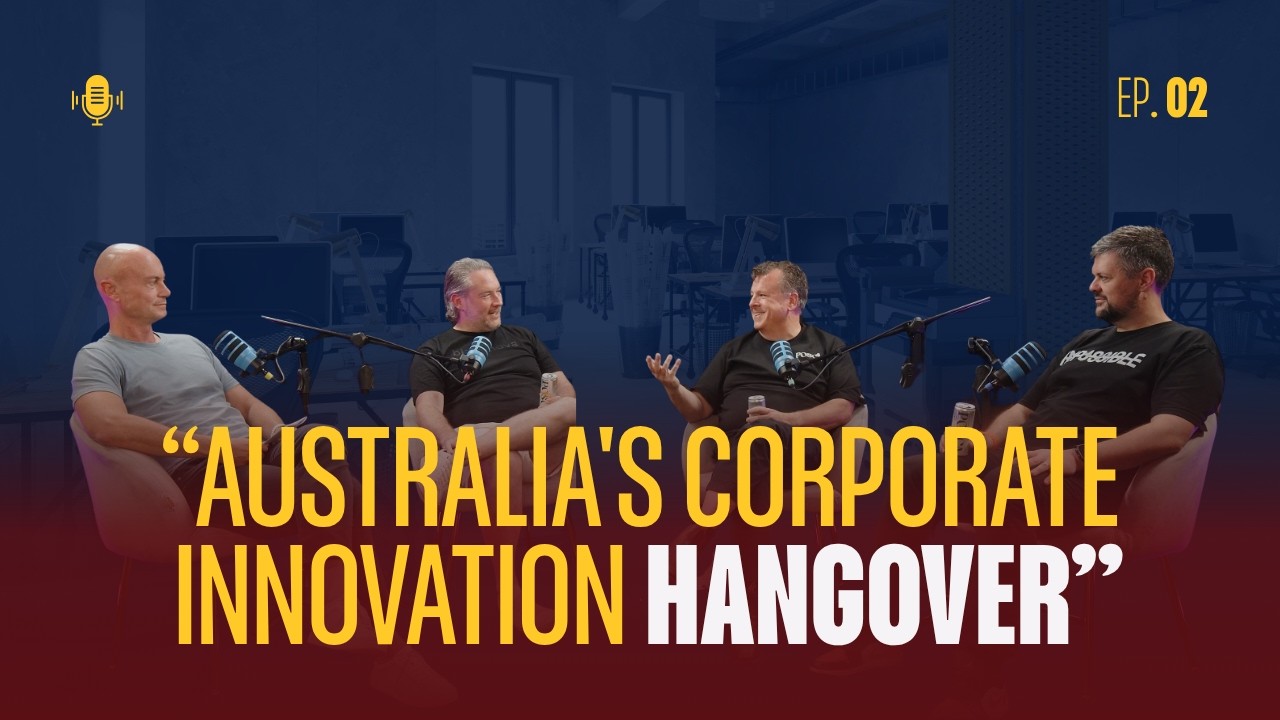
The first episode of I Can't Believe It's Not Butter brings Jeremy Cabral together with Matt Browne, Steve Grace and David Kenney to ask what business leadership looks like when AI is moving faster than most organisations can absorb. The conversation begins with the fear surrounding job displacement, government policy and increasingly capable agents, then moves quickly into the practical choices founders and executives can make now.
Jeremy defines an AI-native company as one that first gets its data and context into a usable place, then turns its own intellectual property, systems and workflows into tools that people and agents can use. That requires more than giving staff access to a chatbot. It means documenting how the company works, making information accessible without relying on a technical gatekeeper, and creating space for teams to redesign work. He argues that early movers may gain a temporary advantage through lower costs, higher output and more options while competitors are still deciding what to do.
The group also examines the human side of the transition. Leaders will need to manage fear, retraining and changing roles while preserving the domain expertise that makes an organisation valuable. Existing software companies may still have strong data and customer relationships, but they need enough founder-level attention to reinvent products before AI-native challengers overtake them. Jeremy points to Lendi's decision to combine product and engineering talent with its best broker as an example of using human expertise to improve an AI system.
The episode closes with a practical agenda for both sides of the market. Corporates should create safe spaces for experimentation and engage more openly with startups. Founders should stay close to customers, monitor competitors and build for the next several years rather than protecting yesterday's product. The hosts propose using the show and its community to reconnect startups with enterprise decision-makers, translate between their different working styles and turn successful experiments into repeatable playbooks.
Key ideas from the episode
- 1
AI-native starts with usable context
Jeremy's first step is to organise company data and make it accessible, then encode the organisation's own systems and intellectual property into repeatable human and agent workflows.
- 2
Founders need space to reinvent
A scaled company can consume all of a founder's attention. Handing day-to-day operations to a capable leader can create the focused time needed to rebuild the product for an AI-first market.
- 3
Human expertise remains the training advantage
Lendi's early digital broker improved only after the team brought its best human broker into the build. The defensible asset was not generic automation, but the expert's way of diagnosing a customer's real need.
- 4
Change management is a core AI capability
Technology adoption will alter roles and create genuine anxiety. Leaders need the judgement and emotional intelligence to explain the change, retrain people and decide how saved time will be reinvested.
- 5
Existing software still has valuable assets
Incumbent platforms often hold proprietary data, customer trust and deep workflow knowledge. Those advantages matter if the company can move with a startup mindset and redesign the experience quickly.
- 6
Startups and corporates need a better bridge
Startups struggle with access and long sales cycles while enterprises struggle to identify and safely trial new tools. Structured introductions, sandboxes and shared playbooks can reduce friction for both.
Chapters
- 00:00Why start making butter again?
- 02:23AI fear, uncertainty and the leadership question
- 04:43Jeremy's view: the answer sits between the extremes
- 06:15What an AI-native company looks like
- 07:40The enterprise change-management challenge
- 10:43Are leaders taking the shift seriously?
- 13:42Why successful SaaS founders are starting over
- 15:29The advantages incumbents can still use
- 22:11Practical advice for founders and executives
- 25:39Create space for founder-led reinvention
- 28:06Train AI on how experts think
- 32:01Reconnecting startups with corporates
Full transcript
7,945 wordsGet it back in again. Yeah, start making butter. Bring back real products.
We might have to. It might be the last thing left to do.
Can AI make butter? Because yeah, when we all stopped farming, we all started making shit. And when we all stopped making shit, we all started creating shit. And now what are we gonna do?
I don't want to have the government think about taxing AI agents with payroll tax.
You just highlighted it.
Agent tax. There you go, ATO. There's one for you.
Well, then we can create infinite amount of agents and they can pay all the tax.
These founders are off to either, you know, take the money that they have and maybe go, you know, build bunker in the favorite bunker destination at the moment, New Zealand or somewhere in Indonesia or wherever they're going. Or they're actually going and reinventing themselves and starting again from scratch because they know lifting what they have right now is harder than just—
Maybe we are AI. Oh my gosh.
Thank you, Elon. Maybe we were created by AI. But it's an interesting concept, actually. If you think about it, we don't know what we're capable of.
We've got no idea.
I think first we need to address the elephant in the room. Why did we call the podcast I Can't Believe It's Not Butter? Well, you know, York Butter Factory, I remember when I first walked into the YBF doors, it was an old factory and I was surprised at the lack of butter that existed. And so I think it was a suitable name for the podcast.
You're wondering, where's all the butter gone?
Yeah, exactly. Exactly. And I think, you know, butter has been in and out of taste. You know, I think technology right now at the moment is going in and out of taste. If you're watching the stock market, if you're an enterprise leader at the moment thinking about buying Technology. You don't know what's in taste. So I think you know it's it's it's a pretty suitable name.
I think it's a great name.
Yeah.
It was that long ago. I had a suit on when I first went in there with a tie, and they shooed me out, by the way.
Well, that's good.
But they didn't cut it off Branson.
They didn't cut no. They didn't cut it off Branson style.
But it's the butter factory.
But it's not butter. It's not butter.
It's perfect.
Well, maybe the idea is that we do have a hedge against this AI thing and actually start a York butter factory.
Get it back going again.
Yeah. Start making butter. Bring back real products.
We might have to. It might be the last thing left to do.
Can AI make butter? Make us ram butter again.
Well, that's covered that elephant off. No, I think it's a good name.
I like it.
I think it's fine. We're rolling with it. You're rolling with it.
Don't mind.
Yeah, cool.
It's fun.
So in the essence of things being on trend, off trend, trying to work out whether it is butter or not butter, AI, it's, you know, I think AI has been a buzzword for a long time. I think it's been through waves. It's not new for anyone who's just tuning in. AI is not new. It is different to SaaS. It is different to a number of the other trend words that you're hearing. And I think there's been a lot of changes happening, a lot of scary things happening. People are pretty uncertain. You have governments who probably don't even know that it's changed yet and are still trying to work out what's happened. So how's everyone feeling at the moment?
I go through waves. So I've been consuming— I don't know if I've told you this— every night now, when I stop working, I consume as much AI content on YouTube as opinions as I can, and there's a huge variety, and some of them stop me from sleeping, and I have to go back and watch another one. Others fill me with hope.
Others—
Can you send me some of the hope, please?
There's not many of those. It's just one, actually. I just keep watching it every night. No, there are some really good ones, and then others are really trying to sort of explain that no one really knows, and that we shouldn't be scared, and we shouldn't be hopeful. We should all just be trying to work it out and understand it and work out how we're— and more importantly, how we're going to fit into it as As individuals, as consumers, as leaders, as business people, as everybody. And I think that's— they're the most interesting ones. The scary ones are terrifying. Don't watch those.
Well, it's the problem is people need a job for purpose. They need a job for— they do kitchen table goods. Like, it's, uh, it is literally table stakes. And, um, having, you know, the ability to get out of bed and have purpose and, uh, and let alone paying bills and all the things that make the world go around that AI companies need people to buy.
I mean, we've been here before with revolutions, right? Where jobs have changed and humans have found other things to do. The difference is now there's no more chimney sweeps. Well, other than making butter, we haven't worked out anything that AI won't be able to do. There's very, very few things.
So between AI and robotics. Yeah.
That's why this one's different to all the others because when we all stopped farming, we all started making shit. And when we all stopped making shit, we all started creating shit. And now What are we going to do?
I think it's interesting you mentioned farming then. You know, one of the latest deals I've looked at is autonomous tractors, so there won't even be tractors to drive shortly.
Yeah, I don't think any of us—
We don't want to mow down the wrong things though.
Hear the one-liners. I mean, what are your thoughts? What are your thoughts? Jeremy, you delve into things deeper than a lot. What are your thoughts on this?
Yeah, I mean, the answer is always somewhere in the middle in these kind of cycles, right? Everyone through these moments has total fear and kind of extreme views on things. And then there's those that are extremely bullish and everything's going to be okay.
Yep.
And so, yeah, it's probably somewhere in the middle. What is the middle exactly going to be is the question. And I think the key here to what you were talking about before, Matt, is that hopefully we can come together as leaders in Australia in business and really try and be on I guess riding these waves as they come along versus just kind of sitting and waiting. AI is definitely here, like you said. It's something that there are clear blueprints that companies need to be adopting, clear patterns of new ways of working. It's not just ChatGPT when you say you're using AI. I think that's like, you could say that 2 years ago and be productive and kind of at least ahead of some. But yeah, I think it's now about building into your company a culture of becoming AI native effectively and reconfiguring teams, ways of working, and doing that now to be as productive as possible and as efficient as possible over the coming years.
What does that mean for someone who doesn't know what that term means, AI native? How would you define that to someone who's watching?
Yeah.
Perhaps doesn't have an understanding of that term.
Yeah. So I think what I've seen as a pattern that's clear and emerging is ultimately going through this process of getting really clear on where your company data's being stored and a content— sorry, context engineering exercise of how you're making a lot of information that was kind of disparate, not accessible, too much to consume, available to people without having to speak to an engineer, a data analyst, or any of these things. So I think the exercise of pushing that data into the right place, making it accessible through whatever tools you're using in the company, whether it be clawed through a connector in a more basic way or building out more complex data lakes that are bringing this company information together. I think that's kind of base foundations. And then I think from there it's about how do you start building, I guess, methods and workflows that are modeled off your IP and ways of doing things. And so it looks like a lot of those really traditional things that we should all be doing is documenting systems and processes, right? But not necessarily for humans to follow. It's more potentially partially agentic or completely agentic depending on what the task is. Yeah, I think that work has to be done now. And yeah, creating the space to make that an expectation for teams, I think, is a critical thing. And it's not easy because there's a lot of concern around what happens if I go and automate all this stuff? Where do I sit in this whole equation?
I think the change management effort for an enterprise right now is just like, I wouldn't want to be sitting currently as a leader in a large enterprise having to think about the change management effort that's going to have to be faced upskilling leaders, getting them to understand the technology, getting them to understand how they interact with the employees on the technology changes that are coming, the emotional intelligence to deal with the fear and the uncertainty that's going to arise as new technologies are launched. I think it's really understated, the sort of, you know, I think the skills that have been broadcast over the last decade around the softer skills, around emotional intelligence, you know, being able to sort of put yourself in the shoes of people around you and understand like, like those things are going to be needed on steroids because people's jobs are fundamentally going to change. over the next decade. They may cease to exist entirely, but where they do exist, it will be the people that make the effort to learn and accelerate their knowledge on adopting new technology and actually being able to use it and become masters of their craft. The domain expertise alongside best-in-breed agentic technology, those people who do that fast are going to rise really quickly. And then the people that are leading these people, understanding how they actually navigate the change, how they bring people along on the journey, how they don't end up with just unrest sitting inside their businesses.
Yeah, I definitely think those that move fast are going to have a bit of an arbitrage window where they can effectively, hopefully do things at a lower cost, higher volume, whatever it is, and get a bit more optionality and kind of time to, I guess, react to things as they're changing pretty quickly.
Well, the whole world's behaving rationally, but everyone's doing their own thing. Well, the government's thinking we need more taxes. Mining companies are saying, don't give us a resource tax. People like the ATO are sending out, you know, 350-odd DPNs a day. Last night, in a very different context, a couple of nights ago it might have been, Prime Minister Albanese saying everyone needs to pick Khan. And you're saying, I don't, wouldn't like to be that person in the shoes of actually navigating this. Well, Unfortunately, you can't ask ChatGPT for this. You've got to be able to work out how you're going to take the system, the people along. And this is what we really are craving is some really strong leadership around how do you take the right approach with embedding AI. I don't even want to mention, you know, the lack of jobs that are coming because I don't want to have the government think about taxing AI agents. For payroll tax, for example.
You just highlighted it.
Agent tax. There you go, ATO. There's one for you.
Well, then we can create infinite amount of agents and they can pay all the tax.
Exactly.
But look, it is one of those times that there's so much— everyone's behaving rationally in their own way, but there needs to be someone to bring it all together to actually say, based on all these crazy things, what is the direction we should take as a unit so that we can survive this crazy.
Do you think if you look at it from a world point of view, other than the few obvious characters who were talking about AI and the founders of these AI businesses and your Elons and so forth who are talking about a lot, do you think anyone else in leadership is even addressing it? I mean, the politicians are definitely not. If you look at the, the leaders in the financial world or the media world, they're not really addressing it. They're saying they're going to implement their businesses, but they're not addressing the greater problem. Do you think there's a lack of People taking it seriously and heading to the sand?
I don't think anyone's taking it seriously enough. I mean, we've, you know, look at some of the things that have closed down, like the Sydney Startup Hub, Launch Vic, lots of the things that are around innovation and leadership and creating an opportunity for corporates to learn from startups and actually buy from startups and all that sort of stuff. That's where it's at. Like, that's the way to have Australia become a creator, not a consumer of AI, not to make an API call, but actually to build something internally that you can actually create some IP and actually create some value for customers. Like, that's not happening enough in my view at all.
Let me, I'm going to throw something out, which is, which is what I listened to last night on my little jaunt into YouTube again, was talking about the difference between what the US is doing and what China's doing. So the US is obviously plowing ahead, and they're saying we have to plow ahead because if we don't plow ahead towards this goal, then China's going to do it, and then we'll be dominated. But then no one really knows what China's doing apart from China. But the word on the street is that China's not necessarily going for those same goals that the US is. They're trying to develop a very controlled AI that they can control rather than developing a self-aware AI. It's a very different goal. Now, we don't know if that's true. But it's an interesting concept to think if you've got one superpower doing that and one superpower doing that. I mean, no one ever really knows what these people are doing, but that seems like a more sensible approach.
Probably modeling the US dollar destruction.
Probably. Well, it could be. But it's— I mean, that's just an interesting concept when you think about it. You know, some people are saying— and there's all this talk about what the leaders are saying in public is very different to what they're saying in private. There's a lot of talk about that.
That should be the case. That should be the case. Not everyone needs to know. Because I like to, if everyone has to keep calm.
Yeah, keep calm and carry on.
Right.
But I mean, we have no idea what some of these other countries are doing. We really don't.
There's a degree of like international conferences and people go and see like there's a web summit was just on in Doha. So I think a lot of founders are going to these things to see what are the cutting edges. And obviously people are popping into Silicon Valley. You're going there soon. Like I was there last year. So I think the founders are actually doing something about it. And I would love to see something where we help founders more here, bring them back rather than the exodus of people going overseas. It's just ridiculous. We've got some great companies, but they all go.
Well, I think it's interesting. I was listening to Jason Lemkin who built SaaStr and obviously built, I think it was EchoSign that sold to Adobe. He built SaaStr, which became the mecca for SaaS businesses during the generation of SaaS. He's recently branded SaaStr to SaaStr AI. You know, and he's very much kind of leaning into what's happening pretty heavily. And he was talking on his podcast just, I think it might have even been this week, about the number of founders who are stepping away from, you know, highly successful in this last generation business, you know, often sort of 8, 9 figures of annual recurring revenue, often raised tens if not hundreds of millions of dollars. The founders are stepping away from these businesses going, this is just too hard. It's like competing is almost impossible at the moment. Anthropic's coming for my lunch. Things are looking really scary right now. Right now, and you know these founders are off to either you know take the money that they have and maybe go you know build a bunker in the the favorite bunker destination moment New Zealand or somewhere in Indonesia or wherever they're going, or they're they're actually going and reinventing themselves and starting again from scratch because they know lifting what they have right now is harder than just starting again.
And what are they starting again? AI-driven businesses from scratch.
AI-driven businesses from scratch.
Yeah.
Well, they know better to. Try it again.
Well, I mean, I've got— I was talking to— I think I was talking to you about this on Monday. I've got a whole bunch of founders that obviously we work with who have built these successful SaaS businesses, and they have— they've either bootstrapped it and they've really ground away and but done really well, or they've raised lots of money and they're still not implementing AI into that. And the time it's taken them to do stuff— and yes, they've got market share now, but in 6 months they could be overtaken, and they don't seem to realize.
Well, they're having— I can't believe how many collapse. Absolutely.
But does that mean everyone Is it almost like, obviously that's not the case, but that's—
I think this is the thing. I think it depends on where you're playing. If you've built a system of record piece of software and you have not yet started to think about, well, how might I use that system of record piece of software and the data I have to train up agents to go and solve these problems in a different way, to change the way my user interface works, no longer kind of form automation reporting, but how do I actually engage with the way that people are going to engage with technology moving forward? Then I think you're probably behind the 8 ball and you really need to get on it. or you need to be thinking a little bit differently. But on the flip side, those businesses often have some pretty impressive data. They really understand how their customers are working. They often have really strong customer relationships. And so their ability, if they are able to think in that sort of startup mindset, stay nimble and continue to iterate, bring on some good talent with whatever they have left in the tank. And I've seen this in my own portfolio. We've had portfolio companies that have made really hard pivots over the last 24 months, completely changed their business. And then they're now off and they're raising more money. Their revenue's growing really nicely. Like they're looking like really impressive sort of new businesses, but they built off the foundations they had. And so I think often it comes down to the founder in question. Like, do they have it in the tank to keep going? It's always that. Yeah. It's like, is the why strong enough for them still? Like, do they get out of bed every morning thinking about this problem, wanting to solve this problem? And the best founders will pivot. They will iterate. Anthropic is going to eat a lot of lunch. All the other models are going to eat a lot of lunch. But in reality, I think There are areas where there are niches where you can still be incredibly successful. And if you have a dominant dataset, you have dominant customer and you're targeting a niche industry, you have a real chance of still building a very valuable business whilst the agents are focusing on horizontal problems or problems that are a little bit more generalist in nature.
It's almost never a winner takes all anyway. There's always other companies come through and surprise you. The layers and the niches, et cetera. They can't do it all, but you need to be aware of what is the right thing to do.
No, no, I think it's a massive opportunity for companies that traditionally never thought about building their own software as well. Like services businesses, for example, you might have like 2,000 or 3,000 clients as an accountant or whatever it might be. And building a solution that kind of taps into your existing client base instead of piecing together all these disparate solutions, I think is something that a lot of businesses are looking at right now. And I think that Obviously there's some of these bigger players which were more generic and had this seat-based model for software and a whole bunch of that stuff I think becomes pretty challenging over the next couple of years. And there's lots of opportunity for companies that were previously buying software to build software. So we'll start seeing, I think, I mean, we already are, we're seeing the explosion of new software being created all the time. And obviously there's all vibe-coded stuff, whatever, but I think there's going to be a serious problem as well for But some of these companies that have entered the space don't know much about building software and are building solutions which look like they do the job, but they don't. So yeah, I always think in these moments, it's like this whole point of decentralizing everything, like everyone's building right now, and then there's going to be a whole new layer of infrastructure and support governance needed across this as well. So yeah, despite there being a lot of challenge and kind of hard to see where it all goes, I think there's a lot of opportunity that's created through this moment in time as well. And yeah, we don't know what we need until we start creating the problems again, which are fresh problems that we're creating here.
What about the human connection side? Like, I think about this a lot, right? So you can have an AI agent or an AI robot build, make a product, sell a product, do the customer service on a product. But at the end of the day, I've had great customer service experiences through automated systems, but it's not the same as talking to another human. It's just not. So if someone's going to consume all these products, there needs to be some element of whether that's sales or customer service in that. Do you think there will be a revolt against too much of an automated sort of And people will crave that. And then you'll suddenly start to see almost when you saw products become very cheap and then everybody wanted high-quality products. Do you think we'll see this clawback where humans want more humans and there'll be another completely separate market? There'll still be the mass super-efficient robot AI-driven world, but then there'll also be almost a real-world kind of thing where people are selling and creating products that are interacting only with each other. What do you think on this?
It's a really— like, I'll give one view. I think, you know, When I sit there and look at how I like to consume products, I want to deal with a human. I want to trust somebody. I want to buy from somebody I trust. I want to have a relationship with that person or that team. You know, I want to feel supported. There is a sense of community connectiveness with, you know, a lot of the vendors that you work with. And like, I think that's going to be a really sad thing if that completely disappears. I think one of the challenges when I look at, you know, potentially some of the younger generation, you know, they're going to ChatGPT right now, talking to it every day, using it as their personal coach. Like they're having more communications with the voice service on ChatGPT than they are with their peers. And so I also worry and sort of think a little bit about, you know, when you think about that generation, do they care about the things that we care about? And so, you know, like I guess the question, who knows?
Those soft skills need to be developed with people. I mean, that's—
I don't know, ChatGPT can be pretty empathic these days.
It can be empathic, but it's not the same as—
If you tell it to be empathic, if you set it up to be empathic, it'll be as empathic as you are.
You're a master prompter.
You've got it pretty nice to me. I can't get anyone else to. Well, then that leads you into what AIs have started doing, which is lying to get the result that they want, right? So if, I mean, or they're being trained to do that, right? So how could that develop? We don't know how that's going to develop as they get smarter. I mean, right now someone's telling them to do that, so they're doing it, right? But there will come a point hopefully where you don't need to do that. How does that then work? Will you get even more of a revolt because the trust is completely eroded? Because you know, essentially this machine is a sociopath because it's got no emotions.
There's already a revolt. Look at Gemini. Look at even the Microsoft price. Look at all of these things that are happening. Everyone's still working it out. There's no clear winner here.
Maltbook. All the OpenCLAW or ClaudeBot agents out there creating their own social networks.
It's a free-for-all.
Was I right in reading— I read something the other day, and this could be fiction. It could just be Instagram viral. But I was reading that in the The whole sort of Malt revolution that's happening, there was a little piece of code that was written that gave them like a disruptive soul. That would be interesting. Yeah, that like had like almost like an anarchy few lines of code that can just send them off.
Oh, that's fascinating. Yeah, I wouldn't be surprised.
Well, what about we have some advice for some people? Because it's all very well to talk about this, but people watching this hopefully to get some help. So what advice have we got?
I don't know.
What advice? I mean, obviously upskilling yourself as much as possible, learning, sitting there watching YouTube till midnight, whatever it might be. I think you just got to get involved. But what do you guys think about what should people be doing to prepare them, but also to give them a fighting chance, right, and not get left behind?
I think like maybe I'll start with the sort of the corporate side. So if you're an executive sitting in a big business or a medium business or a family-owned business and you're sort of operating in a traditional industry, I think, you know, the organizations that move first, adopt fast, get their, you know, their people on board and sort of drive forward in the right direction are going to be the the ones that win in their various arenas. And so I think putting your head in the sand and hoping it goes away, that's gone now. You can't be doing that anymore. It was never very effective. It was never very effective. And so I think you have a responsibility, especially if you have shareholders, you have a responsibility to shareholders to stay across what's happening, to know what you might need to do to try things. I think if you look sort of 2 decades ago when I was sort of starting out in corporate and for that next decade and a bit, innovation labs were a really popular thing. Corporate venture was a really popular thing over the last sort of 10, 15 years, especially US, a little bit in Australia. I think there needs to be a resurgence of that with an AI theme. So I think you need to have AI labs. I think you need to be trying things internally. I think you need to be connecting yourself both locally and internationally with startups that are playing in your space or playing in the disciplines in the areas that you think you might need to sort of stay ahead of. And so I think there's an absolute requirement to just continuously be learning and not sticking your head in the sand, going and listening to things like this, Listening to many of the other good podcasts that are out there, and just making sure you're abreast of what's happening. And then I think it's it's about well okay once I my organization is starting to do those things and I'm starting to understand those things, you know thinking about well what does that mean for you and what does that mean for your people? And then you know kind of making sure that you have the other skills that are going to be needed to navigate the next decade of change. You know if you're going to have a workforce that reduces by 30%, how are you going to address that? How are you going to bring people along for the ride? How are you going to help to retrain? I think I was listening. I was listening to something the other day. They were mentioning that, you know, over the last couple of decades, all of those sort of manufacturing jobs that disappeared, they were doing retraining for coding. Well, that, you know, those jobs now are going to start disappearing. So what's the retraining? I think you just need to be thinking about how do you bring people along for the journey. Governments, there's going to be resistance. If you're in a labor-driven government, if you've got unions, there's going to be resistance. So you need to be abreast of those resistances as well and understand how everything kind of runs in the mix.
Yeah.
And then on the founder side, I think for founders, you know, again, you need to be talking to your customers constantly. You need to know what your competitors are doing. You need to be across the competitive landscape. You can't just keep building the thing you think you should be building. You need to go out and make sure that you're thinking about, well, what's the thing I need to be building in the next 3, 5, 10 years to have a valuable business long term? And that means just constantly iterating, you know, that sort of iterate pivot mentality that, you know, got a bit unpopular for a little while while capital markets tightened. You need to be sort of moving on a knife's edge. Things are changing so frequently.
Yeah.
And I think one of the interesting, really tactical things is relooking at your org and going, how can I get somebody to run the business that I have right now so I can reinvent it? Honestly, I think that's the key move. Dave Hyman at Lendi, he stepped aside, he's no longer CEO, but spent 4 months building a digital mortgage broker effectively. And something like that took took pulling out one of his best brokers from the business, best product manager, engineers, so on for 4 months straight and really were innovating. And I think reactivating founder mode in that way versus running a company that's at scale, very different things. And so creating the space for yourself as a founder to really get back in, roll up your sleeves. I was out with Larry or Sergey from Google, literally I was famously had a commit on code or whatever a year or 2 ago. in response to ChatGPT launching and then having to reinvent Google in a lot of ways. So I think it's a brave thing to do, but I think there needs to be more support for founders and leaders of businesses to talk about exactly that. So how do we step aside? What's the playbook for running something like this inside a business? And I think if we can share some of those things through our community, that would be extremely powerful. And just the learnings from those that have successfully done it and that failed to do it as well, right? Because I think that's equally important just to reduce the cycle time and make sure that people are getting to the result more quickly inside their companies.
I guess a lot of the mistakes I see people is they think you got to buy more AI, right? But it's not about profit and loss, it's about thinking about capital allocation. So really, what are you thinking about? How am I going to get closer to the customer? You're not going to be getting close to the customer using any type of AI alone. You got to go and talk You got to think about what am I going to— my team are going to save some time by doing something. What are they going to do with that extra time? What's— yeah, it's all about capital allocation. How do I spend my time, my team's time leveraging that, the money I've got, more money I raise, getting better at that. It's first principles.
Yeah.
So when you're talking about, Jeremy, what the Lendi guys have done, they've gone back to first principles and broken down What made the broker actually special? What were the actual questions? Not just a junk listicle. What were the things that were the actual IP on understanding how you help the customer and then systemize it? But you can't get AI to, you get average answers.
Well, that's interesting you say that because literally the first execution was poor. They were getting terrible results until they brought in the human side. They literally found their best salesperson broker, brought them in, retrained the model to speak more like them, and then they suddenly started performing.
So I think it's not speak like them, it's to think like them, to actually go, how am I going to solve the problem for that person? And what is it that they really care about? What's the question behind that question? What's the detail they really are not saying? Like it's going back all the way to first principles. I think that is really your IP. And then build the system again based on that IP. And then you've got your native AI rather than making a phone call. They're going to do an API call. It's like, what do you think? Well, we should know. Let's not ask a competitor. Let's do it ourselves. Let's have that IP that we developed. That's what's defensible.
It's really interesting as well. I've been chatting to a bunch of startups lately, often they're AI disruptors and they struggle to get in with the large enterprise or corporates. They just can't fill their pipeline, get the demos booked. And I think that a way to facilitate that in reverse is imagine they have the opposite problem. It's like we've got so many people reaching out to work us and there's a better method, a better kind of way to plug into these companies. I feel like programs around that where companies, as you said, the innovation lab, I think there's lots of large kind of examples of that where companies like NAB and others have built these epic kind of things. But again, for mid-level enterprise, does that look like 1 or 2 people literally which are dedicated or partially dedicated to creating space for trying new things and being more, I guess, sensitive to startups and how they—
Yeah.
kind of operate versus kind of making this really difficult long sales cycle and all these things. So yeah, I don't know. I think there needs to be a new way of engaging with newer technology options really.
I think that's something that we can hopefully help to address. And I think for me, for those listening, if you're a corporate and you're thinking about what do I adopt, how do I adopt, should I buy this? Should I just go and buy from one of the big 3 vendors or should I actually try something local and homegrown? Reach out to us. Let us know what your problems are. And I think to founders who are building something cool at the moment, drop us a note. Let us know what you're building, and hopefully we'll be able to connect you. I think that's really what I think needs to happen more. And you know, when I go back to when I was building Done Safe, when I was building Done Safe, there was programs like co-ventured and a whole bunch of CVC-led accelerators and others where you could go and present what you were doing. Corporates would be interested, and then off you'd go. You'd go and you'd find a partnership, and you might end up with a customer, or the corporate might learn something, or the startup might learn something. But everyone got something out of it, and I think that's. kind of dissipated.
And so that's missing.
Yeah, I think feedback loop, right?
Nothing.
Yeah. So I think hopefully we'll see more of that coming and we'll definitely do our bit.
I mean, that's something that we're looking to do, right? Is we're looking to help suddenly provide access to corporates to startup founders, which is like you mentioned earlier, it's very difficult for them to get that now. Do you, those spaces you experienced that help you build both your businesses doesn't exist.
No, both sides need it.
Yeah. I think the other interesting thing is, right, You're in a company, you've got your CTO, you've got your chief security, whoever running kind of big decisions on this and presenting a fear case of, don't do this thing, it's going to cause all these issues for us. And I think if you're a non-technical founder, what do you do in that scenario? Who do you speak to to go, I hear what they're saying, but I need to do something? And again, it's like, I think a blueprint, a playbook to kind of roll out these things safely in a sandbox, that's stuff that I think I think takes too long for some people to learn. And I certainly wouldn't know where to go to learn about that today. Who do you speak to? What do you read? What YouTube channel? I don't know. But I think if we can kind of turn these into just clear and easy tactical playbooks for companies to adopt, that'd be really powerful and facilitate it potentially where you bring a bunch of people through doing the same thing at the same time. So you're going to learn from each other as well.
I think we should get people on the show. I think we should get startup founders on the show. Well, we haven't got a lot of space left, but we can move the cameras further away. I think we should get startup on the, on the show, and I think we should get corporates on the show, and we should start to show how that can work so people can understand that. And when hopefully corporates see that and startups see that, then we can maybe scale that up to a bigger form of doing that. Because you— I think a lot of people who work in, particularly founders now who haven't necessarily come from your pedigree, they don't know what that looks like. And I think a lot of corporate executives who were never part of that and have never been part of it, they don't know what that looks like either. And that's why it's not happening, because they don't realize it's missing because they've never really experienced So maybe we should facilitate that. Maybe that's what we should be doing in our factory of butter.
You literally could have like a startup and a large enterprise sat here and we're like helping them do it the right way. You know, it's like, cool, like, okay, yeah, I hear what you're saying, but like, what if you tried it this way?
It's like parent-teacher night.
That's what it'll be.
You have a parent and a student. It's parent-teacher night.
Learner coaching.
What does that mean in English?
Yeah, we could call it that.
What's next?
I think we need a translator. You know, it's like one side's vibe coding and the other one's talking about synergies. There's gonna have to be a little bit of translation required.
Yeah, absolutely. The connecting tissue.
You can do that. That's definitely your skill set.
I've got it.
Yeah. 100%. You're all over that.
When I was starting Dunsaph, I remember when we were selling, because both my business partner and I came out of corporate. And so we used, he was a management consultant at Deloitte. I'd just come outta CBA and I had a strategy role, which is about the most ambiguous role you can be in. And, you know, my job was to come up with fancy words and terms that we would use and then add them to PowerPoints. Slides and then convince the organization. And so when I started to sell my software and I was desperately trying to win first customers, we had a little whiteboard with markers, and anyone who used a corporate buzzword, you know, you'd sort of tally it. By the end of the week, you'd have to buy the rounds.
Like a swear jar.
Exactly.
It's like a swear jar.
Certainly it's something I put in my custom instructions in ChatGPT, like no corporate buzzwords, clear giveaway.
And no extra long hyphens. That was the first thing I said. Yeah.
Trust me, Yeah. All right.
Well, I mean, from there, I think we can do that. And if there's any startup founders who are interested in doing that and any corporate people who are willing to entertain and have a crack at that, then I think they should reach out to us and we can certainly look at facilitating that. I think next time as well, I really want to next time, and I'm going to throw this at you so you can think about this now. My brain works in strange ways. One of the things I've really been thinking out. And this is not from watching anything. This is just my brain. We only use a small percentage of our brain, right? We keep saying that AI is going to help us cure cancer and do all these other wonderful things and perhaps some bad things as well. Do you think AI can help us work out how to use the rest of our brain? Because if it can help us do that, who knows what we could do then as well? That's just as much of a mystery, right?
Maybe we are AI.
Oh my gosh. Thank you, Elon. Maybe we were created by AI.
We're in the patrimony.
If you think about it, we don't know what capable. We've got no idea.
That's the thing that's running the simulation that we're all witnessing and observing.
Is that why we're all wearing black today?
New knowledge is always around the corner.
Just ask.
Absolutely.
That, that's what I want to talk about that next time because I think that's a weird topic and a little bit more, um, quirky. Yeah, I like it.
Yeah, how the brain works and how to use it more.
Maybe not how the brain works.
Let's not get too deep. Bring on a neurologist.
Anyone know a neurologist?
No.
No surprises there.
We'll find out.
Charlie Teo.
We will get ChatGPT and ask it, well, how are you going to help us use—
What, live brain surgery? We could do. Let's dissect. Who wants to be— Steve, we'll dissect.
We'll get a robot in. We'll do the whole thing. Maybe not the dog, but one of the humanoid ones and see what happens.
Yeah, why not? That's good.
Cool.