I Can't Believe It's Not Butter
Australia's Corporate Innovation Hangover
About this conversation
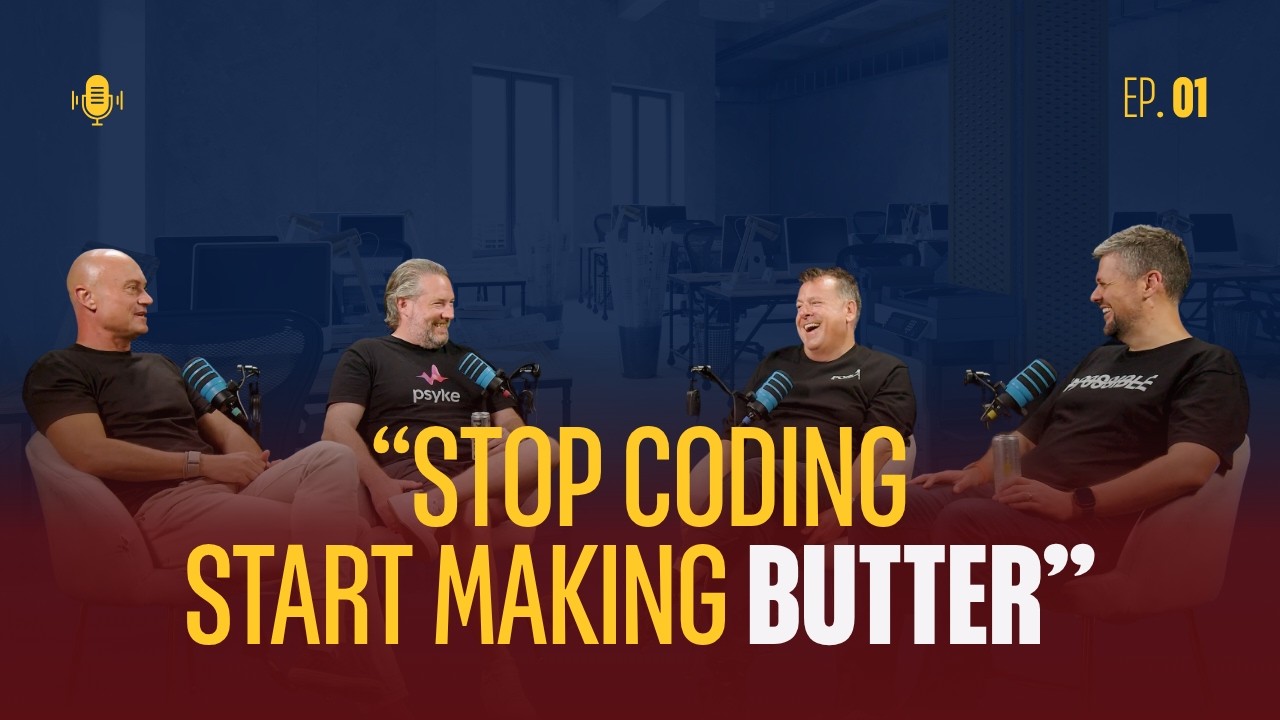
In this episode of I Can't Believe It's Not Butter, Jeremy Cabral, Steve Grace, Matt Browne and David Kenney examine why Australia's once-visible corporate innovation programs faded and what it will take to reconnect enterprise resources with startup speed. Steve calls the problem a corporate innovation hangover: a period when major companies once invited disruption through labs, accelerators and hackathons, followed by years of slower procurement, heavier risk controls and fewer open doors.
Matt draws on building Donesafe, when innovation leaders inside companies such as HSBC and Suncorp could introduce a startup to the full buying group and sponsor a trial. Today, founders often face a long chain of stakeholders without an internal champion who has authority. David describes the modern innovation role as increasingly political, while Jeremy remembers hackathons that gave builders a rare look under the hood of enterprise systems and made useful experimentation possible.
The group argues that AI makes this gap more dangerous. Matt distinguishes between AI-native organisations, whose core products and operations are rebuilt around data and models, and AI-enabled industries such as construction, where technology supports work in the physical world. Both need outside ideas, but the second group has a particularly strong opportunity to combine proprietary data with nimble startup teams. The challenge is creating safe commercial and technical structures that let founders learn what enterprises need without exhausting their runway.
The practical barriers are substantial. An enterprise sale may take six to nine months, and in difficult cases several years, because procurement, cybersecurity, politics and risk review all move sequentially. Jeremy sees this directly while mentoring a Startmate cohort: founders often fund the wait with services, which can help early cash flow but can also trap a product company in bespoke work.
The hosts finish with specific ideas. Jeremy proposes larger, longer hackathons with meaningful prizes. David suggests an open, standard agreement for startup trials, similar in spirit to a SAFE note. Matt calls for enterprises to identify their real AI-era advantage and open controlled access to the data or network that supports it. Steve argues for recurring small-group events where decision-makers and founders meet often enough to build trust. Together, those mechanisms could turn isolated introductions into a repeatable market for corporate-startup collaboration.
Key ideas from the episode
- 1
Corporate innovation lost its internal sponsor
Past innovation leaders could convene decision-makers and authorise experiments. Many current roles have less agency and spend more time navigating politics and risk.
- 2
AI creates two enterprise paths
AI-native companies rebuild core products and workflows around the technology. AI-enabled industries use it to improve work in the physical world, often with a larger need for outside partners.
- 3
Proprietary data is a shrinking window of advantage
Enterprises can pair unique data and customer access with startup speed, but the advantage erodes if the data remains locked away while competitors build new products.
- 4
Enterprise sales cycles can outlast startup runway
Procurement, security and stakeholder approval can stretch a purchase from six months to several years. Founders need early guidance on the buying process and a committed internal champion.
- 5
Services can fund the gap, with a catch
Jeremy sees startups use service work to generate value while an enterprise product matures. It can be sensible, but the company needs a path back to a repeatable product.
- 6
A standard trial agreement could reduce friction
A shared framework for data access, sandboxing, milestones and fair commercial terms would help enterprises experiment safely and stop every startup engagement from beginning at zero.
- 7
Repeated contact builds the bridge
One-off demo days rarely create trust. Recurring, curated meetings between real enterprise decision-makers and relevant founders give relationships and ideas time to develop.
Chapters
- 00:00Australia's corporate innovation hangover
- 01:26How the open-door era disappeared
- 02:46How innovation teams helped Donesafe sell
- 08:15Jeremy on hackathons and access to systems
- 10:29The new value of proprietary data
- 12:01AI-native versus AI-enabled enterprises
- 15:03Which old innovation models still work?
- 17:10Finding an unfair advantage before it expires
- 28:58Why enterprise software takes longer to sell
- 32:24What Jeremy sees in the Startmate cohort
- 38:48Prizes, standard agreements and practical bridges
- 41:31A call for corporates and founders to reconnect
Full transcript
9,211 wordsAnd I am coining it Australia's corporate innovation hangover.
How could they make sure that they didn't become irrelevant? You know, I think right now businesses are facing the biggest irrelevance challenge that they've ever had, and yet corporate innovation seems really stagnant, if not almost non-existent in a lot of industries.
Getting into a meeting, you may not get the right person, as Matt was saying. Sometimes people might have 5, 6, 10 people in the decision chain. So it's no longer people going, oh look, let's, you know, try this.
It's risk, it's processes, Honestly, like, I think the most valuable moments I remember was when there'd be hackathons, you know, where you literally get to look under the hood at some of these internal systems and get to build on top of them.
Because in reality, with the world changing so fast, who knows what the actual right idea is to bring these 2 groups back together. There could be all sorts of things that come out of this, but I think we need to start just getting them to know and like each other, because right now they're strangers.
The startup's thinking in minutes, hours, and days, and a corporate GM is thinking in months, quarters, years, and, you know, probably not decades.
They're all facing the challenge of the same thing, which is, how do we get the best ideas talking about, like, how do I, you know, there's such a long sales cycle, don't know what to do here. And they've got, you know, a certain amount of runway. And often they're effectively having to offer a service to kind of help fund a period of time to be able to offer some level of value to those companies, which I'm actually not opposed to. I think that's actually a really smart way to begin. But then, you know, the risk of being a service-based business forever is a bit challenging. But yeah.
Gentlemen, today we are here to talk about what I believe is a sad change that has happened in Australia over the last 10-15 years, and I am coining it Australia's corporate innovation hangover. So if you go back, I don't know, let's say 15 years, and you look at what was happening in the world when YBF was starting out, Corporate innovation was massive. Corporates were actively going out in public saying, "I want to disrupt myself as a business. I want people to come and disrupt me. I want to fund programs. I want to start innovations. I want to have a whole department that's going to go out and look for people who might disrupt us as a business, and then we're going to bring them in and we're going to help our get our businesses better." And it went on and on and on. And then all of a sudden it stopped. And it was actually before COVID I think a lot of people think COVID killed it. It didn't. It died before COVID And I want to try and work out why, because this is something that obviously fundamentally between the 3 of us, we're hoping to bring back. So before we sort of get into the why, I know you've all got them. I'm going to start with you, Matt, because I know you've got more than any. Tell me what your favorite corporate innovation was back in the day.
I think, look, when I was building Donesafe, one of the ways that we got our product into customer and helped to solve a bunch of problems for enterprises was with corporate innovation. I remember sitting in innovation labs of very well-known companies and talking to the innovation leader, and that innovation leader had real agency at the board level. They had agency within the CXOs. They were often a CXO themselves, and they were able to kind of just walk us in with sort of novel solutions that could solve the problem that they were having. When we were building Donesafe, cloud was quite nascent for a lot of the companies we were working with. They were typically rolling off an on-premise solution. Mm-hmm. Had cloud, they probably didn't have very much of it. And so we were often the first cloud product. And I remember sitting in with organizations like HSBC and Suncorp and others, and it was often the innovation team that I was talking to first. And they were really out there. Their job was to scout for what was kind of up and coming, what would lift really big sort of problems that they were facing inside their organizations. How could they transform their business? How could they transform their processes? How could they make sure that they didn't become irrelevant? I think right now businesses are facing the biggest irrelevance challenge that they've ever had. And yet corporate innovation seems really stagnant, if not almost nonexistent in a lot of industries.
So would you have said that back then, was it easy for you to get a meeting with a corporate?
It was really easy to get a meeting with a corporate. Like I could walk into any of the ASX 200 via the innovation route if they had an innovation department. And most of the forward-thinking companies did. I would get a meeting, I'd be able to demonstrate what I was doing. They would go and get the right stakeholders in the room. You know, they'd have the entire buyer circle there for me. And you'd be able to have the conversation with the right people.
So before I move on to David, just one more question. Tell me, if you— obviously you're in a different situation now, you're managing your fund and you've got a lot of founders in within your fund. Do you think those founders would be able to go and get a meeting with a corporate though?
I think if they didn't have us helping them, no, I think they'd struggle. I think it'd be much harder than it was. You know, we have the relationships and so we're able to help them do it, but without those relationships, there just aren't the openings anymore to have those initial conversations.
Yeah, I think you're right, David. Steve, you've got connections in corporates like no other man that I know, and yet I don't think it would be as easy for you to get a meeting as it perhaps used to be. Talk to me about what you saw as your favorite innovation when, again, back in that heyday when, when it really was an open door, like when Matt was doing Don't Save. What was your favorite program? Was there a particular, um, particular setup that, that you thought worked really well?
Well, I think the CSIRO actually had some really good outcomes.
Interesting.
Um, going right back, and they're still, still in business. Um, But in the heyday, even things like MirraD did a great job. There's been so many, they've come, they've gone, they've fallen, and they do need to come back. But the question is what format? And I think that's why we're really trying to put something back on the agenda here. But getting into a meeting, you may not get the right person. As Matt was saying, sometimes people might have 5, 6, 10 people in the decision chain.
Yeah.
So it's no longer people going, oh, look, let's try this. It's risk, it's processes that have to happen, it's legacy systems, it's not on our radar, it's not what the CEO thinks is a priority at the moment. There's just so many, it is harder to get in and sell and the time it takes for a startup to actually go in, sell, be relevant at the time and be relevant and stay inside the room in the conversation when they might only get one meeting, that's hard. So trying to teach people to understand you've gotta start much earlier to get a sale these days is quite critical for people to think about.
I mean, even before sale, do you think, I mean, I still think there are people in corporates that are gonna be able to buy, and I think we'll talk about that in a separate episode. But what about, you're saying, you know, you could get in front of the right person or the right stakeholders. Do you think they even exist now? Do you think there are departments There are stakeholders, there are people whose sole job it is to do that, or do you think it's actually not in existence even within them?
I think the innovation person that you're referring to, Matt, I think has probably become more of a political navigator rather than a true innovation person to try and keep stakeholders happy and make sure the message is right. I was thinking the other day when governments got involved and said, we better have a training levy. And I thought that that's interesting. You've got 2% for training, which is, Not really that much when you think about how important employees are. And then secondly, I think there's only about 2% of all money spent on R&D at the moment. Now that's not enough.
No.
Particularly if we're just gonna be relevant, as you would say. I just think it's wishful thinking. But getting the meeting and having the right people in the room, I feel like there's, So many priorities are getting in the way and there's so many, I don't wanna say it's a regulatory nightmare to actually get a deal done, but startups don't have the time or the budget sometimes to hang in there and wait so long for decisions. So compressing the decisions down and understanding how people will make the internal champion able to carry the conversation in those meetings, I think that's something that founders need to think more about.
How about you, Jeremy? You were like Matt, you were in their building.
Yeah, that was gonna be my reference, honestly. I think the most valuable moments I remember was when there'd be hackathons where you literally get to look under the hood at some of these internal systems and get to build on top of it. And maybe I'm not as close to that nowadays and it's all happening as it was in the past, but I feel like that was extremely valuable. And just to have that kind of support to know what's possible versus this totally closed garden environment. Where you kind of get a look inside it, right? So yeah, I think from my standpoint that seems to be something that's died off about or pulled back a little bit. I remember so many events as well that used to happen, like where you'd go to the big bank offices and all this stuff and it'd be like a primary way for people to connect. A lot of the meetups would run at those sort of headquarters and so on. And I just, yeah, I just think there's less—
Yeah.
support in that way. And I'm not sure what's driving it, but I'm keen to hear your perspectives.
Can anyone think of a company that really benefited from it, like that, you know, absolutely skyrocketed, or even a couple that, you know, really benefited back then from that access, which I don't think exists at all now because I just don't think they're out there opening their doors anymore?
I think Westpac had some good success with working with some startups and Even CBA and Coca-Cola had that accelerator/lab. Lots of people have had them and sometimes they've worked and they've, but they just haven't kept going with the right initiatives and worrying too much about whose name's on the door in some ways to actually think about how do you actually help founders with opening the room up to them? Like, and I think there's a lot of problems with the data these days. Everyone thinks, Oh, if I let someone know, it'll be out and the dark web will take hold of everything and, or whatever. It's just the unknown and people overly protecting things that aren't mission critical and letting them have a seat at the table and having a data sharing agreement or some sort of licensing to work out, can we build something important before we worry about who owns most of it?
I think interestingly, you hit the nail on the head with data. I think there's a real renaissance opportunity here with data right now. When you think about the sort of disruption that industry's facing, And you look at, you know, you look at the jobs most likely to be displaced by AI, they typically sit at the white-collar end of town. They typically sit where data is publicly facing and where proprietary data is less valuable. And so, you know, there's a real opportunity now for some of these organizations, especially if they're sitting on proprietary data, if they put the right frameworks in place and they go back to engaging through innovation, engaging the startup community, I think there's some real opportunities to commercialize and kind of future-proof yourself as, you know, as a lot of these sort of data sources become more and more commoditized.
100%. I think every startup knows who they want to talk to, but getting in is hard. But also the corporates know about startups. Like there's a lot of people who are talking about some great companies, but it's working out that bridge. I think that's the key thing to say, how do we do it safely so it's encouraged, it's not an inconvenience, and there's a real commercial outcome that's a win-win. Not thinking I need to own all of it, or my favorite is always like, we need exclusivity on this.
Do you think they're trying to do it themselves? Do you think there's people, I mean, not necessarily with the right mindsets, right? Because they're in the corporate environment, but do you think they're trying to break themselves and innovate themselves internally now as opposed to being more open?
I think there's kind of going to be, if maybe take a forward look first and then look at today. So from a forward look, I think there's going to be 2 core types of organizations going forward.
So there's going to be AI native and AI enabled.
So when you're looking at someone like CBA, I believe that they will over the next sort of short period of time become an AI native organization. They will build the capability in-house if they're not already. I'm sure they are. I think most recent AFR articles said that they are now a tech company. Who knows how kind of true that is today, but I think CBA have always been a little bit ahead of the curve. They were very early on the innovation lab front. So they actually built a lab specific for this.
They were.
They have their X15, is it X15?
It is, yeah.
X15 accelerator program. They've got a number of different things that they've had in place and continue to operate. And they're probably one of the few that are still doing corporate innovation reasonably well today. And so that is an example of an organization that will still engage the external market, will still talk to vendors, will talk to specialists, but will build a truly AI-native capability in-house. They'll partner with the best-in-breed commoditized vendors. They'll skill up teams inside. They'll do a lot of the interesting stuff with their own data I still think they'll need consultants and subject matter experts on streams that isn't their core business.
Mm-hmm.
But in core business, I think they'll do a lot of the work themselves. I think on the other side, you're going to have AI-enabled industries. And so these industries will be businesses that typically work in the built environment or work in the real world. So they're not dealing with ones and zeros, they're not dealing with financial instruments, they're not dealing with legal documentation. Or if they are, it's for small parts of streams that enable their overall business. If you think about a construction company, their core job is to go and design and build and deliver. and commission a building. And in those particular instances, most of the workforce are not thinking about AI on a day-to-day basis. They're consumers of technology.
Yeah.
And so in those organizations, there's real opportunity to engage with the startup community, to look at the proprietary data that sits inside their business, and to come up with solutions that can then benefit them as the early adopter, but then also benefit the overall industry at large. And so I think that's very much the shift that you're going to see over the next few years is kind of AI-enabled versus AI-native enterprises. And so I think when you look at today, yeah, absolutely businesses like CBA are ahead and they're starting to restructure themselves in that light. But there's going to be a huge, call it 3 to 5 years of a huge amount of work. You're going to see consulting spend increase. You're going to see overall SaaS seats increase as agents are trained on the underlying systems of record. You're going to see native novel technologies come out that replace some of those incumbent systems of record. So there's a huge sort of tooling up, arming up to get ready to bring AI and become either AI-enabled or AI-native. And within that opportunity is a huge opportunity set for corporates to engage with startups.
So let's look at that in terms of world's changing, right? Very clearly, the world is changing. If you look at the things that were key back then, right? Let's go through them and see which ones are actually going to work in this new world. Because you're right, the way we're going and, and what you just talked about, whether you have them enabled or whether they become native, this changes everything and it changes what's going to work. So some of these things that potentially were fantastic in the past may not work right now. So if you look at them, I've got a list of some of the ones here that I was going through last night that no longer exist. But innovation labs, like we all knew innovation labs, there aren't really— do you know of any now? Can you think of— anyone think of an innovation lab that is corporate driven as opposed to, you know, you've got things like Build Club where they've built their own innovation labs, but can you think of anything?
You see some of the Woolworths—
As in Woolies X?
Yeah, Woolies X.
Is that really an innovation lab though? It's more like a major digital agency using new technology than an innovation lab. I don't think startups get access to that. Founders don't get access to that. That's just a money-making machine for them.
I think they do. I think they get, in terms of supply chain problems that they have, I think there's definitely some initiatives that are coming out of it that are helping Woolies. And seeing some of the companies that have been through it are very much about how do we solve distribution, understanding, I mean, their own scanning at the counter.
Yeah.
That product came through that. So there's a whole bunch of innovation that has been backed up and paid off. And so it can be right, can be done right.
Because to me it makes sense.
It's rare.
I think innovation labs make sense if you think about, and we've all been trying to upskill on AI tools constantly and we all know by the time we've learned one, there's 7 more that have replaced them and they're better. So if you've got technology walking that That quickly, getting one startup in to help you is just not going to work. But having a lab where you can have a whole bunch of people constantly coming, that makes a lot of sense to me.
Yeah, I think where you have an unfair advantage as a business today, that's very quickly— that unfair advantage is slipping away for a lot of companies today and slipping away very, very fast. I think where you still have an incumbent advantage, having the core challenges that you have as a business, having the datasets that you have available to you— and I'm not saying you should go and ship these datasets sets into public-facing LLMs. In fact, I'm actually saying you absolutely shouldn't be doing that. But what you should be doing is tooling up innovation labs with access to datasets, with open challenges to the startup community to say, come in and work with us. You'll work within our ring fence. Our lab is set up in a way that our data isn't shared outside of our organization. You can work with on-premise or private cloud LLMs and agent systems and others and come and work with us on solutions. Come and show us the things that you could possibly do and then let's work out what the commercials are for a way to turn this into something that's exportable from Australia. Yeah.
And there's a subset of that, maybe even getting the CEOs to back it, to say, sandbox this and really actually state what the major problems are, which will move the earnings. Because a lot of times founders are thinking this will make a difference, but it's not an initiative, it's not a priority, it's not a— but this is a sharing that needs to start, I think, rather than having a new lab. But having CEOs say, I actually think that there's some great CEOs here, some great founders here that are capable of doing stuff. And they need to pay for that, not just do free pilots and stuff like that. I think that sets the tone on having the right people allocated to make it successful as well, rather than free. Free is just expendable.
What about accelerators and incubators? We've seen Techstars dropping out the market because the government dropped their funding and they didn't want to fund it themselves. We've seen countless You know, struggling. Startmate's obviously still going, Atlas still going, but I mean, that's about it really. Do you think we should have more accelerators and incubators that are completely funded by corporates as opposed to relying on them being profitable or funded by government? Because the government, particularly in New South Wales, is continuously retreating on any kind of investment.
I think, look, you know, there was a real movement. Again, I don't want to hog the conversation.
Well, he had something to say, but he's quite cautious.
So go for it.
I think there was a real movement. Again, you go 8 to 10 years ago, you had any corporate sort of that was really focused on this area had a branded accelerator. Qantas had the Argo Accelerator, IAG had an accelerator. I think even Bluescope had an accelerator at one point. Most of the sort of well-known traditional brands were out there actively engaging the community and saying, We've got problems. We want solutions. We're willing to work with young, hungry, nimble teams to solve them. And those accelerators, I participated in a couple of them, both as a direct participant, as a judge, as a speaker, and they were fantastic. You got a real buzz from the community around those. And some of them had multiple cohorts. You mentioned Miro D with Telstra, that ran for a number of years. I think that unfortunately, whether people moved on, priorities change, I think you mentioned the politicking. Like, absolutely, there's a ton of politics that arose in organizations. These things, to be successful, need to have a sponsor. They need to almost run autonomously. They need to have a level of decision-making that doesn't require kind of board discretion. They need to be given some power. And I think, you know, you look at some of the ones that ran, the biggest failings were when they tried to get too many corporate GMs onto the board of these companies. Those people don't run at the same speed. A startup's thinking in minutes, hours, and days, and a corporate GM is thinking in months, months, quarters, years, and, and, you know, probably not decades. I don't think many of them think in decades, but, but, you know, definitely longer horizons.
Yeah, much, much. What about— do you think about, um, obviously you've left Finder now, but what about some of these tech businesses like a Finder, a Canva, a SafetyCulture? You know, they've got, they've got spare money. They do have spare money. They could do this. They're not your traditional Westpac, Telstra, but they are a corporate sense if you look at the size of them, the valuation. Definitely.
Yeah.
Um, would you— did you ever do that at Finder, or do you think that's an idea that we should try and push?
We'd often house kind of people at the office, like various communities, whatever, to do things together. I think with open banking, we played a very active role. I was on the committee at one point. Our ex-CEO Chris Ellis was on the committee as well. I think even Frank was on there for a short while. So we're really trying to push the access to good quality data. Yeah, I do think though that you're right, we can do more as as corporates, I think there's an opportunity to maybe come together. I'm cautious on funding and bias, like kind of how that kind of creates certain outcomes for certain companies only. So maybe there's a different type of model where it's almost like a contribution evenly across a whole bunch of businesses, maybe based on size or something.
Even like you said, open hackathons or competitions where anyone can come in. Because my next one in there is corporate venture capital, which I know you want to talk about because that's your world. But I'm going to start with you to carry on on that. I mean, corporate venture Does that still happen as far as we know? You don't hear about it much. I mean, I know it does, but it's not very public.
Well, there's, I think, half a dozen out there that are still doing it. Around the world, it's much more popular probably, but it's still an important part of it. And this is where significant investments and also innovations have arisen. There's a reason why those programmes keep going.
Yeah.
They do work.
Well, I mean, if you look at corporate innovation in the UK or the US, it didn't die like it did here. It's still alive and strong. I don't know why it died here. Does anyone know why it died here?
Oh, I think there's so many different reasons. Like everyone's got their own initiatives, agendas, share prices, new CEOs come in, board objectives. Maybe we just didn't have enough success as well. That's another part of it. But we've had, there's no reason why great companies can't be built in Australia. Like lots of them have been.
I think they just need more support. I think the corporates are just not doing it like they're doing it overseas.
They need to buy from startups. I think that's the—
They do need to buy.
Yeah, buy is a big one. Data share.
I mean, look at Stone and Chalk, right? Stone and Chalk's still going, but it doesn't have anywhere near the same corporate backers that it used to have when it started. I'm like, not even close. And it's, you know, had its rough couple of years as we all know. It's still going, seems to be on a bit of a bounce right now. But again, you know, why have they dropped out of that? That to me seems like a very easy way to not be biased. People can choose to be there or not. Obviously discounted pricing. Again, the government pulled a lot out of that as well.
I think even to that point though, it's kind of sad when you look at even Stone and Chalk and where they're getting their funding from and the sort of corporate partners that are getting involved, they're all international names. And so, you know, I think this is one of the challenges when you look at the ecosystem today, you know, ChatGPT, OpenAI, they're making a big splash in Australia at the moment. They've done some very large partnerships with some of the sort of ASX 50 companies. They're spending a lot of money to acquire the people that are going to build on their commoditized infrastructure. So Stone and Chalk, I know that like they've got OpenAI coming and doing some work with them at the moment. Amazon, Microsoft, Google have always spent money with the Australian ecosystem and have done a great job of investing in innovation. And obviously they've had the flywheel of success from that. You know, if you— if Amazon were a sponsor at the place that your first startup thing at, you probably built your cloud business on the back of their infrastructure. I think there's a bit of a narrow siding for a lot of corporates that have got really unique data sources, really unique platforms where they could be partnering with startups and they could be sharing in the economics of these activities. And I think corporate venture is a great example of that. I actually think there's room for corporate venture and corporate growth in private equity. I think that a lot of corporations are sitting on huge balance sheets Their core traditional business is going the way of Kodak. But if they've got cash and there's a— That's harsh. I hate to say it, there's going to be some people wake up and have their Kodak moment in a few days. And I think the businesses that go, well, actually we've got a really strong balance sheet, we've got a really strong data set, we've got the ability to make some investments, we're going to give the autonomy to the team to make those investments. We're going to provide them access to channels and data to enable them to get those products out. We're going to take a fair economic ownership and split with the founder.
We're going to treat this as a a true VC investment.
If they get big enough, we're going to go and we're going to put PE behind them from our own balance sheet. We're going to invest heavily to see these businesses eventually become a big part of the stable. And then I think the third part of that is ASX-listed acquisition of these businesses. The US are highly acquisitive of startups. US corporates are highly acquisitive of startups. I think in Australia, absolutely, you have it occasionally. In our portfolio, we had Dubba, which is a listed business by one of our portfolio companies, Notive. But that's a really rare thing to happen, seeing a listed Australian company make an acquisition of a startup, especially if they're not already sitting in the tech sector. Obviously WiseTech, I think, is constructed of many acquisitions and is listed, but the vast majority, if you're a traditional business, you are not building the muscle needed to make the investment and then to drive that investment through the partnership channels, sales channels, and data channels that you have.
As you said, it doesn't happen enough, but the word I want to highlight was fair. Like, if you think about what is a standard way for people to actually build something together and, as they call it, bake the bread, how are they going to share that? That is something I think we should talk about is maybe some examples of how people can start. Because I think everyone agrees there's benefits to be had, but they're not happening, which is probably because the benefits haven't been captured.
Yeah.
Like, that's usually, you keep doing something if it's successful.
Yeah.
So if we're not getting success, how do we set the process so that we define the steps and the ways to capture the value?
I was going to say one of the things I feel, commercial viability. Like, if you actually look back through all the time, there's not a lot of ones where you can go, oh, that really worked, that really worked.
You can see why that would—
there's not enough examples. That people are aware of— doesn't mean they're not there— that they're aware of where things really work, both the corporates and the startups. And I think, you know, how many startups really want to go out and build an enterprise product? Probably all of them, because they know that the value on that business is going to be greater. They know that the clients are going to be stickier. But the cost of building an enterprise business or product is so much greater than a B2B product. People almost take the shortcut because they're worried they're not going to get the funding and they're going to fail because because of the funding problem that we have here because we're back to where we were. The commercial entities are not, sorry, the corporate entities are not making them commercially viable and giving them the runway they need to make. I mean, you would know this better than anyone, Matt. If you are building a B2B SaaS, just for the sake of argument now with a hint of AI.
Please don't build any SaaS, no hints of AI, AI first, please.
All right, if you're building an AI first with a hint of SaaS, if you are building a business now And one is aimed at SME business to business and one's aimed at enterprise. What's the difference in length of time in terms of product market fit and commercial viability and the amount of funding that you need?
I think, you know, when you look at an SME-focused business or even a mid-market-focused business, an SME can make the decision themselves and can typically make the decision on a first call or on an inbound email or whatever it might be. And, you know, can put a credit card in and the cost is relatively small and off they go. When you look at the mid-market, you're typically not having to go to the board for a decision. Again, the ACV, the annual contract value, tends to be smaller. They typically don't need the same level of rigor around having all of your ISO standards or your SOC 2 or any of those sorts of things. Hopefully the businesses are all working towards those standards but may not have done them. But the risk tolerance at the mid-market is typically a little bit, they have a little bit more tolerance to make a buying decision.
Yeah.
And because of the size of their organization, they can make a buying decision a lot more quickly. It can be the owner that makes the decision or it can be the CXO empowered to make the decision. But when you get to enterprise, They're typically like, well, they are very risk-averse as businesses. They're big ships. You make a mistake, especially if it's a mission-critical mistake, and it's very costly.
Mm-hmm.
And so they do have to move at a speed that enables them to determine that the risk is effectively mitigated, that they know where the risk sits, they know where the caveat sits, they have engaged all of the politics in the organization, they have all of the people around the table bought in on the decision, that it's gone through the procurement processes, 150 questions have been answered around cybersecurity. So it's a 9-month process typically to sell into an enterprise, 6 on the low side and 3 years on the high side. I think it took me 3 years with some of my customers who had the problem on day 1 and took 3 years before they were able to solve it internally using our products. So I think It is a lot harder and a lot slower at enterprise, but there are a number of things by enterprises engaging with the startup earlier, they can start to get comfortable before the startup's even ready to sell to them. The enterprise can help them to understand what it looks like to sell into their organization. And I know we're gonna talk about that a lot more in future episodes, but I think getting the relationship done early, helping the startup founder to navigate the environment, And on the other side, removing the friction to purchase. I think a lot of the sort of delegation of authority policies limit the chances of something happening that actually saves the business from a lot of heartache. Now, I'm not saying you absolutely shouldn't get rid of the cybersecurity questionnaire. You probably need to be doing even more on the cybersecurity side. You probably need to be sort of able to assess in your own right rather than relying on the questionnaire as to whether something's secure.
Right.
is secure or not. But I think on the actual buying side, enterprises can start to work out how they build the buyer circle internally for making purchasing decisions, that they get the right people into meetings. It's not sort of drip-fed. You don't end up having 7 meetings to get a close. You do it in 2 or 3. I think there are a number of things enterprises can do to be more effective buyers of software.
Do you think that if corporates were more open in any of the ways that we've talked about, and we'll come back to all those ways again in a minute, but Founders would be more willing to go out there and have a level of confidence about putting in the longer journey that it is to go and build an enterprise-level product and really innovate problems that are going to have a bigger impact as opposed to yet another fintech, healthtech, whatever it might be, right? Because those are the bigger problems. What about— what do you think, Jeremy?
Well, yeah, I think it's— I'm currently mentoring a bunch of startups through Startmate at the moment.
170 or something. I'm crazy.
No, no, I think there's 19 in this cohort. And yeah, they're all facing the challenge I was talking about. Like, how do I, there's such a long sales cycle, don't know what to do here. And they've got a certain amount of runway and often they're effectively having to offer a service to kind of help fund a period of time to be able to offer some level of value to those companies, which I'm actually not opposed to. I think that's actually a really smart way to begin. But then the risk of being a service-based business forever is a bit challenging. But yeah, I don't know. I think it's, from my standpoint, it's just gotta be a little bit easier for people to understand how to work with these organisations. And I do think the mentorship through Startmate is pretty solid on that front. You've got people like Jeff McQueen, great experience on that front, really helping the businesses on the sales side of things. And yeah, I just think there's not necessarily these playbooks which are well understood. I know Black Nova does a great job as well in terms of installing your kind of sales engine into the portfolio. And yeah, I just feel like that the more examples of this and kind of access, not everyone's in Startmate, not everyone's a Black Nova portfolio company. I think it's going to really increase the chances of us seeing more innovation on this front and supporting large corporates.
Do you have any corporate sponsors at Startmate that are opening their doors to them? Because they used to.
Yeah, there's a little bit of that going on, but it's mostly personal introductions. Yeah.
Which is great, but it's not enough. You wouldn't have any corporate sponsors helping your portfolio companies, or maybe you would, I don't know. You've got quite a lot of enterprise. Most of your portfolio companies are enterprise focused.
Yeah, so I wouldn't say we have, we don't have corporate partnerships as a fund. What we typically do, both we have investors in our fund who are involved in corporate Australia and other regions as well. But I think what we work really hard to do, you know, our LP base, sort of more than 70% of the LPs are founder-operator background. So they've built and sold businesses that have built and sold into enterprises. And so we are very focused on that warm introduction. On the kind of how do we get our startups ready? So we spend a lot of time working with our startups on pricing, on the ways that enterprises procure and understanding the buying circle and how you can educate the buyer on how to buy your software. And so Kind of how you can proactively reduce the hurdles that you're going to face in selling to an enterprise, which might take it from a 9-month sales cycle to a 6-month sales cycle. Those are the sorts of tactical things that we do. And then what we've, what we've been doing more of is running, uh, sort of specific focused kind of targeted events on the themes that our enterprise buyers are facing. And that's absolutely something that we'll look as a group to do more of, I think, as well.
How about you, David? Like, you know, you know You've worked with more corporates than probably any of us here, I think, because of the nature of what you've done over all those years. What do you think we can do to wake them up to this? Because I don't think they don't want to do it. I just don't think it's crossing their mind. Or am I wrong about that?
I think they recognize that they need to innovate. And of course, they already are innovating in their own way.
Internally though, yeah.
But look, I think we've covered a tiny bit of the key things which Which is how do you get them to understand the value in it and work out a process which will de-risk it? And so it'll be de-risked, which is everything. Yeah, but there's the fines are for getting it wrong at the moment. Like, you know, the corporate fines on data breaches.
Mm-hmm.
Do you know how much? I mean, I'm not even going to go there. But the second thing is that I was thinking about something Jeremy said, which Because with the mentoring, a lot of people will know local companies, but there's also people that are talking about, like I think Nicky's famously, Nicky Shevack famously talks about global from day one. So does that mean no companies in Australia worth talking to? I don't know. Of course, a lot of people say, well, what's the point of proving product market fit here? Because you're only going to have to go and do it overseas. So there's all These platitudes or norms that founders get exposed to. So I don't know, I can't tell you why corporates aren't engaging as much, but we want to fix it. Like, that's— there's great, unbelievable founders that are here. And, you know, like, we want our ASX, it's already a very strong exchange, and we'd like it not to be focused as much on banking and mining. We'd love to have Some AI creation, wouldn't we? Yeah. As opposed to being a consumer.
Do you think you would— do you think they'd be more comfortable if you group them together? So for example, you're talking about innovation lab, right? Westpac runs an innovation lab, or whoever it might be. What if you got a whole bunch of them together and they all ran an innovation lab, but without all the GMs coming onto the board, as you mentioned before, because that's obviously not helpful? But if you, if you manage to create a consortium of corporates. They already work together.
They already work together on different projects.
But you would have to manage it for them because they don't play that well together when they're trying to do something like this.
I think that also that comes down to an element of competitive advantage. So I think if it's anything that kind of goes into your core ways of working as an organization and your core way of making money, you don't really want to share that in a sort of—
You could take one from each industry.
Yeah, well, I think that's where it kind of comes. I think what would be interesting in that sort of lenses, like where are the industry challenges that are not necessarily competitive advantage but are productivity bottlenecks or compliance bottlenecks or human capital bottlenecks, whatever they might be. And then grouping, bringing, and that happens. So like in the finance industry, there's things like the FIG, the Finance and Investment Group, or I can't remember what it was. Yeah. Where you have 21, 22 of the sort of finance insurance companies that get together. Where they talk about the things that are not competitive advantage but problems they all face. And then that group, you know, are quite good buyers of technology that solve the problem and they recommend within each other. And so I think there's an opportunity to do more of that.
Let's go around and have an idea each. What have you got, Jeremy? What's your— give me an idea of something you would love to see that— and it can be as wild as you like, right? Because it's been very serious conversations so far, but something that Maybe you think could really help, you know, you mentioned it earlier, build that bridge that we need to build just to start the conversations going. You know, we're not going to solve it today, but how can we, what could we do, what could someone else do to start this crossing of the bridge?
Well, yeah, I'm excited for YBF, certainly. I think putting the people in the same room, that's like, you know, pretty simple, to be honest. I think is critical. But then I think incentives matter. I think it's creating opportunity for startups to really build something and maybe they can't sell into an enterprise. It takes too long to go through that sales cycle, but you put up a prize potentially and you see what happens. People move quickly to pursue that opportunity and be the winner and get recognised for that effort. I really like the South by Southwest Build Club hackathon that happened. I thought that was really clever.
Yeah.
Some cool companies there. Dave and I met a bunch of them as well. And yeah, but I think it was on a small scale. So I think really bigger prize, more coordinated over a longer period potentially, I think could be pretty powerful.
Yeah. I wanna say we have a SAFE note for investing. I love a SAFE note for corporate partnering or corporate purchasing.
I love that.
That's a great idea.
So we have, this is how we are going to, set it up so you can participate in it, you can show what you need to be solved, you can sandbox it, have your ring-fence LLMs, have your process around how you're going to take advantage. Not everyone's a good negotiator. So sometimes people will say, well, you'll do this for free, won't you? And you go, so there's rules. That's one of the things I like about the startup community is no one does the wrong thing because there are rules. So you're supposed to do the right thing by the community always.
If you do the wrong thing, you're known about very quickly.
You go, oh, I don't think I did anything wrong here, but it doesn't matter.
You could call it a YBF note. We could call it a YBF note.
A YBF note. There you go. But I think that that process around saying, let's unlock what good looks like and what is possible and how to make it easier to do so you don't have to go and create all the systems and the processes. And we can say, here's What would work for both parties.
An enterprise standard for working with startups.
Yes.
I think that's a fantastic— yeah, okay. I see an open source thing starting from this conversation.
Yeah, that's pretty cool actually.
Anything else you want to add?
Look, I think right now, this is a bigger wave of innovation than what we saw in the cloud wave by far. No corporate will be spared. I think that if you are sort of sitting on your hands today and you're thinking, I'm going to spend the next year getting ready, absolutely you should be getting ready. But at the same time, you need to be out there looking and thinking about what's next. What am I going to— what parts of my business are proprietary and going to remain proprietary? What unfair advantage do I have through data, through network effect, through whatever that might be? How can I take that advantage? I'm not going to do it myself. Like, at the end of the day, it's going to take me 3 years as a corporate leader to take that advantage and do something new with it. So how am I going to engage people that are nimble and fast and give them the autonomy to solve the problem, give them access under some sort of safe agreement that says we're going to work together on this, you're going to have access to some proprietary data, some proprietary networks. As long as you hit these gates, we're going to keep opening the gates on our end to ensure that, you know, This gets out and sees the light of the day and we're going to share fairly in commercial. I just want to see more of that happen. I want to see organizations to have that introspective look and go, what is our unfair advantage today? Truly, in an AI-first world, what is our unfair advantage and what can we do to make sure we maximize the opportunity before time's up and somebody nimble has done it themselves by working with someone else?
I think we need to— I think the The best ideas and collaboration come through any kind of community where you repeatedly see the same people. And I think we need to start running events where corporate— the people that matter in the corporates come, not the person who sent. The people that matter come, and they come with an open mind, and they give their time. And the right founders come, and they meet more than once. They meet twice, they meet three times. They start to build a genuine relationship because then they'll all go away. Whether anything comes out of that event doesn't matter at that first one or the second one. But what will happen is they'll all start to reflect on it because they'll— and then they'll start to build friendships. And from that, I think you'll then start to come up with whatever the right idea is. Because in reality, with the world changing so fast, who knows what the actual right idea is to bring these 2 groups back together? There could be all sorts of things that come out of this. But I think we need to start just getting them to know and like each other because right now they're strangers. And I think we need to change that.
I I completely agree. And I think just a call to action to anyone who's listening today or watching today, you know, if you are— if, if you've heard us and you're like, hang on a second, we're doing innovation really well, you guys need to know about this, we'd love to have you on the podcast. If you're a founder that's, you know, got the secret code— and you might not want to share the secret code because it works really well for you—
If you've got the secret code, we definitely want to hear from you.
If you're doing some great work with corporates and you're able to share in data and share in the commercials, we want to hear from you As well.
And I think we want to hear any ideas. Yeah, like anyone who's got any idea about how we can start bringing these groups closer together again, um, then we— you want— no idea is a stupid idea right now, right?
Yeah, 100%. Oh, it's got to be improved.