Airtree
AI, Search and the New Age of Visibility
About this conversation
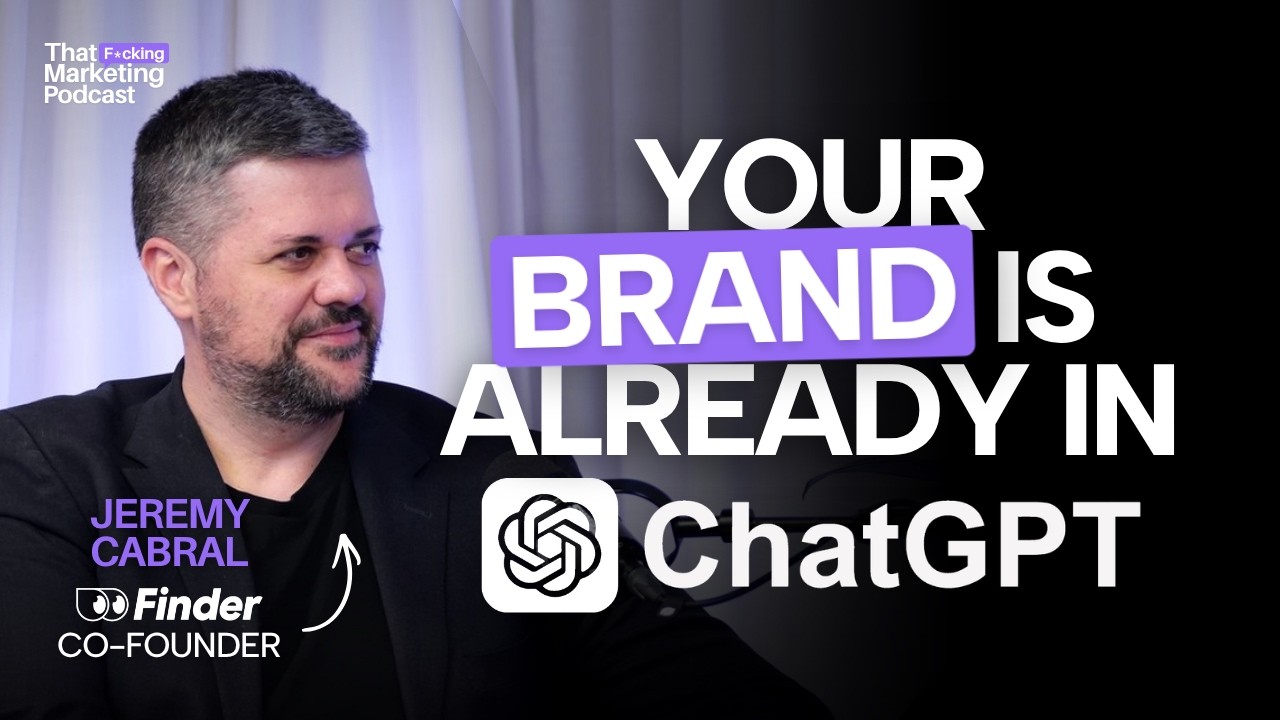
Airtree brings together Finder co-founder Jeremy Cabral and Vercel CTO Malte Ubl to examine how AI is changing search visibility. Jeremy reports that Finder had reached a point where traffic from large-language-model crawlers exceeded Googlebot traffic. The launch of OpenAI's o3 reasoning model then tripled LLM-referred traffic, suggesting that deeply researched, well-cited Finder pages were useful to a system searching across multiple sources.
Malte separates model knowledge from retrieval-augmented generation. A model periodically learns relationships between brands and concepts from its training corpus, while retrieval searches for current documents at answer time. Traditional links still matter, but mentions, sentiment and semantic association also shape how a brand is understood. Access differs by platform, since social networks restrict which systems can crawl their material.
Finder responded with a cross-functional task force inspired by a Princeton study on generative-engine visibility. It combined engineering, product, research, content and digital PR to add credible quotations, statistics and sources. Jeremy says about 80 per cent of the engineering team's effort was directed at preparing Finder for the change during one period. Malte questions broad use of llms.txt outside narrow developer-documentation cases because stripping structure can remove semantic context. Vercel instead invests in frontier content that makes it the original authority on a topic.
For an early-stage startup, the practical advice is direct. Use an AI search product as the default to learn its behaviour. Publish deep, evidence-based material, earn references from trusted publications, participate constructively in relevant communities and monitor brand sentiment. Malte adds that Bing indexing matters because it can support ChatGPT retrieval. Founders can also borrow legitimate authority through their personal reputation, LinkedIn articles, Quora or contributions to established publications while their own domain is young.
The speakers disagree slightly on monetisation. Malte expects intent auctions, while Jeremy believes action-based economics and user experience may restrain obvious advertising. They agree on the larger shift from search-and-click to ask-and-act. Agents will compare, choose and transact, making structured data, accessible services, strong reputation and successful task completion central to future visibility.
Key ideas from the episode
- 1
LLM crawlers overtook Googlebot for Finder
Jeremy says Finder crossed that threshold before o3 tripled LLM referral traffic, making bot behaviour and cited pages meaningful operating metrics rather than curiosities.
- 2
AI visibility has two time horizons
Training builds relatively slow-moving associations between brands and concepts. Retrieval supplies current evidence at answer time, so companies need both durable reputation and fresh, accessible pages.
- 3
Cross-functional evidence improved visibility
Finder joined product, engineering, research, content and digital PR to add quotations, statistics and credible sources instead of assigning the problem to an isolated SEO role.
- 4
Frontier content creates source authority
Vercel asks experts for thorough bullet points, then uses editorial support to turn their novel knowledge into audience-ready work that can become the original cited source.
- 5
Young domains can borrow earned authority
A founder's existing reputation, useful LinkedIn articles, Quora answers and contributions to trusted publications can establish references while the startup's own domain matures.
- 6
Bing belongs in the search stack
Startups that historically ignored Bing should confirm indexing, submit sitemaps and use its webmaster tools because its results can feed current retrieval in ChatGPT.
- 7
Commerce is moving from ask to act
Agents will increasingly decide and transact for customers. Websites need accessible interfaces, structured information and services that let those agents complete the intended task reliably.
Chapters
- 00:02Airtree introduces Jeremy and Malte
- 04:52Finder's LLM traffic passes Googlebot
- 07:06How models learn and retrieve information
- 12:09Finder's cross-functional GEO task force
- 14:34The limitations of llms.txt
- 15:14Vercel's frontier-content strategy
- 18:33How much Finder invested in AI search
- 23:30Will AI search sell ads or actions
- 26:53Practical first moves for startups
- 30:27Why Bing indexing matters again
- 34:15Balancing specific pages and authority
- 48:11From search and click to ask and act
Full transcript
9,324 wordsHello and welcome everybody. Today we are talking about AI and search. We were just having a little giggle beforehand about the fact that there is as yet no prevailing acronym for what this is called. So for now we're going to call it LLM SEO. This is Malta, I'm following your blog post, but You know, obviously this is a pretty, pretty momentous time for a lot of people. The impact on SEO for companies that have relied on SEO has been pretty stark over the last few months. And at the same time, lots of people are seeing the opportunity in a new version of SEO for getting your traffic from LLMs. And so we're bringing together today Malta and Jeremy to Talk about how to, how to take advantage of this moment and prepare your startup well for getting traffic from LLMs. So on to introductions. Malte, welcome. Malte is currently the CTO of Vercel, previously principal engineer responsible for Google Search rendering and engineering director for Google Search. So has a lot of experience in and around this world. Jeremy is co-founder and COO of Finder. He's been instrumental in making Finder Australia's most visited comparison platform and pioneered its launch strategy for new markets around the world. And SEO is one of his favorite things. So welcome to the party, Jeremy.
Thanks for having me.
So maybe where I could get started is just a little bit of context setting. I think, Malta, the reason we even got introduced to you was your fantastic blog post about LLM SEO a few weeks, months ago. Time is flying at the moment. And we also saw your CEO, Guillermo, mentioning that 10% of your signups are coming from ChatGPT today. So perhaps we could just start with a bit of context around, you know, how important was SEO for your business before? And how's that shifted since the emergence of LLMs?
Yeah, I think the super interesting topic. I think, you know, in many ways we are as a developer-facing business, right? Um, we're at the forefront of, of this as the, as the product market fit for, for like agentic software and, and software engineering is absolutely insane. I think many folks here probably have software teams that use, um, hopefully our own tool Re:Zero, stuff like Cursor, et cetera, Blob Code, right? To, to, to chat log code. And these LLMs are just incredibly good at coding, right? And so people are already using them for the type of use cases that we're specializing in. And, but we can, I think, essentially expect that the future outside of the coding domain will look similar. It just takes a little bit longer because it's more difficult to tune the models for those use cases. And yeah, so I mean, in a way, we, I will say, And this is probably very different to time. We were not a business that was like, had a very, very strong SEO strategy. Our SEO strategy was to be present on the internet, to, you know, produce content that people like. We're very focused on social media, probably more so than SEO. And so in a way, we were almost surprised when we saw that there was just this incredible uptake in traffic from ChatGPT and in particular traffic that converts. You might imagine that, like, I mean, we are very, in a way, we are very strongly hit by a reduction in traffic and substitution to LLMs, but not in a way that hurts our business, which I think is important to understand because, like, again, like the software engineers, they have questions and it's the best thing in the world if the platform problem that on my side, gets solved by an LLM and the, you know, user doesn't come to my page, but they're still a happy user, right? But it turns out that the people who then, who have an intent to come and do something in our domain, like host their own agent or, you know, renew their website to a more modern standard, those folks eventually, you know, they want to do business and they come through to us. And so we get enough traffic from ChatGPT That's very, very high intent and that converts at substantially higher rate than what we previously saw from other sources.
Thank you. That's so interesting. Jeremy, what about you? SEO has obviously been a core driver of traffic for Finder. How's it changed and what proportion of your traffic today, I guess, is coming from other lands?
Yeah, still a massive driver for Finder. As they say, you know, we're the most visited site in Australia for financial decision-making. And being highly trusted, I think it's really helping set us up for where things are going from here. For us, yeah, what's changed? I would say that 2 things, like we're really trying to ensure that whatever we're doing is, you know, right for search now and also preparing us for where everything's going. That's a lot of our strategy is trying to find that through line between both. But yeah, we're still seeing massive amounts of search traffic and actually some recent upticks. It's one of those things. With Google and the core updates where there's a lot of volatility. But yeah, some of our strategies are really paying off for us on the LLM traffic side of things. We actually crossed a moment in time a couple of months ago where we have more bot traffic from LLMs than we do actually Googlebot, which is pretty significant for Finder. So we're paying a lot of attention to how those LLMs are crawling the website and really looking at how that correlates with visibility changes for Finder across ChatGPT and so on. But yeah, really significant milestone as well was April 16th when O3 launched through OpenAI. We actually saw a tripling of LLM traffic. So the reasoning model there I think is really, you know, playing the main impact on in terms of why we're seeing an increase in traffic where, you know, I think Finder content is typically really well researched and it has a lot of citations as well. So I think with the reasoning model, it's going across the web and finding those trusted sources and Finder happens to be one of them. So Yeah, really interesting to see. I think every company should have a dashboard around LLM traffic and learn about what's driving those changes for their companies.
Nice. Thank you. Oh, maybe I thought where we could go next is just a little bit of an insight into kind of how the LLMs actually work when they're kind of trying to source authoritative content in a space. Marcy, you mentioned that In your blog post that LLMs don't match keywords, they interpret meaning. I was wondering if you could spend a bit of time just on the kind of technical side of that and, you know, what it actually means in practice.
Yeah. And yeah, so such an interesting topic. I think what's important to structure is that when an LLM tries to answer my question, it does 2 things. It, first of all, it has some inherent knowledge that's in the model. This knowledge is potentially out of date because it can only be updated whenever there's a new model run, and that happens maximum twice a year. One year is actually more normal, especially OpenAI tends to be quite behind. That's part number one. The other part is that there is what's roughly referred to as RAG, Retrieval Augmented Generation, where you run a search first. Like, the users ask a question and then you run a search and say, what are interesting documents that talk— that very broadly talk about this? And then you feed those as part of the prompt in a hidden way to the LLM and say, okay, but answer this question, you can take this input, right? And so that second part, it's much more like traditional SEO in a way how you influence it. But let's talk about the first one really, really quickly. Like the way to, I mean, I don't want to get too technical, but the way to understand what an LLM does, it has this notion of embedding information. And what that really means is that you try, you take these words and their interposition and so forth, and you put them into this many, many dimensional space. I know it's very abstract, but But the space is a space of kind of relationships. And so like Vercel is a company specializing in a technology called React. And so if you have Vercel and React in this space, they might be really close together. And then, you know, we also do web hosting, but, you know, we're not the only company in the world. And so we're kind of close to it, but there's other things, you know, there are they're in this space, they're close to web hosting, but they're not as close to React. And so, and now you can imagine that essentially for every concept in the planet, there is a dimension in the space and things are kind of close together. And if you remember Pythagoras from school, like literally at the end, you can do Pythagoras in this space and say like, how close are these things together? Right? And so ultimately you have to, To win in that space, you have to position your company in this space, in this meaning space, in a way that sets you apart from your competitors. And it's a thing that has, like, again, like these things only update a couple of times a year and then they take into account everything that was ever written. So it's not just important, like in the traditional SEO, you might be trying someone to get to link to you. Right? And actually, it might still actually be quite important, but it's actually much more important that people talk about you. So every single social media post where someone has a positive sentiment about your brand and associates it with some concept actually is helpful. And again, if that person is then themselves more influential, the LLM probably has a way of kind of teasing that out as well, because I think it learns that, okay, there's a lot of likes, and so that You know, makes it more valuable, but none of these things are hardcoded, but it does learn it, right? And so all of that matters. And there's— so yeah, so basically you really have to build your reputation and everything that you do for your reputation counts. One bit of nuance is Jeremy already mentioned how Jeremy gets a lot of AI crawling. Now, often these social media sites actually don't allow that. So Reddit's super important, but Reddit will only help you on Google because the only ones who have access. Twitter, in a way, very important, but the only ones who have access is Grok. TikTok, I don't think anyone has access. Instagram, only Meta's models, right? So I wouldn't even know how to answer, for example, for OpenAI, like which social media sites they actually can crawl, you know, unless they kind of find a way around in the You know, to do it under the hood.
Right.
And I mean, the way you describe that, it sounds like essentially, maybe the LLMs are going to be even better at really doing what the consumer wants, which is trying to find the best source on a topic rather than necessarily the person who's got the most links or had the most advanced strategy. Right.
It's not unmanageable, but it's definitely a different game.
Yeah. Yeah. I mean, I guess in terms of how you're setting up your teams today differently to address the opportunity here, I mean, maybe Jeremy, you can go first. But are you repurposing teams? Are you doing different things differently? How are you doing that today?
Yeah, I'm taking a much more cross-functional approach than ever before. We We'd read a study on, well, I'll say GEO. I think that's what they referenced in the Princeton study back then. And around, I think it was December 2023, we created a bit of a task force around focusing on what that study showed to improve visibility. So what that entailed was a few things. The study showed that there were things like quotations inside content from credible sources that increased visibility by up to 41%. Adding stats to pages, sources, improving fluency and so on. So what we did in that moment was effectively build out a team that could take research, include it into content. So it was a bit of a combination of a product and engineering effort with our insights and research team and the digital PR team as well. So I guess, yeah, it was a moment in time where we really wanted to get early to Walt's point earlier around the fact that these large language models are only training and I guess changing the data normally twice a year or so. We wanted to make sure that we were putting our information into the model as fast as possible. So we had this mass-scale project to work on that. And the second thing is just encouraging much more experimentation and, you know, expanding into more channels like some of those that were just mentioned. I think that's of critical importance. So we're allowing teams that maybe weren't traditionally focused on things like online communities to start experimenting more with that. And that's been, from our perspective, an important part of the strategy as well.
What about, I guess, site structure and like LLMs.txt files?
I think it's a—
yeah, I'm going to say if you can go, go.
They do get crawled, but I, they're more, I think they're more prevalent in very specific use cases in the developer space where people actually manually add them to their agents. And I think the, do it, it's a pretty nuanced topic, but for most business outside of software engineering, it's probably better to just have the structure of your website at this point.
Yeah. Okay. That's interesting. That kind of goes against the narrative. So, um, help me.
Yeah, I think the, the, like the LMCTC is, it's, it's a really weird format. Like it uses, it loses all structure. And so, you know, which actually is partially very important for the LLM to understand how things relate to each other semantically. And since you throw away that information, it's not necessarily good. Um, it does work for these use cases where you, where you do very much just direct information retrieval from a very small set of things. And so developers put like the 5, you know, MTXT from the things they actually work on, but that doesn't necessarily scale much, much wider.
That makes sense. And, and, and what about for you? Is there anything different in how you are setting up your team to kind of address the opportunity?
Yeah, I think what we, so it's not necessarily a team organizational thing, but what we are trying to do is what we call frontier content. Like we want to be the authoritative source on certain topics to produce this kind of feedback cycle of folks quoting us, you know, certainly also linking to us, but it's much more about like, you know, it's, and these things, if someone quotes you and they understand where the original came from, that has the same kind of Propagation of authority. And so like we want to be, we're trying to be like, if the LLM says, okay, I, you know, I can ask you a question and then we want to be the source, right? And so we want the LLM to understand that we are the source of this information. And so, and like we are the original provider, right? And so that's what we've really very much focusing on is to to make content that is truly novel and valuable to the, to the audience rather than a strategy that might be driven by volume, right? So that's, I think that's the most tangible change to how we think about content.
Out of curiosity, how do you actually do that as a team? I remember one of the things that the last startup I was at, like just getting people to create content But the person who is the authority on something, actually mobilizing them to create content is one of the hardest things in the world to do, 'cause it always feels like priority number 5. I guess that's even harder in a world where you kind of need that person because it has to be truly novel. How do you make that work internally?
Yeah, super good question. We're still figuring it out, but the approach we have is that we try to make it As like as low effort as possible. So we're trying to have folks who basically have the expert do thorough bullet points, not more, not less. So it has essentially all the information, but we minimize the amount of work they do and they don't have to like think about the audience too much. It's basically have them produce the absolute minimum. And, you know, eventually you could, I think the job to turn that into a great blog post could, could be automated. But for now, we certainly have like editors in place who, who are expert in then turning that into something that's kind of audience appropriate.
And then I've enjoyed the kind of wave here of, um, I feel like getting LLMs to write content and then now everyone's like, oh my God, it's so easy to understand, to like see LLM written content on the internet. It's driving you slightly crazy.
So.
Does feel like the human craft is making its way back a little bit.
100%.
How would you, Jeremy, you said kind of search is obviously a huge driver for you still, LLMs, you're trying to really lean into the opportunity. How would you like say kind of percentage-wise or split-wise or effort-wise you're resourcing that as a team?
It's honestly really hard to predict where everything lands and the significance of each platform over time. So what I'm really trying to do is have a first principles approach that hopefully, I guess, sees us focusing on things that are somewhat relevant to both and really capitalizing on tactics we know are working across both platforms. And so that From my perspective, it's always been how Finder's approached search in the past as well. We, you know, on the point of organizing teams and getting them to focus on content, I think, you know, the right org structure, which for us was really influenced by the Google algorithm early on, ensured that always-on activity that we needed to do well. And I think it's quite similar again where I'm starting to think about that in a way that ensures that we have that constant activity against what matters. So in terms of focus, honestly, it's hard to say who at Finder isn't really contributing in some way, shape, or form towards the outcomes we want to see across both traditional search and LLMo, given the various engines we're optimizing for. But yeah, as a percentage of focus, I'd say it's, from an engineering standpoint, we spent a good, I'd say 12 months really going deep on a lot of this, probably about 80% of the engineering team was focused on preparing Finder for what was coming next. And that, you know, it comes in waves. And in, you know, I'd say prior to that, it wasn't a major focus from a product and engineering standpoint. And our growth team as well have been, you know, on this for probably 18 months or so, really going hard. So it's, I think it's still to be determined in terms of how we structure things going forward and what percentage of focus looks like. But I think new roles will emerge and that's Some of those people, it might be 100% of their time. So yeah, we'll see where things go.
I'm curious, you know, obviously today it feels like, I mean, OpenAI and all the other LLMs are just like running as fast as they can and trying to build products kind of as they go. But you've gotta assume at some point there is a business model that makes its way around. around this? I guess maybe, Mo, to start with you. I mean, what do you think happens longer term in terms of how LLMs are monetizing their traffic more effectively?
Yeah, I'm— and you mentioned at the beginning that I used to work at Google on the search engine. And so I know the business model quite well. I'm 100% convinced that the— that The consumer-facing AIs are going to work, go towards a pay-to-play model where the owner of the LLM is going to essentially auction off intent, right? I think it's often called the best business model of all time where like you tell Google that you want car insurance and Google is asking, okay, they want car insurance. Who wants, who's bidding the most, right? It's so obvious. And, and, and the relationship with that we have with the LLMs is even stronger like that, where often we just tend to be a little bit more explicit about what our plans are. And I, I just cannot see where a world where that's not gonna be the case. In particular, because the, as a, there are dynamics at play where The, you know, the, you cannot monetize, like you cannot make a subscription product as profitable as the advertising product. I think the, like Google's monetization is on average $150 or so per year. But the problem is that the monetization of the people who would be willing to pay like low hundreds of dollars per year, Let's say it's $20 a month, $240 a year. These people are actually heavily monetized above the average, right? And so it just financially makes more sense to monetize them through advertising in this space. So I'm 100% convinced that's where it's going. There's no way. And especially like, let's say OpenAI chooses not to, there is going to be a player who comes as $0 a month. And And who will do it, right? So like, all the dynamics point to that happening in the future.
And how do you manage the— obviously, you know, brands say there's a world where brands are, you know, just doing paid ads in the way that they do with Google today. But there's also this kind of extra layer of these brand deals that kind of content sites are doing with the LLMs as well. Are you seeing any impact there in terms of if OpenAI has a deal with online media outlet or not, whether that impacts the traffic that you see.
I was actually looking at this data earlier in the week. Yeah. So across, there's a company called Hall, which does LLM visibility tracking. And essentially, from the top 30 cited domains in their dataset, they saw a significant chunk of those were through OpenAI partnerships. So it's absolutely directly impacting. And yeah, it's going to be interesting exactly how that plays out into the future. But you know what the tactical thing there is, if that's the case, seeking to have your website referenced on those publisher platforms that are actually in partnership with OpenAI is going to be a key move. I have a slightly opposing view in terms of business model though. I truly think that OpenAI is focused on user experience and I think with Google it's become almost like the Yellow Pages where it's just all ads above the fold. And I think that for a lot of people, especially those that are more discerning, I think has trust concerns, like where people like, can I trust this information if it's about whoever's paying the most? And I get that, you know, relevancy is involved in that. But from my standpoint, I feel like they're going to take more like an Uber play to the taxi industry and really focus on user experience over time and try and extract people from the Google platform onto theirs to To take the action that they are hoping people will take through their platform. There's a big announcement, I think, in the last 12 hours or so around the agent platform that OpenAI is releasing. And I think that actions are going to be a significant way that it seeks to monetize, where taking those actions on behalf of people is where they might seek, again, maybe through partnership to take a clip of that outcome versus showing ads front and center to a customer. So that's That's where I see it going potentially. And the future will tell exactly where it all goes. But, you know, certainly some level of ads, but I don't think it's going to be as ad-heavy as Google.
Oh, I mean, I didn't say there would be ads, right? I just said that the intent will be monetized. So if I get to choose which of the 5 providers for Action Log I'm going to use to fulfill a task, I might, you know, be charging, I might be picking the one that pays me the most.
Yeah, that's fair.
So it's kind of a mix of the brand deals and potentially the kind of product deals, I guess, essentially.
Yeah, I think that it's definitely like it's intent auction, right? So the, like, that's where really the money is, which I wouldn't usually describe as a brand deal, right? Because the intent, the advertiser, like, it's a performance marketing play. Rather than a branding deal.
Right. That makes sense. I guess in terms of like the, there are a bunch of people on this call, I looked through the list ahead of time. And largely, I would, I would describe that most of the attendees as early-stage startups. If you had kind of practical tips for what they can do today, I mean, potentially where we could start is, is You know, experiments that you've run, the ones that have worked and the ones that have failed and kind of what you learned from them. And then potentially, you know, practical tips for what startups could do today to get started. I mean, Jeremy, maybe I'll start with you.
Yeah, I think the first thing is to— what I actually did was when SearchGPT was launched was make it my default search engine. I think that really helps you understand exactly what you can and can't do on these platforms and what sort of answers are coming back in response to the various prompts you're putting in. And from that learning, I think you really start to understand what gets referenced and determine from there a content strategy that really, in my mind, needs to be involving publishing in-depth content and something that's really evidence-based and quite specific in the way it answers questions. So in all scenarios, like It's about action and actually starting to do something. So yeah, I'd start today on that. And really importantly, and then something that was early on important for Finder as well is starting to develop relationships with websites that are trusted sources so that you have a chance of getting referenced. That could look like a digital PR strategy where you have something that's, I guess, some research or something that's newsworthy enough for you to have a conversation with one of those publications. But I think that's a really tactical two-pronged strategy of, you know, constantly publishing and ensuring that you're getting it referenced. And I think over time that's gonna play a big role in ensuring that you get referenced across each of these. And yeah, as a startup, you may not have as much online presence as other brands that get referenced across these online communities, but starting to engage across them, I think is going to be really important as well, not only for citations to ensure that you turn up, but it's how you turn up and the sentiment around your brand is really important. So yeah, I guess managing those online references is going to be really critical, ensuring those touchpoints are all positive around your brand.
And how are you doing measurement today, Jeremy? I mean, I know you mentioned Hall earlier, it's a local founder, Kai, who's started that business. There are others, I guess, alongside Profound Daydream. I mean, are you using tools like those today? Are you Do you have a slightly different stack? I mean, how are you working with it?
Yeah, we have a combination of some in-house stuff that we're doing and also exploring and have used most of the third-party tools available at this stage. You know, I'd mentioned bot tracking. That's been something that's been in place for a long time. And we really just wanted to ensure that we're just tracking that activity and how it's— which pages are getting crawled and trying to understand why. From a visibility standpoint, it's a bit challenging. We know we've been talking a lot about, you know, ChatGPT and so on. That's a lot easier. But some of the platforms like Google's AI overviews are harder to track. So yeah, from our standpoint, it's constantly moving targets. So I really am trying a whole bunch of different tools to see what we can glean from those as insights. But the stack, yeah, at this point we've tried, you know, several LLM visibility trackers to see how they're going. And some of the traditional SEO tools as well are starting to expand their datasets to have some of these as well. And I guess that's quite important if you're looking at the large-scale studies and trying to understand from that what's working. We have a combination of, I guess, tactical checking of our own stuff, plus what's happening for some of our competitors. And sometimes looking outside your own industry is a really important thing as well to understand what are the most referenced brands. Achieving in these platforms and why, like trying to reverse engineer, I guess, why is a really important thing too.
Thank you. What about you, Malte?
I think, by the way, one super practical tip is that you might have ignored Bing in SEO land, but now you totally have to care about Bing because that is what ChatGPT is using As the like fallback search engine, if it you know if it feels that it needs to get something current from the web, right? So you definitely need to sign up for Bing Tools. I I will admit I've done it for the first time in my life like a couple months ago. They actually did a great job. You can actually do OAuth connect to your Google Search Console, and you it auto imports all your projects like zero friction. Really well done by Microsoft. They do have a copilot situation there, which I didn't try, but. Good for them. So that's, I mean, yeah, so you have to care about Bing, you have to care about Bing indexing you. I think there's a few things where in the past you might have said, okay, I have a sitemap, but I only told Google about it. Now you probably put it into your robots.txt so that your, the crawlers that kind of come just around the web know how to pick it up. I think one, and you know, since we have early stage startups in the And the audience. There is certain things, because I mentioned how these knowledge updates are only a couple times a year, they're very biased to authority, and you have none of that, right? Maybe you're younger than 6 months, and you definitely don't have any authority. And so I think this actually comes together with a question that James asked in the chat. The, whether social media is important. So I think they're like the one asset that you probably have or that you could hire is essentially influencer marketing with the main influencer being yourself. Because that is kind of the continuity coming into the company. And so like a little bit of his authority could come from you, right? And so you have to be careful about that, like, because these Brands are kind of, they're like, they pick up on you being non-genuine the same way how that wouldn't go well if you, you know, if your followers think you're just shilling them stuff, right? So you have to be careful about it. But it's, I think it's honestly the one thing that you can directly influence is kind of how your own authority kind of helps bring forward your you know, your current main project and, and, and, you know, gives it kind of a boost when, when no one else is doing that at the moment.
I 100% agree with that. And I think, I don't want to use the terminology and have people go and do some bad things with it, but in SEO there's something called parasite SEO where you're effectively borrowing the authority of another domain to publish content onto it. And if done correctly and in a positive way, I think that's a really useful tactic for a startup where You might be able to publish a LinkedIn Pulse article that, because LinkedIn's heavily crawled and referenced, or some of these other websites as well out there like Quora and so on. I think leveraging other domains that already have strengths are really going to be critical ways of getting your brand referenced. And it could look like a contribution post to another website that is already included in ChatGPT as well. So yeah, that's a really tactical thing you can do instead of waiting for your website to be known and And reference is find other websites that already are and publishing on those.
Yeah, that makes sense. And is there anything that you would, that like, would the— you would have done in the traditional SEO world that like, if you did it today, it would actually hinder you? Maybe Jeremy, I'll kick it to you.
Yeah, look, That's a really interesting one because I think at this point in time, the tension that is constantly in my mind is around the number of pages you should publish. I think, you know, Finder is a very large website, but it's smaller than it was. So we just went through a phase of actually consolidating and having less topics for Google. Like it was something that, you know, we were trying to really consolidate the signals around topic authority and so on. That's, I think, a traditional SEO strategy. For LLMs, I think a hyper-specific content could actually be beneficial. So a larger scale of publishing, if done well, potentially could have really great results. So I think the key in both scenarios is ensuring that if you're publishing a page, it needs to have a reason to exist, a reason in my mind as to why you would not stay within ChatGPT or whatever platform you're using and actually go and visit your website. So from my standpoint, that's about ensuring that it's meeting the intent, it's high quality, and supports the task to be completed. And I think that's the through line that in both scenarios, I think really matters, you know, having, whether it be unique information, I think that's, you know, something that you can't find unless you're engaging the page, you know, getting, you know, access to information that's behind a closed, you know, wall, potentially membership only is another piece in my mind. There's some really great examples out there that the VAPI website, for example, has the ability to engage with its voice models embedded into a page. So that's something that, you know, it's almost like a pre-usage of the product before you've gone ahead to buy it. And that not only has a great impact from a traditional search standpoint because you've got a page with high user engagement and that tends to do very well for traditional search. And, you know, we've seen the public trials around, you know, some of the stuff out there that really, you know, brought evidence forward around that, you know, being a significant signal, if not the most important signal. And, you know, from my standpoint, you know, there was an announcement recently and, you know, Perplexity's already, you know, got its browser. OpenAI's due to launch one soon. I think that user engagement continues, will continue to be a very important signal, not only from within, you know, these platforms with the feedback in response, you know, to every answer that's provided, but from the browser and ensuring that the actions that customers are seeking to take are actually successfully completed. So Yeah, I think that some of these things are going to evolve over time for sure. But from my standpoint, that tension is really difficult to manage and ensuring that you're testing first before going and doing anything at a crazy scale is really important. And looking at the numbers and getting that feedback loop before you continue forwards is something I'd always encourage for anybody trying to do anything to improve visibility.
Do you have any examples of like something, you know, you experiment, you did it as a small experiment and you're like, it just Fell flat completely or did it as a small experiment and you kind of really leaned into it?
Yeah, I mean, I mentioned that survey project, you know, off the back of the Princeton study. We really wanted to ensure that we had, our goal was to have every single page with a unique referenceable bit of information that was nationally representative that would support the outcomes people were seeking to take as a result of reading that information. So research and stats on, you know, the factors that people consider to be important in choosing, you know, a frequent flyer credit card, for example. I think the intention was there and the goal was there, but our success rate was probably something like 60 to 70%. We got all the research completed and there was literally, you know, thousands of data points and we included that across a lot of pages. But in some circumstances, I think that that's a very hard product to scale well. So the way I'm rethinking that is How can we gather more, I guess, feedback on the pages themselves to really other people visiting those pages versus running this separate isolated study? And yeah, so that was a challenging project internally. I think we got to the goal and we managed to have, you know, some improved visibility as a result. But yeah, it was complicated to run and a lot of people are glad to see the other side of it.
And what about you, Malte?
Yeah, I mean, what I would add is that I honestly, you know, I've obviously worked at Google for a long time. I do have a— I have respect for the SEO community, but I also have a lot of, like, criticism for them. And I think there's the folks who have really professionalized it. And, you know, since I'm not from Australia, not a expert in Finder, but I think Pinterest is probably at the absolute forefront. And so they run experiments across their entire fleet of content because there's so much content that you can manipulate in kind of distinct ways and then see signal in the overall thing. But most of the SEO has been kind of this like tea leaf reading. Like, I heard this and then I misinterpreted and now I'm doing this and so forth. And I think that something that actually always was good with Google also works even better with LLMs in that you have to, I always struggle with this word, anthropomorphize them. So the Google and the LLMs are They have a goal of doing right for the user. And so, for example, people are like worried that Google doesn't crawl them. And like, Google wants to crawl you and it wants to crawl you as much as humanly possible, but it also wants to avoid that it accidentally takes your website offline because then, you know, it would be bad to link to you. But like, it's not like you're not in this like crazy competition where it like, it Google fights against you and you have to win, right? Like Google actually wants to get your content. And the same, that's even more true for the LLMs who are like, I need all the data I could possibly get, right? And so you're on the same team and they want to find out if they're doing a good job. Like one of the things that like you can do now is that almost all of the things that Google used to do used to be secret. And totally not taken advantage enough of is that as discovery of the recent lawsuit, the entire shit is all on the internet now. Like, like everything. The fact that the, that the Chrome data is used to measure how long people are on the destination site after the, after the user clicked through, that's, that's now, that's in that lawsuit data. And so like, that's also why OpenAI and Perplexity are making browsers because they realize that they cannot be competitive if they don't have that data access, right? And similar. So anyway, like the point being, they, you need to think with them. It's like they want data that makes them produce a better product. And so whenever you can kind of find a way to to align with that goal, that will be successful. It's, you know, maybe you can cheat it, but mostly it's, yeah, okay, like, I mean, I, you know, Google likes it if people actually stick around on my site when they did a good job ranking. Okay, cool. Let's actually give the user what they wanted and not try to trick them, right? So there is this dynamic going on, but it really helps to, you know, don't think about the search engine or the SEO or the LLM as something that's adversarial to you, but like they're on the same team, they want the same thing. As long as you have good intention.
Yep.
So essentially, just create good content. And you'll make both of them happy. Right.
And it's not just content, right? Like, I think there's actually quite— by the way, if you like, there's a really complicated discussion to be had if all you have is content. Right? There's a more or less straightforward conversation to be had if you have something to sell. Because that kind of loop still works. I think there is a question of what happens if the information intent of the user has already been fulfilled by the LLM, and so there's little value in the click-through, right? But if the user was thoroughly informed about how awesome your product is and they click through and go buy it, then, you know, everyone's happy.
Maybe that's a good, good moment to take us through to kind of looking ahead because, you know, I think the world is changing very fast. And I think, you know, many of us can see a world where in a few years, the LLMs are becoming more agentic, they're becoming more like personal assistants. And there's a world where, you know, the agents are acting on behalf of you, you're not clicking through, they are. I guess, where do you see potentially the role of agents over the next few years in kind of doing, maybe even buying themselves? And then probably separately, there's another question, which is if the LLMs become the curators of information themselves, what is the role for human curators? And so I could probably make the argument on both sides for that one. So I'm curious to hear your perspectives on that. Maybe, Malte, I can kick off with you and then go over to Jeremy after.
Yeah, I'll try to give an answer because, I mean, there's so many answers. Jackie, you already mentioned earlier that there will be a flight to human touch and curation and everything, right? And in many ways, this is a continuation of a trend that we've already been seeing where, you know, in the news space in particular, that there has been for a while this problem that you used to have these like local monopolies and with the internet that fell. And so there wasn't really a need to have, you know, 100 newspapers all publishing the same thing. And so you have a bit of a winner takes all dynamic in many markets. I mean, maybe not winner takes all, but like you have like a few very large publications and others struggle to differentiate. Except that now you have the phenomenon of the modern paid newsletter working super, super well, right? And I think that in the particular publishing space, that is like, that's just straight up the future, right? Even more so that, that now you want to know who's writing it, you know, and then you're also willing to pay for, for that person, right? Or, you know, or that small set of folks. So I think we'll, we'll definitely see a continuation of that trend. I think on the, on the agentic side, one of the first things I said today was that I do believe that the software engineering space is kind of the avant-garde here. And again, the reason is not that that's actually— it's actually surprising because software engineers, when it comes to their tools, are very conservative because they use them in this very kind of mind-melded fashion. And so actually getting someone to switch their IDE like Cursor did, completely unheard of. You would do that once, a decade, if at all, right? So there's so much value that people do it. And that is because they're so good at this. And there are some technical reasons why that's the case, but these technical reasons are more of a thing that you're 1 or 2 years ahead in quality. And so this will come to the same thing. And so there's absolutely no question to me, like, that if I want to go, let's say, on a more complicated vacation, Um, from it, then I will have an agent go and figure it out. Um, what, you know, what the plan is. And maybe it, maybe it books for me, maybe it doesn't, but it certainly shouldn't take me more than like, ideally it has seen my previous travel and it knows everything about me and it'll figure it out. Like that, that just, that is just going to happen. I think it's gonna be similar in, in other retail categories. And like, I, yeah, there's no question to me because the convenience factor is so good and it's such a great experience that, that, that's going to happen.
In that world, um, this becomes more important than ever, right? Um, you, because you'll give it, the consumer has less and less, I guess, judgment in, in where they're ending up. And it's, it's more and more the LLM who's kind of Curating the decision path.
Yeah, but you also have a chance of getting into more long-taily aspects. So like humans, because we have, we are so limited in our attention, we tend to buy the, you know, the trustworthy brand in categories where we don't, where we haven't invested deeply, right? And there's zero reason for our agent to not be like, very, very sophisticated shopper for like something that I have no idea about, right? Um, so I think that there, that I, we shouldn't underestimate that, like, that the world can be different when the, when you're less kind of constrained by the, by the individual human capacity to process information.
Makes sense. Jeremy, anything, any differing perspectives or?
No, I'm actually very aligned. I think, you know, firstly on the, I guess the agent side of things, you know, we're in a, have been in a mode up until now, up until now it was like a search and click and, you know, we kind of do all this stuff on our own to kind of figure out what's, you know, information we need to complete the task. And I think we're moving to an ask and act approach where I think ultimately the LLMs are You know, not only gonna help people decide, but they'll actually help, they'll make a decision on their behalf using, you know, what they know about them, the preferences, information and so on. And I think that's gonna be incredible to see this explosion of actions being taken on behalf of the customer. So, you know, from my standpoint, it's about preparing your business for that and ensuring that you're following, you know, all the releases and everything that's happening on that front to ensure that your website services are ready and prepared for Not only website services, there's the data and all those things prepared for the actions that'll be taken using your business as a platform ultimately to complete the action. On the creator side, I think it's really interesting because the behavior we saw on Google was that a lot of people started appending Reddit to their searches. And I think that was really showing how much that there was a preference towards this real human voice and opinion, not a corporate perspective. And From my standpoint, that's incredibly important. We have not only Reddit, there's TikTok, really raw and I guess human perspective that people are taking into account when making their decisions on things to do. And what's really important from here is that you are publishing across those platforms and that information is going to be playing a massive role, not only in influencing your customers and the actions they take, but You know, like we mentioned before, it becomes a training data. So, you know, from my standpoint, making sure that you're not only visible, but credible and quotable is critically important. And, you know, I think there's gonna be a bit of a battle playing out between, I guess, the creator kind of platforms, which is more like, you know, Meta and I guess Google, which have been very creator-focused, and the user experience ones, you know, that, well, both focused on user experience, but those that have been from that outwards from the beginning, I think, you know, ChatGPT and so on, and how they evolve. From here and how they play out in this LLM war is going to be incredibly fascinating. But, you know, already seeing, you know, Google partnering with Meta on the Instagram indexation recently was fascinating. It's revealing of that partnership emerging between Meta and Google. And I think that's something that you wouldn't have seen in the past. So yeah, I think the creator piece is going to be fascinating to see how these creators are enabled with these new technologies and And how they're supported by those platforms. And yeah, I'm extremely excited to see where things go from here. But from my standpoint, it's just going to be a crazy time. And I think anyone that's listening, if you can start taking action now, something obviously it's a good thing to be listening to people like Malta and really understanding things that from my side as someone that's representing, I guess, content creation for Finder, I think it's about, you know, really starting to understand these platforms and publishing more, seeing, getting that feedback loop. So you yourselves can have your own insight and your own proprietary, I guess, method on how you get better results on these platforms too.
Well, thank you so much, both of you, for your time. Just wanted to see if there were any final points that you wanted to make, anything I should have asked you. Also, Jeremy.
I mean, I think one, one final topic and, and I mean, something that, that Resell is heavily investing in both as a platform and for ourselves is that obviously as an early stage startup, your own agent also plays a, a big role in this. Many of the companies are probably building agents literally here on the call, right? And so I think the, that relationship is also really interesting how you can get folks to maybe have some of those same interactions that currently are happening on ChatGPT on your own surface and sort of more influence as to what, you know, what the overall journey is.
Yeah, that's good. That's a really good point. Well, look, thank you both for your time so much. If anyone hasn't checked out Vassal, I highly recommend having a play around with these areas. It's a very good sign. Jeremy, it's a— you guys are a stalwart of the Aussie ecosystem, and it's fun hearing that you're kind of going through such big changes at this stage in your journey. And thank you for sharing your experiences.
Thank you.
For everyone on the call, thanks for hanging out for an hour. We are— I highly recommend this If you haven't had a chance to go to our Open Source VC library on our website, this conversation will be hosted there, but we also have a ton of other resources for early-stage startups, everything from template financing documents to policies, everything else to make your life easier as you're going through those company-building firsts. And this will also be hosted on our YouTube channel where many of our other conversations are also hosted. So please go check that out. If you have any feedback, please, um, please send that on email. And if there are any other topics you'd love us to cover, please send that too. Um, thank you both so much for your time, and, uh, we'll let you get back to your days.
Thank you so much. Thank you for having me.
It was fun.
Bye.