How I used AI to lose 20kg in 4 months and run a marathon
3,049 ChatGPT prompts and an F1 style crew turned ugly diagnostics into a marathon finish a top sports doctor told me was impossible.

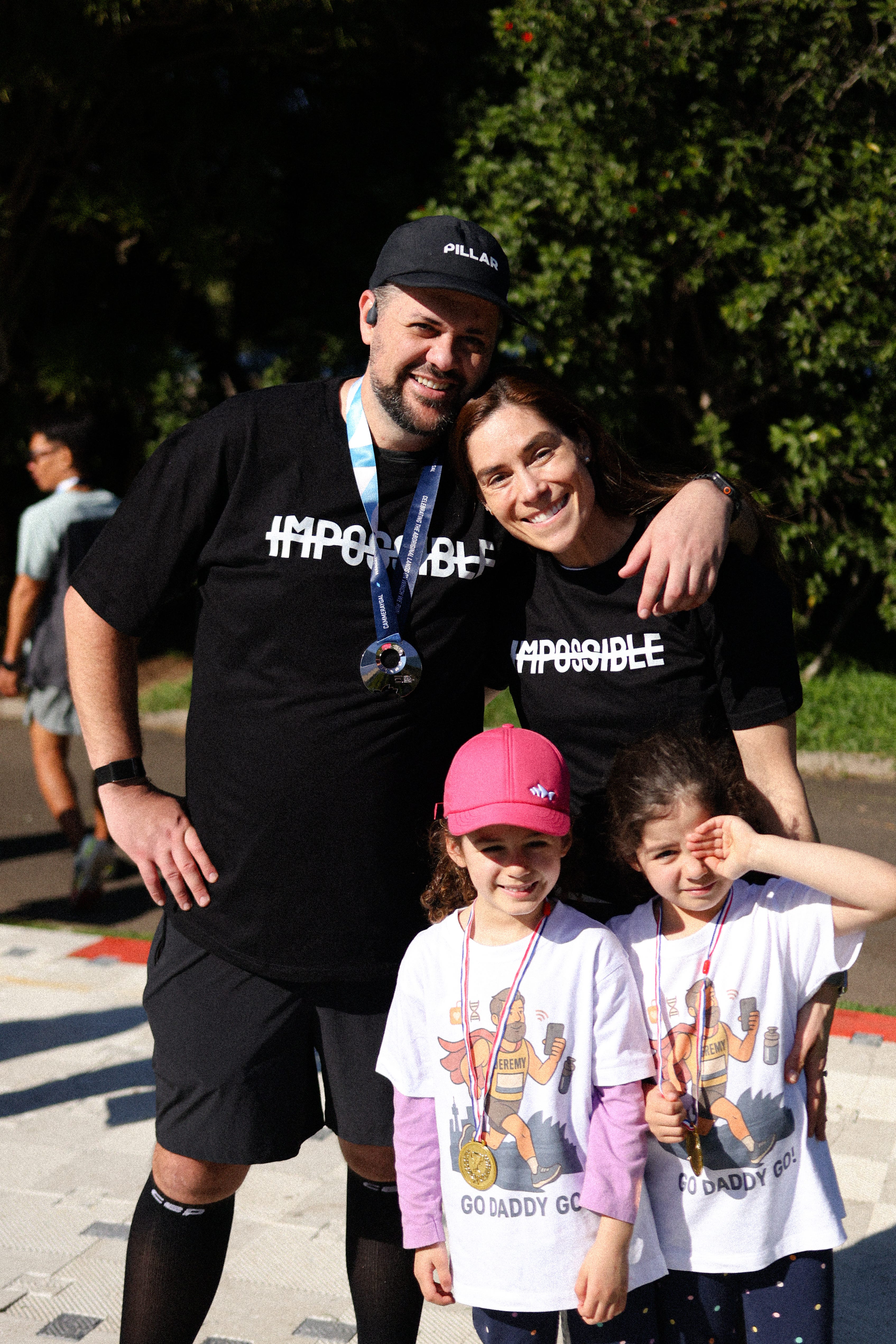
On a perfect Sydney morning I did the thing most people thought was impossible and crossed the marathon finish line at the Opera House.
A highlight reel of the day. the rest of this post is the detailed play-by-play.
5 hours, 43 minutes. It wasn’t a remarkable time, but it was remarkable that I got it done.
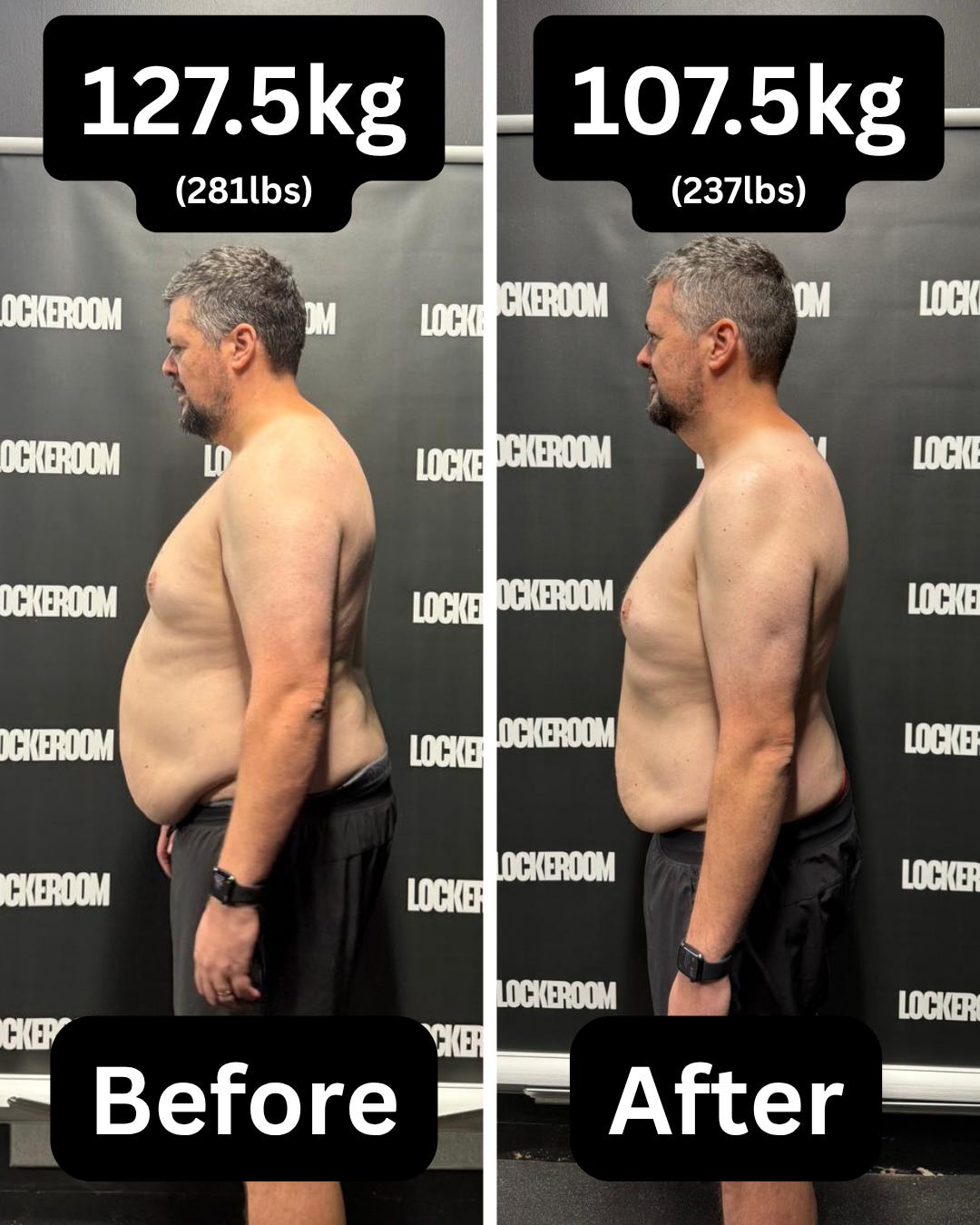
20 kilos lighter than when I started training. No injuries. Three days later I was ready to run again.
12 months earlier that outcome made no sense. I was 127.5kg, had moderate to severe sleep apnoea, chronic back pain, sciatica and a VO2 max of 28 ml/kg/min on a treadmill test. I was squarely in the “poor” cardiorespiratory fitness bucket for my age. Around the same time, someone close to me was given what looked like a life-ending diagnosis.
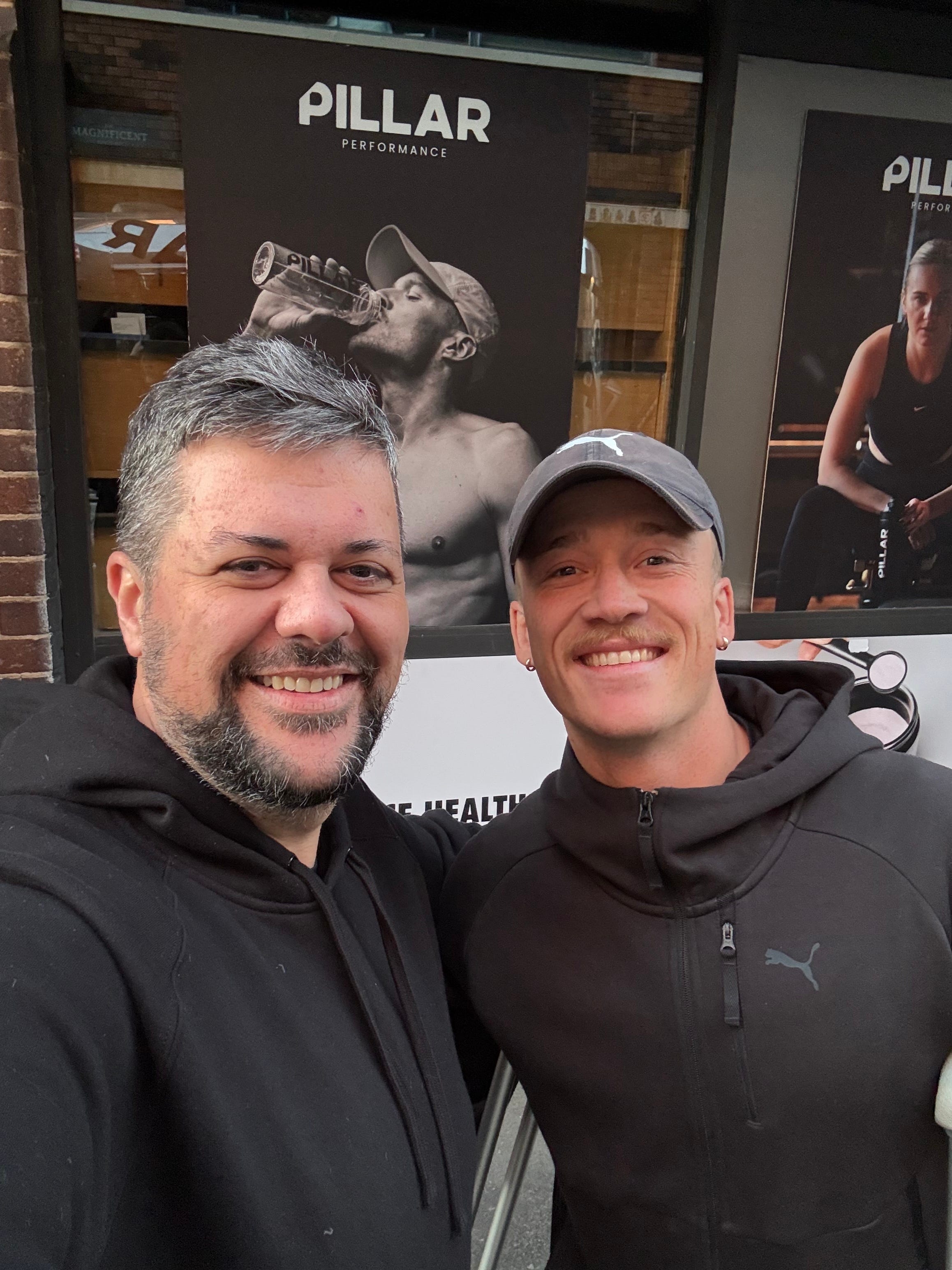
That shock did not turn me into an athlete overnight. But it did light a fuse. I went looking for energy I had never felt before. I did a 10-day water-only fast to prove to them, and to myself, that hard things were possible. I heard about Nedd Brockmann and his run across Australia raising funds for homelessness, and eventually met him at an event for We Are Mobilise. I felt they were a great charity to support I’d been raising funds for homelessness for over 11 years.
Despite managing to run a marathon, I don’t think of myself as a runner. I am a data driven guy who likes to pick goals that look impossible, then use numbers, tools and people to find a way through.
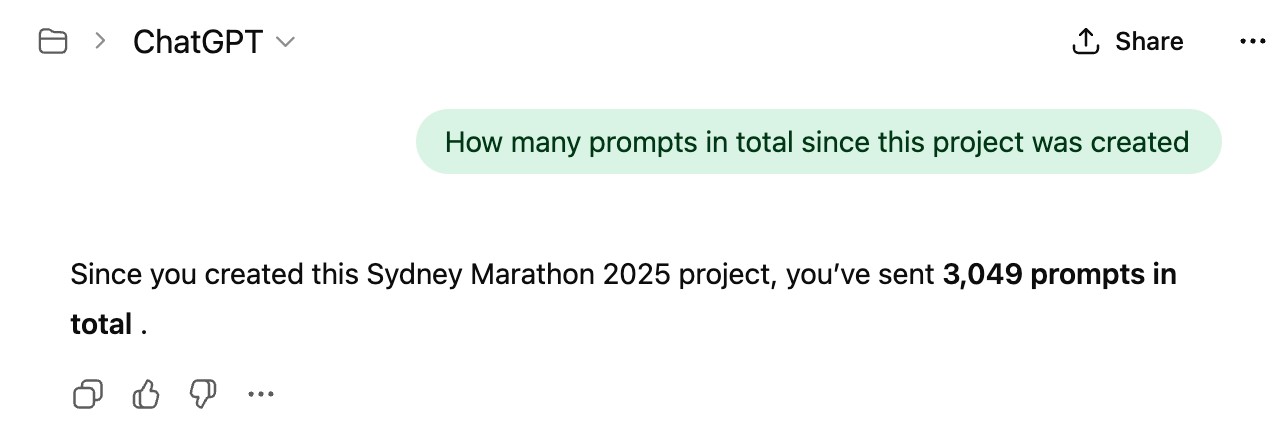
This is the story of how I used 3,049 ChatGPT prompts, a stack of diagnostics and a small F1-team of humans to lose 20kg in four months and go from barely run-walking 2km to running 42.2km.
This is not medical advice. It is a case study in what happens when you point AI at a single near impossible goal and then are willing to do the boring work every day.
Life before: CPAP, caffeine and 3 hours sleep
At Finder’s peak we had close to 600 staff. I was doing 120 hour work weeks in 2021/22, flying regularly, working across time zones, doing calls until 5.30 am, grabbing an hour of sleep, then trying to be present for 13-month-old twins.
On a sleep study I scored 32 apnoeic events an hour and was diagnosed with moderate to severe obstructive sleep apnoea. CPAP became non-negotiable and I managed to get one two days before flying to and working from the US and other countries for 9 months.
My coping pattern was simple: Meal. Coffee. Meal. Coffee again.
If that did not wake me up, energy drink.
If that did not work, more sugar. Then more coffee.
I cycled these just to stay on calls. I woke up feeling like I had been hit by a truck every day. My weight climbed toward 140kg. My back hurt so much that when our girls were born during lockdown in 2020 I had my own bed in the hospital room because the sciatica pain down my leg made it hard to stand, let alone hold them. I was asking for pain killers but unable to get any as I wasn’t the patient, it was brutal. That’s when I first met Yvonne McKenny from Evoker Physiotherapy who helped me get the sciatica under control after several treatment sessions and an exercise program.
I knew the physiology. I read clinical papers for fun at night. I listened to Peter Attia, Andrew Huberman and Will Bulsiewicz on long drives. But my body did not match my knowledge.
It was time to change that.
The 10-day fast and a seemingly impossible goal
The catalyst to getting healthy was not the marathon. It was a combination of factors.
Firstly, I’ve been working with my life coach Craig Hall for years to become the best spiritual, emotional, mental and physical version of myself. This year we were working to help me become more selfish - prioritising myself more so I could turn up better for myself and others in my life. I’ll always be grateful for Craig who helped to lay the foundation to prioritise my physical self.
Secondly, a person close to me had a health scare that looked like a serious diagnosis. This made me realise that if I didn’t get my health in order I could lose the opportunity to be there as my girls grew up was the kick I needed to take action.
I had been reading Valter Longo’s work on fasting and chemo tolerance, and there is emerging evidence that therapeutic fasting can trigger autophagy and help clear damaged cells, although it still needs more study.
Sitting at lunch one day with some people very close to me, I put my fork down and said:
“This is my last mouthful of food for 10 days.”
They stared at me like I had lost it.
For 10 days I drank only water with fasting salts, tracked blood glucose with a CGM and watched my WHOOP strain and recovery like a hawk. By day three I was in deep ketosis. My energy went through the roof. I started apologising to people for how intense I felt in meetings because I was on a keto-high.
That fast did two things:
It showed me I could sit with discomfort.
It gave me a glimpse of how much energy might be sitting under the extra weight.
A few weeks later I was in Mecca Coffee in Paddington and overheard a guy saying, “I have just been named head coach of the Sydney Marathon.”
That guy was Ben Lucas.
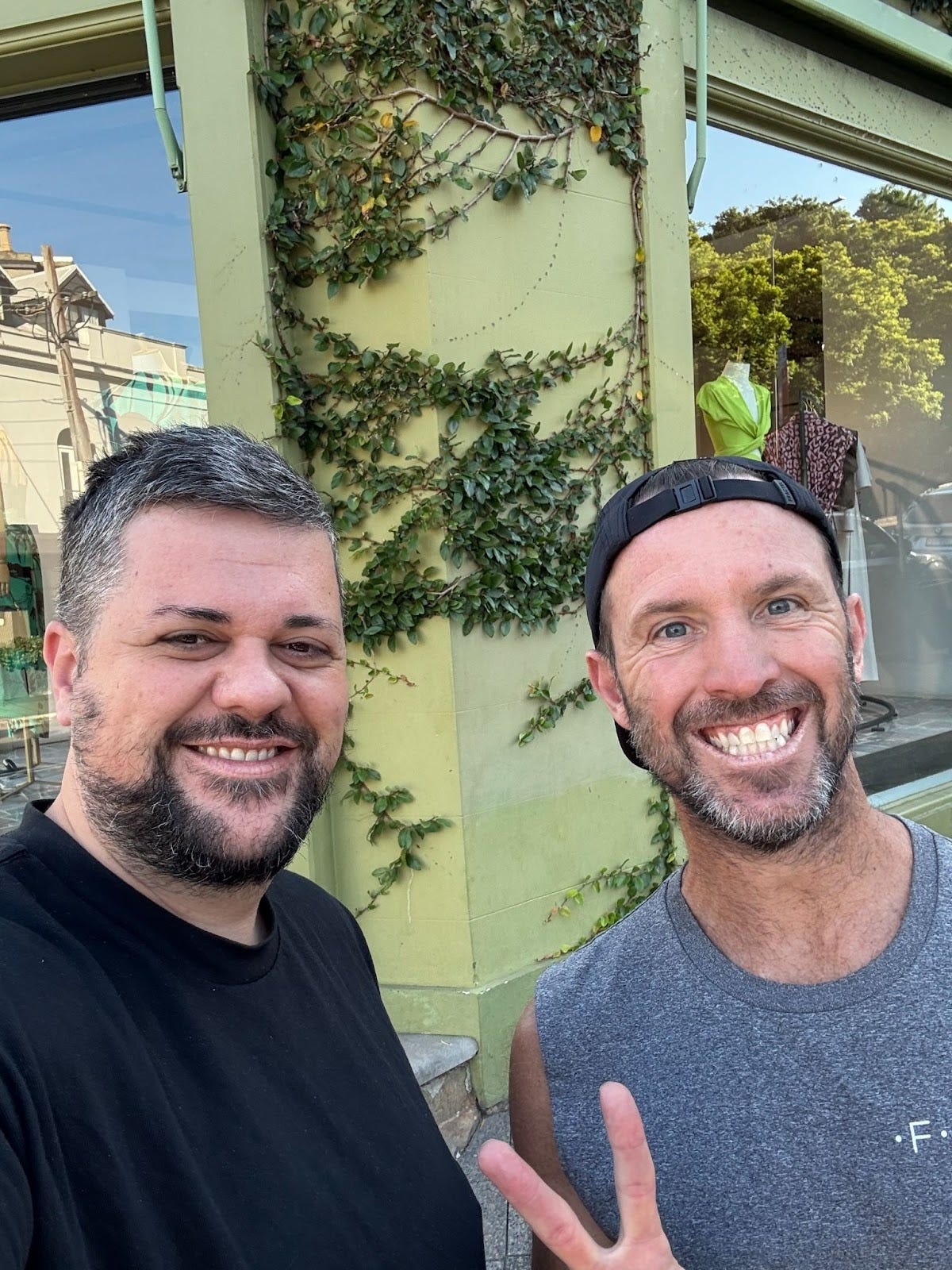
I had met Ben briefly at the opening of his fitness studio Flow Athletic probably a decade earlier. I got his attention.
“Mate, can you coach me to run a marathon?”
He looked me up and down. I was a 125+ kg, sleep-deprived tech founder asking to run 42.2km having never even run a half marathon. He could have laughed me out of the cafe.
Instead he said, “Yeah, we can do it. It will be hard, but you can get it done. Let’s get to work.”
The next week I shuffled 2km around the block with Ben, alternating 60 seconds of running and 60 seconds of walking, and felt like I was dying.
That was the baseline.
I had spent some time really reflecting on what drove me and gave me energy. This marathon was about unlocking that energy to be available to me every single day.
Turning my health into an F1 program
If I was going to pull this off I had to treat my health like we treated growing Finder.
Setting a big goal.
Having brutal honesty about the starting point.
Then a lot of incremental optimisation - or ‘incremental unlocks’ as I commonly say. I might get that tattooed on my arm one day.
I pulled together a little F1 team/pit crew:
Ben Lucas for marathon coaching and running specific strength work
Lockeroom Gym for my holistic strength program and weight loss accountability
Adam Monteith, Yvonne McKenny and Mick Morrison - the team at Evoker Physio to help me avoid injury and optimise my running form.
In the last month or so prior to race day, a running podiatrist to help me with cadence and orthotics
My clinical nutritionist Karen Van Esveld at WELLSET plus gastroenterologist and microbiome testing with an Australian lab, Microba.
The Compounding Pharmacy of Australia and the team constantly supporting my supplementation strategy.
Dr Will Bulsiewicz (a guest on the Diary of a CEO podcast) to help rebuild my gut after years of IBS.
NIMBUS & Co for recovery, multiple times a week for saunas and ice baths.
Craig Hall - my long-term life coach
A friend Walid Abou-Halloun who offered to run the marathon with me
Extensive blood panels, plus DEXA scans to track fat, lean mass and visceral fat.
On paper my starting numbers were not great:
I did a VO2 max test in Chile in December 2024 and finished with a 28 ml/kg/min on lab CPET and mirrored by WHOOP - very low for a 38-year-old male.
BMI 35.6 with total body fat 32.8 percent and estimated visceral fat area 194 cm².
LDL 4.0 mmol/L and non-HDL 4.5 mmol/L, both above target ranges, increasing long term cardiovascular risk.
Vitamin D low at 46 nmol/L, fasting insulin 11 mU/L with HOMA-IR 2.2, nudging toward insulin resistance.
At the same time, the literature is very clear: cardiorespiratory fitness is one of the strongest modifiable predictors of mortality. Going from low to moderate fitness cuts all-cause and cardiovascular death risk by roughly 30 to 50 percent.
So the task became simple:
Raise VO2 max.
Drop body weight aggressively while protecting muscle mass.
Fix my sleep and apnoea.
Build a gut that could handle crazy long runs and gels without turning on me.
This is where AI came in.
How I used AI prompting ChatGPT 3,049 times as a control tower
I exported my ChatGPT conversation history and after some data wrangling using Python, managed to chart it too.
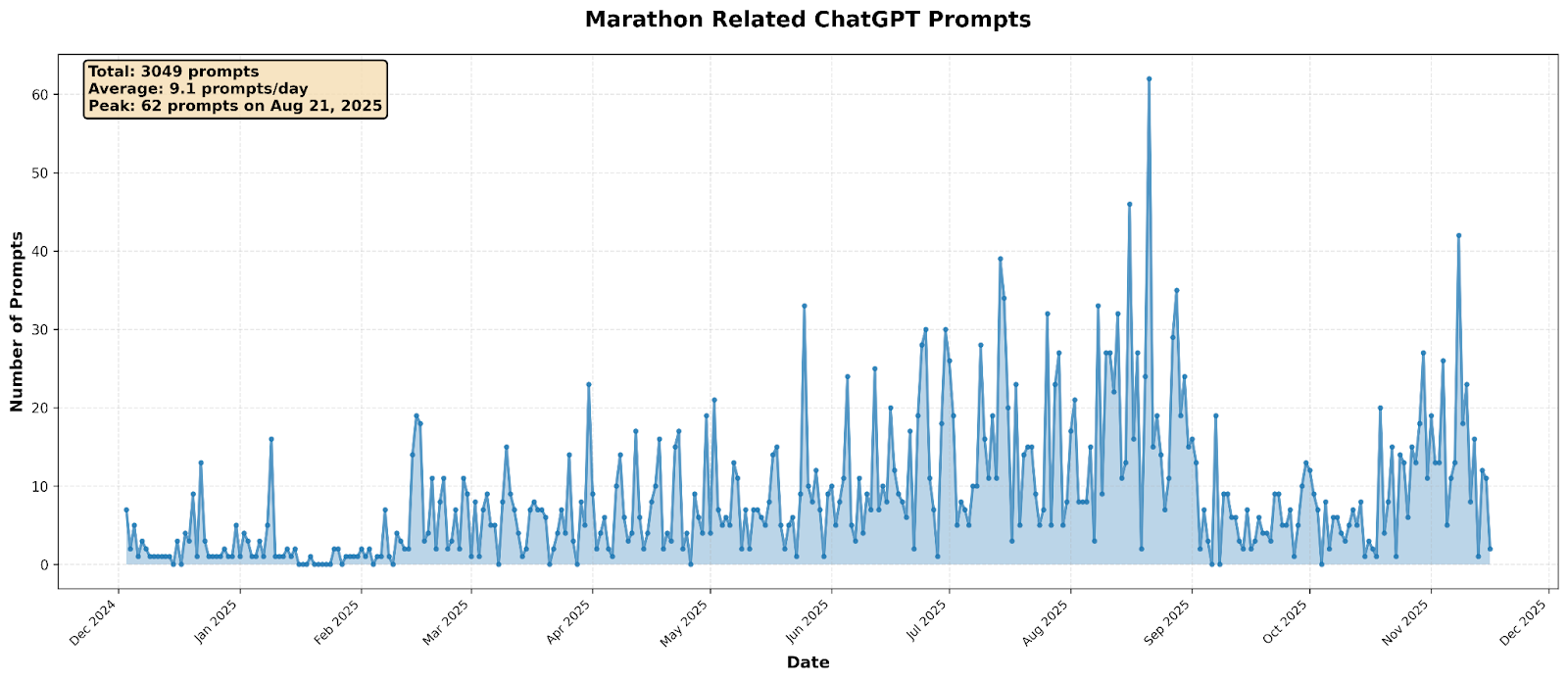
I treat ChatGPT like a chief of staff that never sleeps. It knows everything about me and has unlimited context to be able support me 24/7.
Over the 10 months between that first 2km shuffle and the finish line I logged 3,049 prompts in a single project. A few examples of what I fed in:
Full CPET report with my treadmill stages, thresholds and VO2 data.
DEXA scans showing fat distribution, lean mass indexes and visceral fat estimates.
Blood test history back to 2022 including lipids, hormones, vitamin D, inflammatory markers and insulin.
Gut microbiome results and suggested strains from the lab reports.
Training plans from Runna and notes from sessions with Ben.
WHOOP data on sleep, HRV, strain, resting heart rate and step counts.

On top of that I asked it to cross-reference what I was doing with work from people like Attia, Huberman, Rhonda Patrick and Dr B, plus the clinical studies behind them.
Some concrete ways I used AI:
Designing a Minimum Viable Training Plan
I had a finite number of hours to prepare for the marathon. Finder was still a huge time commitment so there wasn’t much spare time to work with. The kids were still young. I prompted ChatGPT to help design a “minimum effective marathon plan” around my CPET thresholds, lab VO2 max and Runna structure. The goal: hit enough volume without getting injured, ruining my joints or nervous system.Optimising VO2 max and weight in parallel
AI built me a simple model: VO2 max is driven by stroke volume, oxygen extraction and body mass. It pushed the idea that dropping body weight is the fastest way to improve relative VO2, especially when you start in the obese range. That guided the decision to target 5kg a month for four months and the guys at Lockeroom Gym were critical in keeping me accountable to this target.
The meta-analysis from Kodama et al showed that each 1-MET (3.5 ml/kg/min) increase in fitness cuts all-cause mortality by roughly 13 percent.Periodising nutrition across the week
I did not have a single “diet”. I had a weekly operating system.Protein-only days on lower training days to drive satiety and preserve lean mass.
Carb loading the day before long runs with 300 g plus of carbs, then Maurten gels every 25 minutes while running.
Occasional fasts (24 - 36 hours) to re-set appetite and get deeper into fat loss.
AI worked out macro ranges and timing templates for strength days, VO2 sessions, tempo runs and long runs, then I had Karen and Dr B sanity-check them.
Clinically, losing 5 to 10 percent of body weight improves blood pressure, insulin sensitivity and lipids. For sleep apnoea, 10 to 15 percent weight loss can halve severity.Gut rebuild plan
Since about October 2024 Dr B hammered one simple rule into me: 30 plus different plant foods a week to diversify the microbiome. That target comes from the American Gut Project, where people eating 30 or more plants per week had significantly higher microbial diversity than those eating 10 or fewer.
I worked with Karen from WELLSET to develop a targeted supplementation strategy to support my gut repair.Sleep, CPAP and thermoregulation
I gave ChatGPT my sleep study, CPAP settings, Eight Sleep temperature data and WHOOP recovery scores. We iterated on a “sleep protocol” that tried to hit 7.5 hours a night, with strict caffeine cut-off times, magnesium glycinate and threonate, a GABA/taurine/inositol compound from my Sydney pharmacy, and a consistent wind-down.
Restoring sleep was not optional. Poor sleep worsens insulin resistance, appetite and accident risk, and CPAP plus weight loss can meaningfully improve apnoea.Treadmill vs road and injury risk
I did almost all my early running in preparation for the marathon on a treadmill. Adam Monteith gave me this brilliant advice and it was key to me not getting majorly injured in the lead up. AI pulled studies showing that treadmill running at 1 percent incline gives similar metabolic cost to outdoor running but with roughly 40 percent lower impact forces at the knee and ankle, which matters when you are 120+kg.
I only moved to regular road long runs about eight weeks out from race day.
Adam and Yvonne were on speed dial the moment I had a niggle and managed to step in within hours to deal with it and give me strategies to evade any risk during my runs.Race strategy in real time
During the race I wore SHOKZ bone-conduction headphones with a metronome app ticking in the background at my target cadence. Several times I pulled out my phone, dictated into ChatGPT and asked things like:“I am 26km in. Pace 7:30/km. HR mid 150s. Legs ok. Stomach ok. What should I adjust for the next 5km?”
“I am starting to see people walking. I feel strong. What is the risk of pushing now vs waiting until 35km?”
It did not give magic secrets. It reminded me of basic race craft: do not surge because you feel good at 25km, keep fuelling, respect your heart rate caps, save the final push for the last 30 minutes. When your brain is fried, having a calm, data-driven voice in your ear helps.
The sleep stack
Optimising my sleep was critical to get this done. I had already been focused on this for a couple of years but went to another level several months prior to starting the marathon. I even live-streamed my sleep from the Finder office to bring attention to how I’d been optimising my sleep.
Here is the tame version of my supplement stack. DM me on LinkedIn if you want a full list of everything else I take.
My sleep stack:
The four-month fat loss block
The headline number people latch onto is “20kg in four months”.
The raw stats:
Start: 127.5kg in April.
Lowest: 107.5kg in August, just before the marathon.
That is about 1.25kg a week. Aggressive, but not crash-diet territory for someone starting at my weight.
Here is what those months actually looked like.
Month 1 - Shock and data
Goal: Stop the bleeding.
No alcohol. I made a few exceptions along my journey but otherwise zero.
Time-restricted fasting when I could and three protein-heavy meals a day.
3 to 4 training sessions a week plus 3 short run-walks.
CPET, DEXA, full bloods, microbiome test.
Weight came off fast in this block, a mix of glycogen, water and early fat loss.
Month 2 - Structure
Goal: Set a rhythm I could hold.
Follow Runna plan with Ben’s tweaks: 1 interval/VO2 session, 1 tempo, 1 long run, 1 to 2 easy runs. Some weeks I could only squeeze in two runs, and it was enough to get me through.
Strength on non-running days, focused on posterior chain, glutes, hamstrings and calves.
Protein first at every meal. Aiming for 30+ plants a week.
Two higher-carb days a week preparing for the long run.
10,000 steps minimum every day.
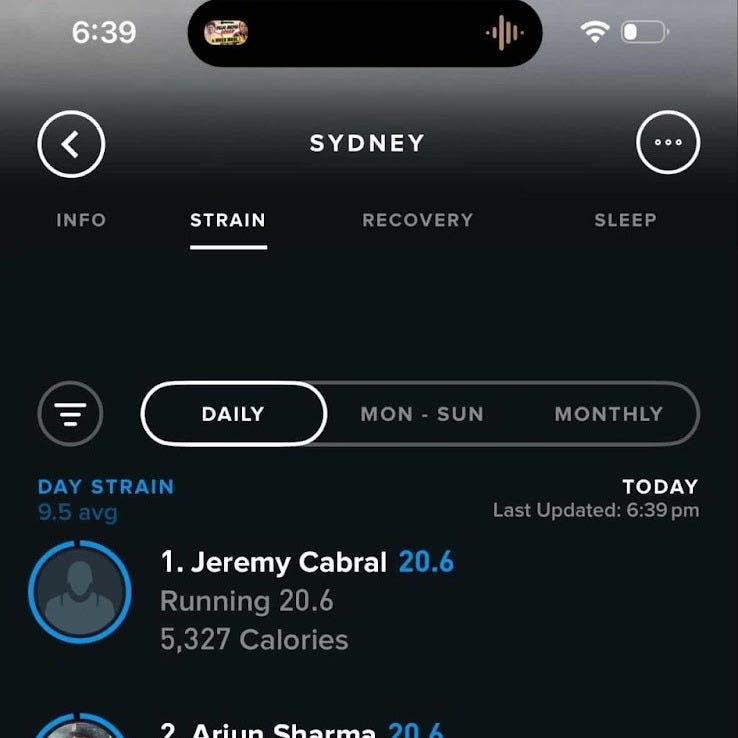
My WHOOP strain scores on long run days were on some days the highest of anyone in the Sydney group on WHOOP. A colleague screenshotted the leaderboard and called me insane.
Month 3 - Hard things
Goal: Become the kind of person who does hard things on purpose.
Treadmill for all runs
Hill repeats, tempo blocks and VO2 Max optimising intervals
24 to 36 hour fasts to move into deeper fat loss.
Cold plunges: 15 minutes at Nimbus immediately after long runs.
There is a large Finnish cohort showing that 2 to 3 saunas a week cut fatal cardiovascular disease risk by around 25 percent, and 4 to 7 a week by about 40 to 50 percent, so sauna and heat stress were in the mix as well. Also that sauna usage can have a positive impact on VO2 Max.
Month 4 - Race specificity
Goal: Arrive at the start line light enough, fit enough and uninjured.
Outdoor long runs up to 29km around Narrabeen Lagoon, and then my final 32km long run in torrential rain that finished in the dark at Centennial Park.
I had to do 5 half marathon efforts in my preparation for race day fueled with Maurten gels every 25 minutes plus electrolyte drink (thank you Hyro). Studies on nitrate rich beetroot juice are mixed but suggest small benefits for short time trials, so I added beet shots and tart cherries around key sessions to help blood flow.
Cadence work with a metronome app beeping in my ear. I had a running gait analysis in the city where the podiatrist told me to lose the metronome so I would not go mad. I ignored that advice in most of my running and had it on as often as possible to help prevent injury. I remember turning them off after runs and still hearing the beeping for minutes after.
I practised running with music I disliked but with the right beat, then saved my favourite punk and metal tracks for the last 30 minutes of big sessions. It was like a Pavlovian reward.
Race day: metronomes, Nedd Brockmann and AI
Race day started crossing the Sydney Harbour Bridge. The weather was perfect.
For the first 30km I stuck to the script:
Maurten gel every 25 minutes.
Water at every aid station.
Metronome ticking away beneath a podcast or bad pop playlist.
Around 32km you start seeing people hit the wall. They cramp, they shuffle, they walk. I saw it happening in front of me. When you are still running at that point it is a mental trap. Your brain says, “Everyone is walking. It is ok for you to walk.”
Somewhere around there I heard, “Go Jeremy!” with a few expletives included and looked up to see Nedd Brockmann on the sidelines. I had only just met him at a charity event for We Are Mobilise a few days before. Him yelling my name, and after a quick selfie together it flipped a switch and I started pushing again.
The last 10km were delirious. I was singing out loud. My physio Yvonne saw me and asked what on earth I was doing. I yelled back, “I am pumped, baby!”
In the last 2km I started to see familiar faces. Friends and family. Then my daughters. They were there around Mrs Macquarie’s Chair, running along next to me for a bit with signs in their hands encouraging the runners.
I was coming into the home stretch in immense pain and totally missed a group of my friends who were yelling my name out. I just kept telling myself to not stop and I wanted to be crossing that finish line running.
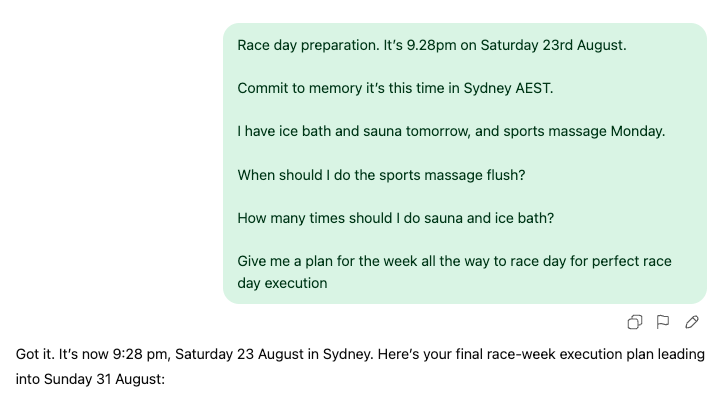
I crossed the line, walked the stiff-legged finish chute wanting nothing but a can of Coke, hugged my wife and burst into tears. After seeing friends and family briefly I went straight to NIMBUS & Co and did an ice bath for 15 minutes straight. I did that for the next 3 days after the race too and it dramatically sped up my recovery.
WHOOP had my strain score maxed. But three days later I was back running easy laps, no injuries. I put that down to the incredible running coaching I was given and the support from the EVOKER team.
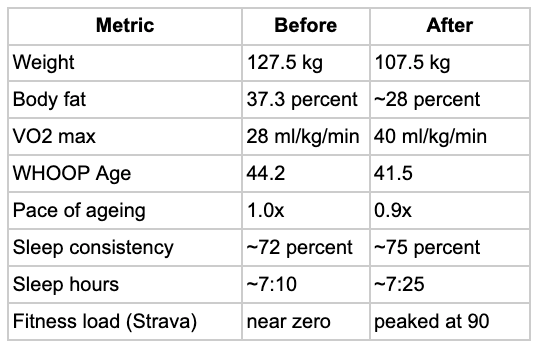
The stats: the health and fitness transformation
Here’s how I managed to move the needle before and after completing the marathon:


Life after: bio age, girls and boring consistency
Since the marathon, I kept up the running at one to two sessions a week. I now have set my sights on optimising my blood markers, my bio age and getting as healthy as I can by the time I turn 40 in January.
My weekly program looks like:
Three strength sessions a week.
One VO2 or interval session.
One longer run or race practice.
12 to 15,000 steps most days.
Sauna three to four times a week.
My sleep optimisation is still locked in.
My biological age on WHOOP is dropping toward my actual age. I am pushing toward sub-100kg and ideally the mid-90s at 187 cm, which is a much healthier range.
The best part has nothing to do with numbers.
My girls now ask, “Dad, are you going for a run so you can be healthy?”
They came to meet me at the end of one long run near the NSW Art Gallery and dropped their scooters to run the last stretch with me. I bought them little joggers and they think they have “race shoes” like Dad.
When your five-year-old says, “Dad, your tummy is not big anymore,” it hits harder than any lab result.
In saying that, I am super interested in seeing how they come up with my upcoming blood test with Everlab.
What you can steal from this experiment
You do not need 3,049 AI prompts, a VO2 lab test and an Eight Sleep to make progress. Here are the pieces I would keep if I had to strip this back for a normal human with a job and kids.
Pick an “impossible”, emotional goal
“Lose weight” is vague. “Run the Sydney Marathon next August” is clear. Tell everyone. Let their doubt annoy you into action. (Thank you Doone and P-A for pushing me to have an ambitious goal like this).Get some real baseline data
At minimum: weight, waist, blood pressure, fasting lipids and glucose, and some sense of fitness (e.g. a 1km time trial). If you can afford DEXA, a VO2 test and a sleep study, even better. It is easier to change what you measure. In all scenarios a health tracker like WHOOP will give you plenty of data to work with.Use AI as an assistant, not a guru
Let ChatGPT summarise papers, draft training week templates, explain VO2 or sleep apnoea in plain language and suggest questions for your doctor or coach. Always run advice past real clinicians and coaches who know your history (and can tell you when ChatGPT is hallucinating.)Build your own F1 team, one person at a time
I did not hire everyone at once. I added people as I hit bottlenecks: a physio when I kept almost getting injured, gut support when my IBS flared with gels, specific exercise prescription when my knees hurt.Sleep like it is your main job
If you snore, stop breathing at night or wake exhausted, push hard for a proper sleep assessment. Fixing my apnoea changed everything.Raise fitness and cut weight together, but respect the maths
Aim for 0.5 to 1.0kg of loss a week. Use protein and fibre to stay full. Use carbs around hard sessions and tactical fasting to manage calories over the week.Feed your gut 30 plants a week
Diversity, not perfection. Frozen veg, herbs, spices, nuts and seeds count. Your microbiome will thank you and so will your long runs if you have a sensitive gut like me. Gels caused me a lot of issues in my preparation.Do strength work even if you only care about endurance
Sarcopenia and low muscle mass are a straight line to frailty. And stronger legs handle more running load. Strength work is also a key to longevity. Some cohorts show weak quadriceps or poor chair-stand performance raising death risk by about 50- 65%.Accept that most of the work is boring
Sleep. Steps. Cooking. Logging runs. You do not see those in headline stories but that is where the change happens.Make it about people, not just performance
I did not chase a marathon to post a medal on Instagram. I did it because I want another 10 good years with my girls, and because I want my body to match the health knowledge I have spent years absorbing. I was chasing a new level of energy that could be available to me every day, and I found it.
If you are reading this as someone who feels stuck, overweight, exhausted and a bit embarrassed that your body does not match what you know, I get it.
You do not fix that in one weekend.
You do not need to.
You just need one stupid goal, one clear why, and the willingness to let AI, good clinicians and a boring training log support you while you do the actual work.
Now it’s your turn to make the impossible possible.